May 09,2026
Logistics Visibility Platforms for Monitoring Shipment Milestones
Introduction
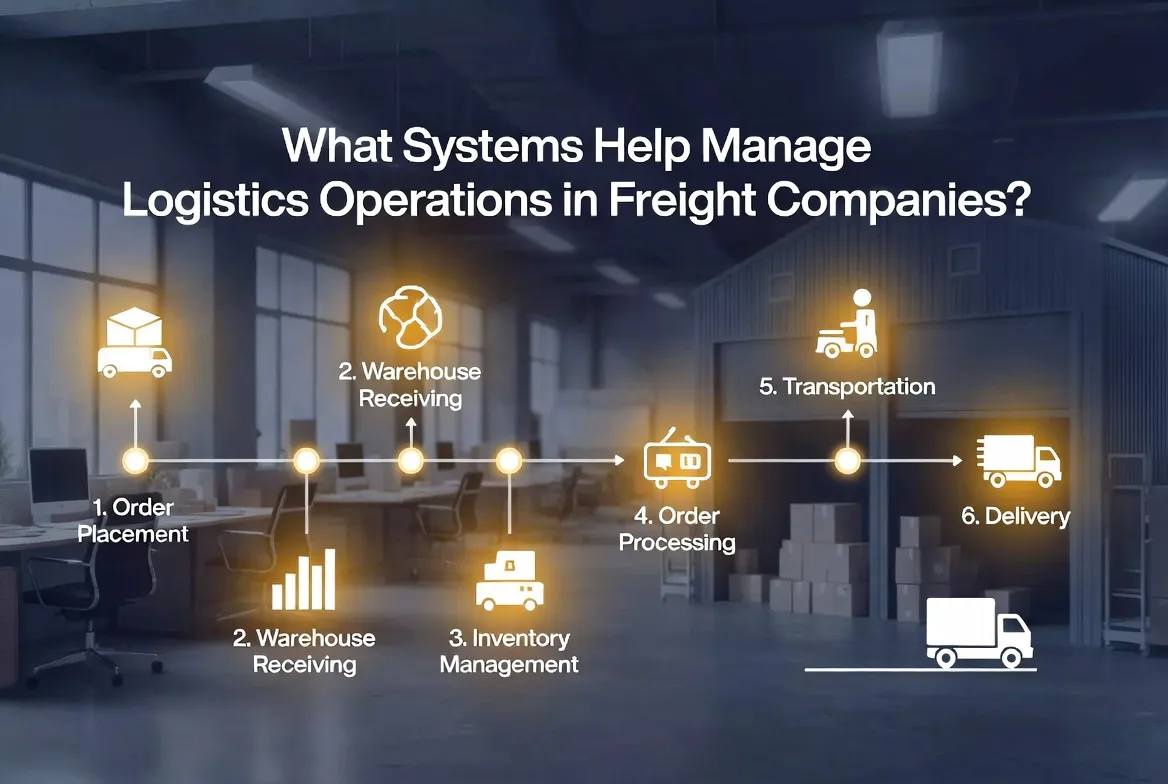
Shipment milestone tracking in logistics systems refers to the process of monitoring and recording key events or checkpoints throughout a shipment’s lifecycle, from origin to final delivery. Instead of only showing location updates, milestone tracking provides structured visibility into operational progress across each stage of transportation. This approach is widely used in modern logistics platforms to improve coordination, transparency, and control across complex supply chains.
In global logistics, where shipments pass through multiple carriers, warehouses, and customs processes, milestone tracking has become essential for ensuring accurate, real-time operational visibility.
What is Shipment Milestone Tracking
Shipment milestone tracking is a logistics tracking method that captures predefined events—known as milestones—at each critical stage of a shipment journey.
A milestone represents a specific operational event, such as:
Order creation
Cargo pickup
Warehouse inbound or outbound
Customs clearance
Departure or arrival at port
Final delivery
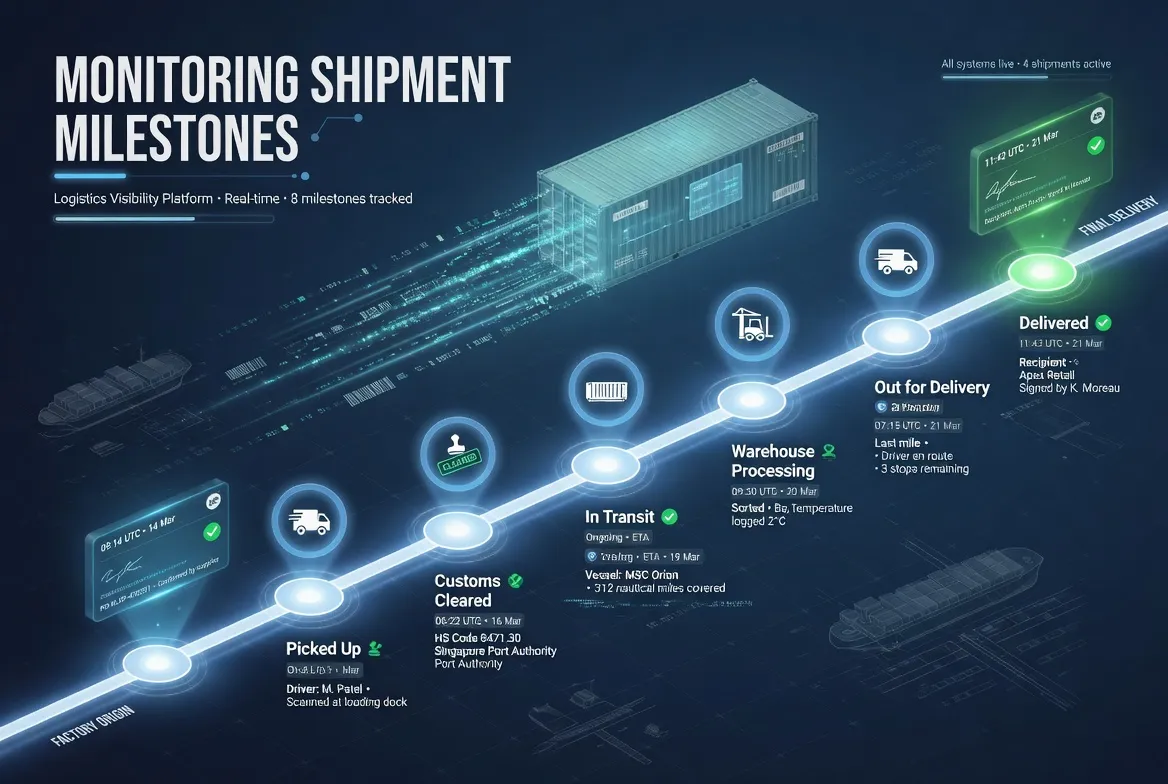
Unlike basic tracking that only shows location or status updates, milestone tracking organizes shipment progress into a structured timeline.
This enables logistics companies to view the entire lifecycle of a shipment in a standardized and actionable format. In modern systems, milestones can be automatically captured from multiple data sources or manually updated when needed.
For example, in cross-border logistics operations, milestone tracking can unify events across multiple transportation segments such as sea, air, and last-mile delivery into one continuous timeline.
Why Shipment Milestone Tracking Matters
1. Eliminates fragmented visibility
Traditional logistics operations often rely on disconnected tracking systems. Each carrier or partner provides separate updates, making it difficult to gain a unified view.
Milestone tracking consolidates these updates into a single timeline, reducing information silos.
2. Improves operational coordination
Global shipments involve multiple stakeholders:
Freight forwarders
Carriers
Customs brokers
Warehouses
End customers
Milestone tracking ensures all parties are aligned on the same shipment status, enabling better multi-role collaboration.
3. Enables proactive exception management
By defining expected milestones and timelines, logistics teams can quickly identify delays or deviations.
For example:
Missed departure
Delayed customs clearance
Late last-mile delivery
These exceptions can trigger alerts and workflows for faster resolution.
4. Supports customer transparency
Customers increasingly expect real-time updates. Milestone tracking allows logistics providers to offer self-service tracking portals with clear shipment progress visibility.
How Shipment Milestone Tracking Works
Shipment milestone tracking typically follows a structured workflow within a logistics system:
1. Milestone definition
The system defines standard milestones based on shipment type and business process, such as:
Booking confirmed
Cargo received
Customs cleared
Delivered
These milestones can be customized depending on operational requirements.
2. Data collection
Milestone data is collected from multiple sources through modern cargo logistics management software, including:
Carrier integrations (API/EDI)
Warehouse management systems
Manual input by operators
IoT or tracking platforms
Modern logistics platforms integrate multiple data streams to ensure comprehensive coverage.
3. Event synchronization
All milestone events are mapped into a unified timeline. This allows users to track shipments across multiple transportation segments seamlessly.
For example, a shipment may include:
Inland trucking
Ocean freight
Destination delivery
Each segment contributes milestone events to the overall shipment timeline.
4. Real-time updates and alerts
Systems continuously update milestone statuses and compare them against expected timelines.
If delays occur, automated alerts are triggered to notify relevant stakeholders.
5. Visibility and reporting
Users can access milestone data through dashboards, reports, or customer portals, enabling real-time tracking and performance analysis.
Key Features of Milestone-Based Tracking
Modern logistics systems provide advanced capabilities for milestone tracking, including:
End-to-end visibility
Unified timeline across all transport modes
One shipment view from origin to delivery
Multi-source tracking integration
Aggregation of tracking data from multiple carriers and systems
Automatic subscription to tracking updates
Workflow automation
Automated milestone updates
Trigger-based actions (alerts, notifications, task assignments)
Exception management
Configurable rules for delay detection
Automated alerts for abnormal events
Collaboration across roles
Shared visibility for internal teams and external partners
Role-based access to shipment data
Financial linkage
Milestones connected to billing triggers
Automated cost and revenue recognition based on shipment progress
Benefits for Logistics Companies
Implementing shipment milestone tracking delivers measurable operational benefits:
Improved efficiency
Structured workflows reduce manual tracking and repetitive communication.
Better decision-making
Real-time milestone data allows teams to respond quickly to disruptions.
Reduced operational risk
Early detection of delays helps prevent cascading issues across the supply chain.
Enhanced customer experience
Clear and transparent tracking improves customer satisfaction and reduces inquiry volume.
Financial accuracy
Linking milestones to financial processes supports automated billing and reconciliation.
Best Practices and Use Cases
Standardize milestone definitions
Define consistent milestone structures across all shipments to ensure uniform tracking.
Integrate with external systems
Connect with carriers, warehouses, and customs systems to automate data collection.
Enable role-based collaboration
Ensure that all stakeholders—internal teams and external partners—can access relevant shipment information.
Use automation for exception handling
Set up rules to automatically detect delays and trigger workflows.
Provide customer-facing tracking portals
Allow customers to view shipment milestones independently, reducing manual communication.
Conclusion
Shipment milestone tracking is a foundational capability in modern digital logistics software, enabling structured, real-time visibility across complex global supply chains. By organizing shipment progress into clearly defined events, logistics companies can improve coordination, reduce operational risks, and enhance customer transparency.
As global logistics networks become more interconnected and data-driven, milestone-based tracking is no longer optional—it is essential for scalable and efficient operations.
Frequently Asked Questions
What is shipment milestone tracking in logistics?
Shipment milestone tracking is a method of monitoring key events throughout a shipment’s lifecycle, providing a structured timeline of operational progress rather than simple location updates.
How does milestone tracking work?
It works by defining key shipment events, collecting data from multiple systems, and organizing these events into a unified timeline with real-time updates and alerts.
Why is milestone tracking important in logistics?
It improves visibility, enhances collaboration, enables proactive issue management, and provides better customer transparency.
What are examples of shipment milestones?
Examples include cargo pickup, warehouse entry, customs clearance, departure, arrival, and final delivery.
How does milestone tracking improve customer experience?
It allows customers to track shipments in real time through clear, structured updates, reducing uncertainty and the need for manual inquiries.
About WallTech
WallTech provides digital logistics solutions designed to support global freight forwarders, 3PLs, and cross-border logistics operators. Its platforms enable end-to-end logistics collaboration, connecting multiple stakeholders across the supply chain within a unified system. With capabilities such as real-time shipment visibility, milestone-based tracking, and workflow automation, WallTech helps companies standardize operations and improve efficiency. The system also supports financial automation, including billing and reconciliation, enabling better control over logistics performance and profitability.
If you're exploring ways to improve your logistics operations, feel free to connect with us to learn more about our solutions and system capabilities.
.webp "The Role of Freight Operations Efficiency in Modern Logistics")