May 13,2026
How Do Freight Platforms Connect Multiple Logistics Platforms?
Introduction
Digital logistics platforms for end-to-end logistics management are systems that enable companies to manage the entire logistics lifecycle—from order creation to final delivery and financial settlement—within a single, unified platform. These platforms provide full visibility, structured workflows, and automation across all logistics processes, ensuring seamless coordination and operational control.
For freight forwarders, 3PL providers, and cross-border eCommerce logistics companies, end-to-end management is essential to eliminate fragmentation, improve efficiency, and deliver consistent service across complex global supply chains.
What is a Digital Logistics Platform for End-to-End Logistics Management
A digital logistics platform for end-to-end logistics management is a centralized system that integrates all stages of logistics operations into one continuous workflow.
It typically covers:
Order management
Shipment execution and tracking
Warehouse and inventory coordination
Documentation and compliance
Financial processes (billing, reconciliation, profit tracking)
The platform connects internal teams and external partners, ensuring that all stakeholders operate within the same system and follow a unified process.
Unlike traditional approaches—where different stages are managed in separate systems—end-to-end platforms provide a holistic view and control over the entire logistics lifecycle.
Why End-to-End Logistics Management Matters
Modern logistics operations are often fragmented across multiple systems and stakeholders.
Common challenges include:
Disconnected workflows between order, execution, and finance
Lack of visibility across different stages of the shipment lifecycle
Manual handoffs between departments
Inconsistent data across systems
Inefficient coordination with external partners
These challenges lead to:
Delays in shipment processing
Increased operational costs
Errors in data and documentation
Poor customer experience
End-to-end logistics management addresses these issues by unifying operations into a single, integrated platform.
How Digital Logistics Platforms Enable End-to-End Management
Digital logistics platforms manage the entire logistics lifecycle through integration, visibility, and automation.
1. Unified Order-to-Delivery Workflow
All processes are connected within a single workflow:
Order creation → shipment execution → tracking → delivery → billing
Each step is linked and tracked within the system
This ensures continuity across operations.
2. Multi-Role Collaboration
Different roles collaborate within the same platform:
Sales, operations, documentation, and finance teams
External partners such as carriers, agents, and warehouses
This eliminates communication gaps and ensures consistent data usage.
3. End-to-End Visibility
The platform provides a unified timeline for shipments:
Tracks all milestones from origin to destination
Displays real-time updates
Enables quick identification of delays or issues
4. Data Integration Across Systems
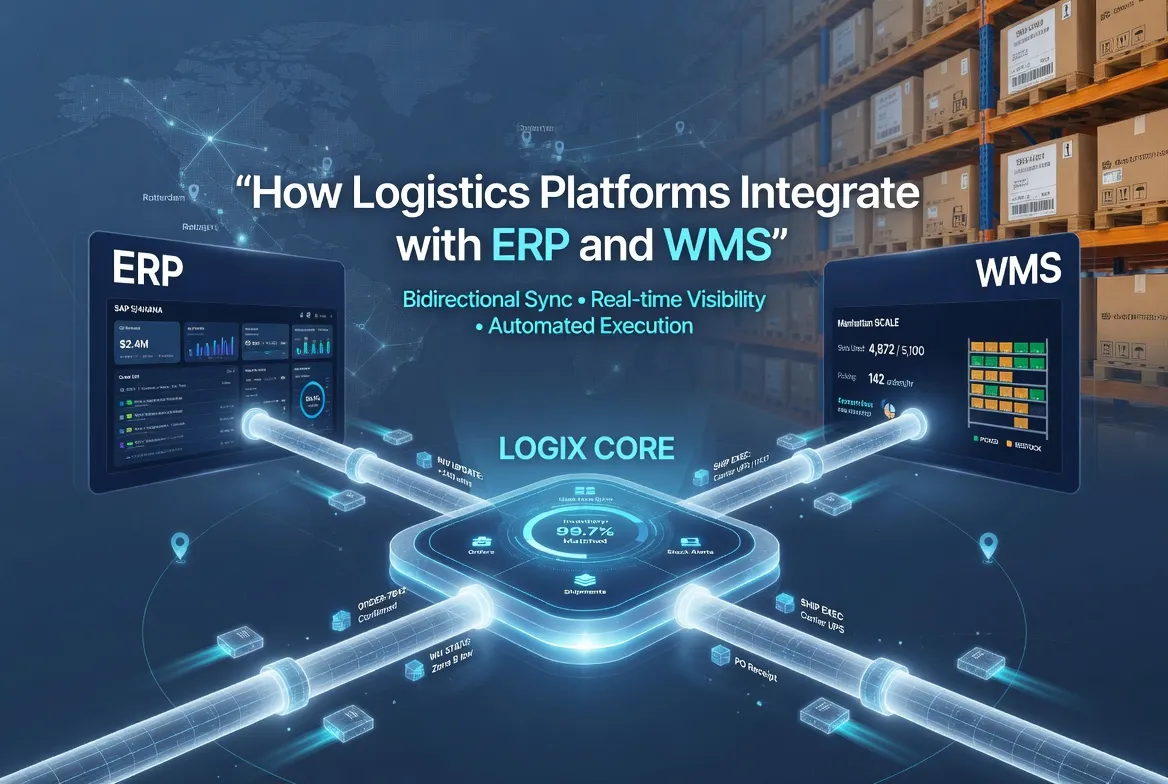
The platform integrates with:
ERP systems
WMS platforms
Carrier and tracking systems
Financial systems
This ensures seamless data flow across all stages.
5. Workflow and Process Automation
Automation supports end-to-end operations:
AI-based document recognition reduces manual input
Workflow automation ensures consistent execution
Automated billing and reconciliation streamline financial processes
6. Financial Integration
Financial processes are directly linked to operations:
Billing triggered by shipment milestones
Real-time profit tracking
Automated reconciliation of receivables and payables
This creates a fully integrated operational and financial workflow.
Key Features / Key Capabilities
Digital logistics platforms for end-to-end management typically include:
1. Integrated Order Management
Centralized order creation and processing
Support for manual, batch, and API-based input
2. End-to-End Shipment Tracking
Real-time visibility across all logistics stages
Unified shipment timeline
3. Multi-Role Collaboration
Coordination across internal teams and external partners
Shared access to data and workflows
4. Workflow Automation
Automated task execution and process management
Reduced manual intervention
5. Financial Management Integration
Automated billing and reconciliation
Profit tracking and financial reporting
6. System Integration
API/EDI connectivity with external systems
Seamless data exchange across the ecosystem
These capabilities allow logistics companies to manage the full lifecycle of logistics operations within one system.
Benefits for Logistics Companies
Complete Operational Control
Full visibility across all logistics stages
Better management of complex operations
Improved Efficiency
Reduced manual work and process delays
Faster shipment processing
Enhanced Data Consistency
Single source of truth across operations
Elimination of duplicate data entry
Better Financial Performance
Automated billing and reconciliation
Real-time profit visibility
Scalable Growth
Ability to manage increasing shipment volumes
Support for global expansion
Best Practices / Use Cases
1. Freight Forwarders
Manage end-to-end shipment processes
Integrate operations and financial workflows
Improve service reliability
2. 3PL Providers
Provide comprehensive logistics services
Manage multi-client operations within one platform
Improve operational transparency
3. Cross-Border eCommerce Logistics
Handle high-volume shipments efficiently
Integrate with eCommerce platforms and carriers
Automate fulfillment and returns processes
4. Multi-National Enterprises
Standardize logistics processes globally
Enable cross-region collaboration
Improve visibility and control
Conclusion
Digital logistics platforms for end-to-end logistics management provide a comprehensive solution for managing modern supply chains. By integrating all logistics processes into a single system, these platforms eliminate fragmentation, improve efficiency, and enhance visibility.
As logistics operations continue to grow in complexity, end-to-end management will be essential for maintaining control, optimizing performance, and delivering consistent service.
Frequently Asked Questions
What is end-to-end logistics management?
End-to-end logistics management refers to the coordination and control of all logistics processes—from order creation to final delivery and financial settlement—within a unified system.
How do digital logistics platforms support end-to-end management?
They integrate workflows, data, and stakeholders into a single platform, enabling real-time visibility, collaboration, and automation across all stages.
Why is end-to-end management important in logistics?
It eliminates fragmentation, improves efficiency, enhances visibility, and ensures consistent execution across the supply chain.
What are the benefits of end-to-end logistics platforms?
Benefits include improved operational control, increased efficiency, better data consistency, and enhanced financial performance.
Who needs end-to-end logistics management solutions?
Freight forwarders, 3PL providers, cross-border eCommerce logistics companies, and multinational enterprises benefit from these platforms.
About WallTech
WallTech provides digital logistics platforms designed to support end-to-end logistics management across global supply chains. By connecting all stages of logistics operations within a unified system, the platform enables seamless collaboration between internal teams and external partners. With real-time shipment visibility, milestone-based tracking, and integrated workflows, logistics companies can maintain full operational control. In addition, workflow automation, AI-driven data processing, and financial integration help improve efficiency and scalability, allowing businesses to manage complex logistics operations with confidence.
If you're exploring ways to improve your logistics operations, feel free to connect with us to learn more about our solutions and system capabilities.