

Jun 20,2024
WallTech Family | Season 1: Inside Shipping Companies | Part 2: Price Predictions for H2 2024
Introduction
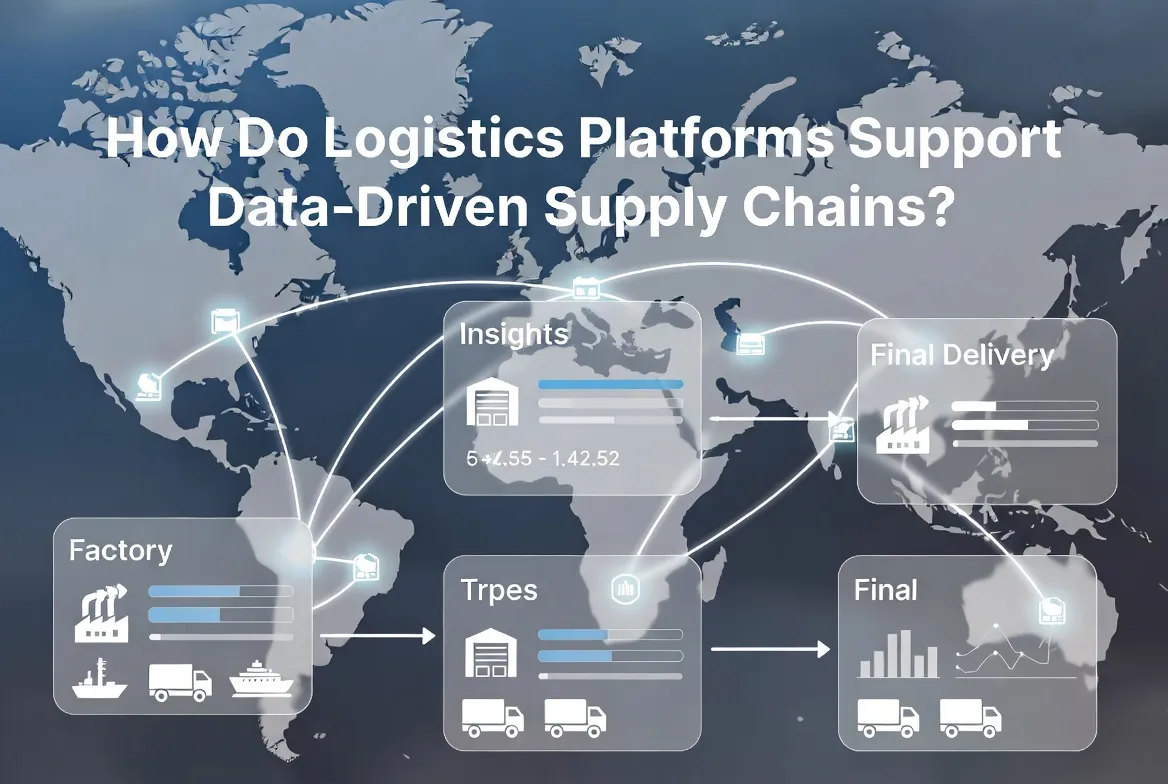
Logistics platforms support data-driven supply chains by centralizing shipment and operational data, enabling real-time visibility, and applying analytics and automation to optimize decision making across the entire supply chain. By transforming fragmented data into actionable insights, these platforms help logistics companies and their partners operate more efficiently, collaboratively, and strategically.
In today’s global supply chains—where freight forwarders, 3PLs, carriers, warehouses, and eCommerce platforms must coordinate seamlessly—data-driven operations are essential. Logistics platforms act as the digital backbone that connects stakeholders and enables intelligent, data-led execution.
What Is a Data-Driven Supply Chain?
A data-driven supply chain is one where decisions, planning, and execution are guided by real-time and historical data rather than manual assumptions or disconnected systems.
Key characteristics include:
Real-time visibility across shipments and inventory
Integration across multiple systems and stakeholders
Use of analytics to monitor performance and predict outcomes
Automation of workflows based on data triggers
In logistics, this means every shipment, milestone, and financial transaction contributes to a continuous data loop that informs operations and strategy.
Why Data-Driven Supply Chains Matter
1. Managing Complexity
Global supply chains involve multiple countries, transport modes, and partners. Data-driven systems provide structure and control.
2. Improving Responsiveness
Real-time data allows companies to quickly respond to disruptions, delays, or demand changes.
3. Enhancing Efficiency
Data insights help eliminate inefficiencies and optimize resource allocation.
4. Increasing Transparency
End-to-end visibility ensures all stakeholders have access to the same information, reducing miscommunication.
5. Supporting Scalability
Standardized data and automated workflows enable businesses to grow without operational bottlenecks.
How Logistics Platforms Enable Data-Driven Supply Chains
1. Centralizing Data Across the Supply Chain
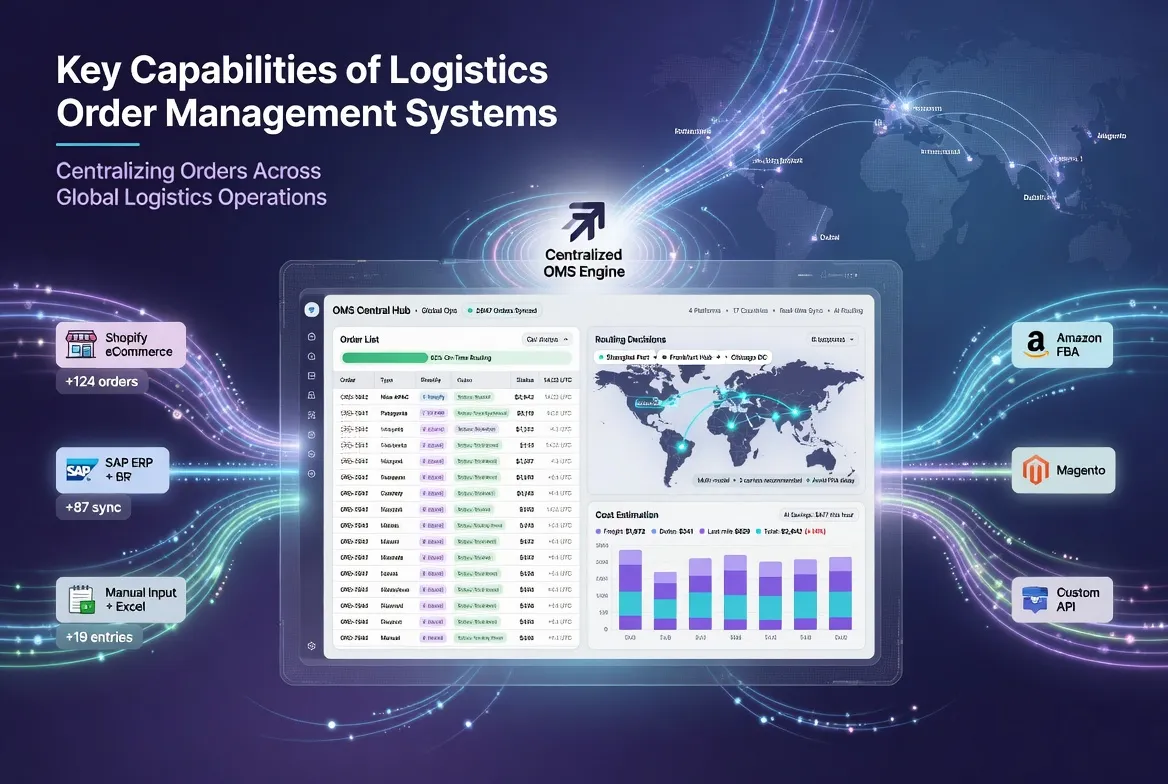
Logistics platforms integrate data from:
Freight operations systems
Warehouse management systems
ERP and eCommerce platforms
Carriers and logistics partners
Financial systems
This creates a unified data environment where all shipment-related information is accessible in one place.
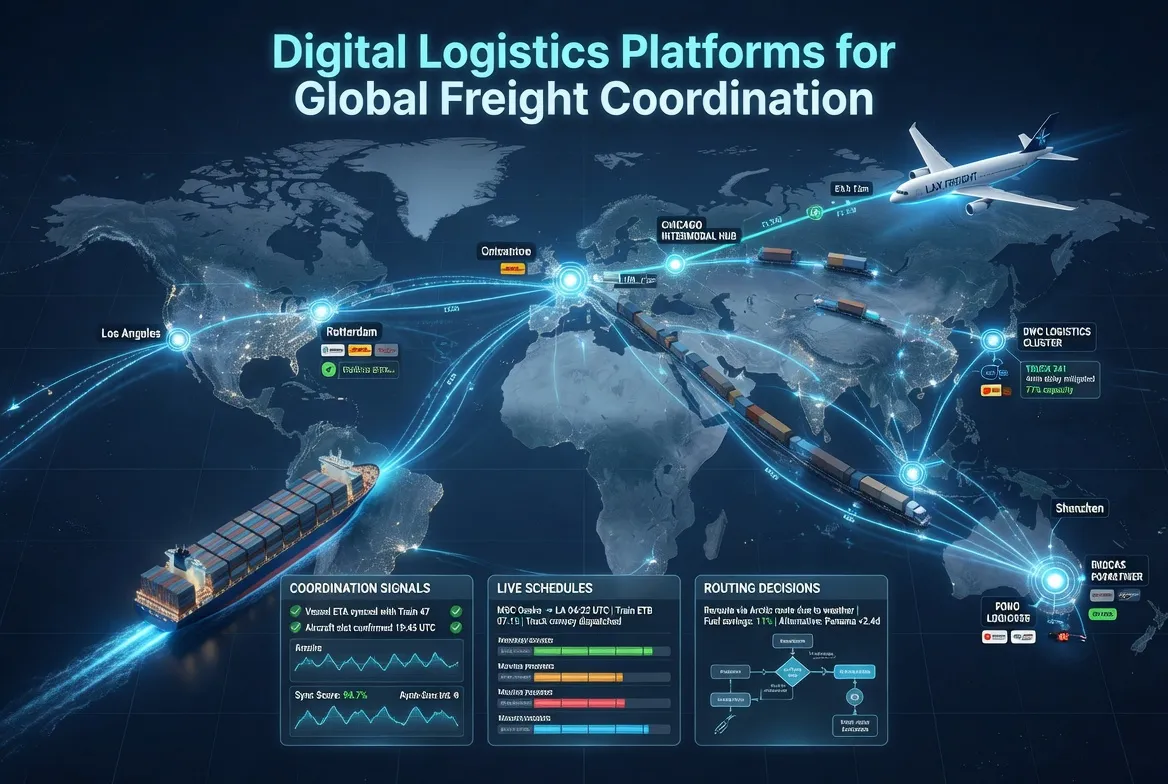
2. Providing End-to-End Visibility
Platforms deliver:
Real-time shipment tracking across all milestones
Unified timelines covering pickup to final delivery
Exception alerts and status updates
This visibility allows stakeholders to monitor operations and make timely decisions.
3. Enabling Multi-Role Collaboration
Data-driven supply chains rely on seamless collaboration:
Operations, finance, and customer service teams share the same data
Upstream suppliers and downstream partners are connected
Role-based access ensures secure and relevant data sharing
This reduces delays caused by fragmented communication.
4. Applying Data Analytics for Decision Support
Logistics platforms analyze data to generate insights such as:
Transit time performance and delays
Carrier and route efficiency
Cost and margin analysis
Demand and capacity trends
These insights support both operational decisions and long-term planning.
5. Automating Workflows Based on Data
Automation is a key enabler of data-driven supply chains:
AI-powered data recognition for documents
Automated billing and financial reconciliation
Exception-triggered workflows
Automated notifications and task assignments
This ensures consistency and reduces manual intervention.
6. Integrating External Systems and Ecosystems
Modern logistics platforms connect with external systems:
APIs for ERP, WMS, and eCommerce platforms
Integration with carriers, customs, and partners
Real-time data synchronization
This connectivity ensures that data flows seamlessly across the supply chain.
Key Features of Data-Driven Logistics Platforms
End-to-End Visibility
Real-time tracking of shipments
Milestone-based monitoring
Unified shipment timelines across stakeholders
Multi-Role Collaboration
Shared data access across departments
Coordination with partners and suppliers
Role-based permissions for secure collaboration
Workflow Automation
Automated data capture and validation
Automated billing and reconciliation
Rule-based workflow execution
Advanced Analytics
KPI dashboards and performance monitoring
Trend analysis and forecasting
Cost and margin insights
System Integration
Seamless connectivity with ERP, WMS, and external platforms
Unified data synchronization
Benefits for Logistics Companies
1. Improved Decision Making
Access to real-time and historical data enables faster and more accurate decisions.
2. Increased Operational Efficiency
Automation and data insights reduce manual processes and optimize workflows.
3. Enhanced Collaboration
Shared data improves coordination across teams and partners.
4. Better Customer Experience
Real-time visibility allows proactive communication and improved service reliability.
5. Greater Scalability
Standardized data and automated systems support business growth.
Best Practices and Use Cases
Best Practices
Integrate all systems into a unified platform
Standardize data formats and milestones
Leverage real-time dashboards for monitoring
Automate repetitive workflows
Encourage data sharing across stakeholders
Common Use Cases
1. Real-Time Shipment Visibility
Provide customers and internal teams with up-to-date shipment status.
2. Cross-Border Logistics Coordination
Manage complex international shipments with integrated data and collaboration.
3. Demand Forecasting and Capacity Planning
Use historical data to predict demand and allocate resources.
4. Cost and Margin Optimization
Analyze financial data to improve profitability.
5. Exception Management
Detect and resolve issues proactively using real-time alerts.
Conclusion
Logistics platforms are essential for enabling data-driven supply chains. By centralizing data, providing visibility, enabling collaboration, and automating workflows, these platforms transform how logistics operations are managed.
For freight forwarders, 3PLs, and cross-border logistics providers, adopting a data-driven approach is critical to improving efficiency, enhancing service quality, and remaining competitive in a rapidly evolving global market.
Frequently Asked Questions
What is a data-driven supply chain?
A data-driven supply chain uses real-time and historical data to guide decisions, optimize operations, and improve performance.
How do logistics platforms support data-driven supply chains?
They centralize data, provide visibility, enable collaboration, and apply analytics and automation.
Why are data-driven supply chains important?
They improve efficiency, responsiveness, and decision accuracy in complex logistics environments.
What are the benefits of using logistics platforms in supply chains?
Benefits include better visibility, improved collaboration, increased efficiency, and scalable operations.
How does data improve supply chain performance?
It enables proactive decision making, identifies inefficiencies, and supports continuous optimization.
About WallTech
WallTech provides digital logistics solutions that enable companies to build data-driven supply chains. Its platforms support end-to-end logistics collaboration, connecting multiple roles and partners within a unified system. With real-time shipment visibility and milestone-based tracking, logistics teams can manage operations with greater transparency and control. In addition, workflow automation—such as AI-powered data recognition, automated billing, and reconciliation—helps reduce manual processes and improve accuracy. By combining visibility, collaboration, and automation, WallTech supports logistics companies in enhancing efficiency and scaling their operations effectively.
If you're exploring ways to improve your logistics operations, feel free to connect with us to learn more about our solutions and system capabilities.