
May 06,2026
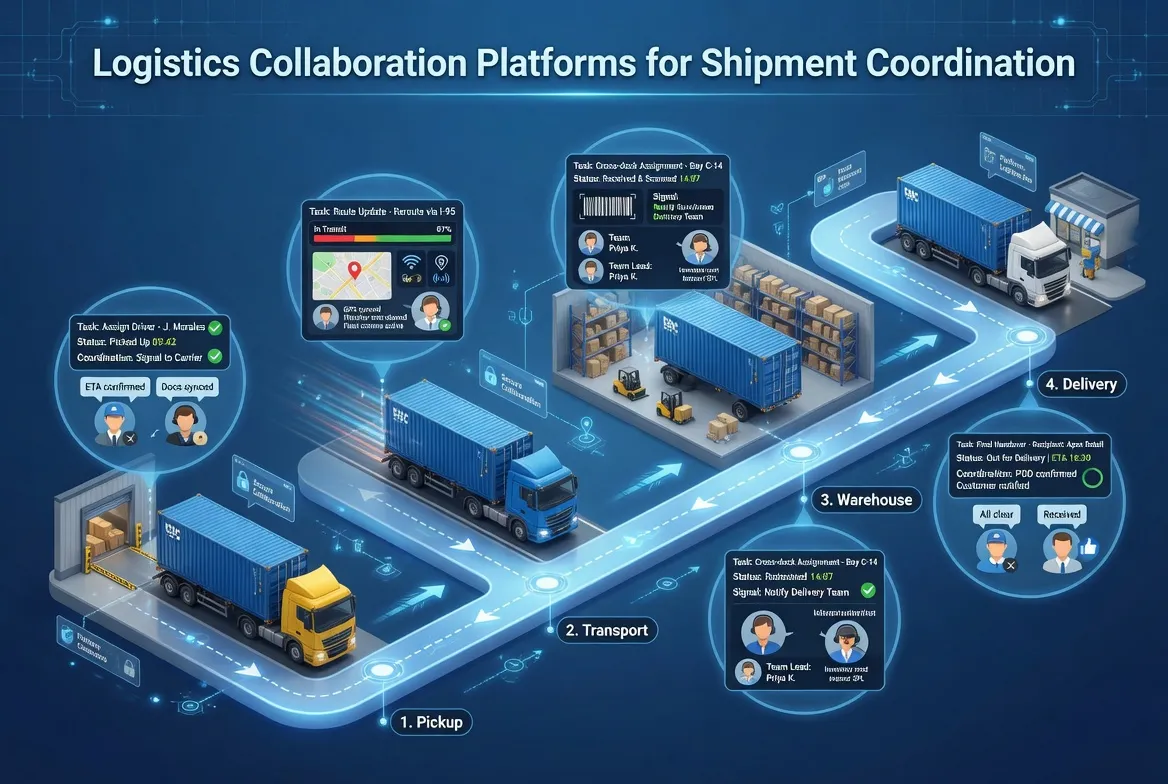
Logistics Collaboration Platforms for Shipment Coordination
Introduction
Logistics visibility platforms for data-driven supply chains are digital systems that help logistics companies collect, analyze, and utilize operational data to improve supply chain visibility, decision-making, and operational efficiency. These platforms centralize shipment information, transportation events, milestone tracking, and logistics analytics into a unified operational environment.
In global logistics operations, freight forwarders, 3PL providers, and cross-border logistics companies generate large volumes of operational data every day. However, when this data remains fragmented across disconnected systems, companies struggle to gain meaningful operational insight.
A logistics visibility platform transforms fragmented logistics data into actionable intelligence by combining real-time shipment visibility, operational analytics, workflow automation, and collaborative supply chain management.
What is a Data-Driven Supply Chain
A data-driven supply chain is a logistics and transportation network that uses operational data, real-time visibility, and analytics to support decision-making and process optimization.
Instead of relying on manual reporting or reactive operations, companies use centralized data to improve:
Shipment planning
Transportation management
Carrier performance
Inventory coordination
Exception handling
Customer service
Financial accuracy
A logistics visibility platform serves as the operational foundation for a data-driven supply chain by integrating information from multiple logistics systems and providing a unified operational view.
Modern platforms typically consolidate data from:
Transportation systems
Warehouses
Carriers
Customs systems
ERP platforms
eCommerce platforms
Financial systems
This enables organizations to make faster and more accurate operational decisions.
Why Data-Driven Supply Chains Matter
1. Logistics Operations Generate Massive Operational Data
Every shipment creates operational data related to:
Transportation milestones
Warehouse activity
Customs processing
Carrier updates
Delivery status
Financial transactions
Without centralized visibility, much of this data remains underutilized.
2. Manual Decision-Making Is No Longer Scalable
As shipment volumes increase, relying on spreadsheets, emails, and disconnected reports becomes inefficient.
Data-driven supply chains allow companies to automate analysis and improve operational responsiveness.
3. Customers Expect Faster and More Accurate Service
Modern customers expect:
Real-time shipment visibility
Accurate ETAs
Faster issue resolution
Consistent communication
Operational data helps logistics providers improve service reliability and transparency.
4. Supply Chain Disruptions Require Predictive Visibility
Transportation disruptions such as:
Port congestion
Carrier delays
Customs inspections
Inventory shortages
Warehouse bottlenecks
can significantly impact operations.
Data-driven visibility helps companies identify patterns and respond to risks earlier.
How Logistics Visibility Platforms Support Data-Driven Supply Chains
Logistics visibility platforms create data-driven supply chains through centralized data collection, operational analytics, and workflow automation.
Step 1: Integrating Operational Systems
The platform connects with:
TMS systems
WMS systems
ERP platforms
Carrier APIs
Customs systems
eCommerce platforms
Financial systems
This integration creates a unified logistics data ecosystem.
Step 2: Collecting Real-Time Operational Data
The system continuously captures data related to:
Shipment milestones
Transportation events
Inventory movement
Delivery performance
Warehouse activity
Financial transactions
Real-time synchronization improves operational accuracy.
Step 3: Standardizing Logistics Information
Different systems often use inconsistent data structures and event terminology.
Visibility platforms standardize operational data into unified formats for easier analysis.
Step 4: Building Operational Dashboards and Analytics
The platform organizes logistics data into dashboards showing:
Shipment status
Carrier performance
Transit times
Delay trends
SLA compliance
Inventory movement
Financial performance
This enables operational and strategic analysis.
Step 5: Supporting Automated Workflows
Modern platforms also automate operational processes such as:
Shipment notifications
Task assignments
Billing workflows
Financial reconciliation
SOP execution
Exception escalation
Automation reduces manual work and improves operational consistency.
Key Features of Data-Driven Logistics Visibility Platforms
Real-Time Shipment Visibility
Users can monitor operational activity across the entire supply chain.
Centralized Operational Dashboards
The platform consolidates logistics data into unified reporting interfaces.
Transportation Analytics
Companies can analyze:
Transit times
Delivery performance
Carrier reliability
Transportation efficiency
Milestone Tracking
Milestone-based tracking improves operational measurement and shipment transparency.
Exception Management
The system identifies:
Delayed shipments
Missed milestones
Customs issues
Delivery failures
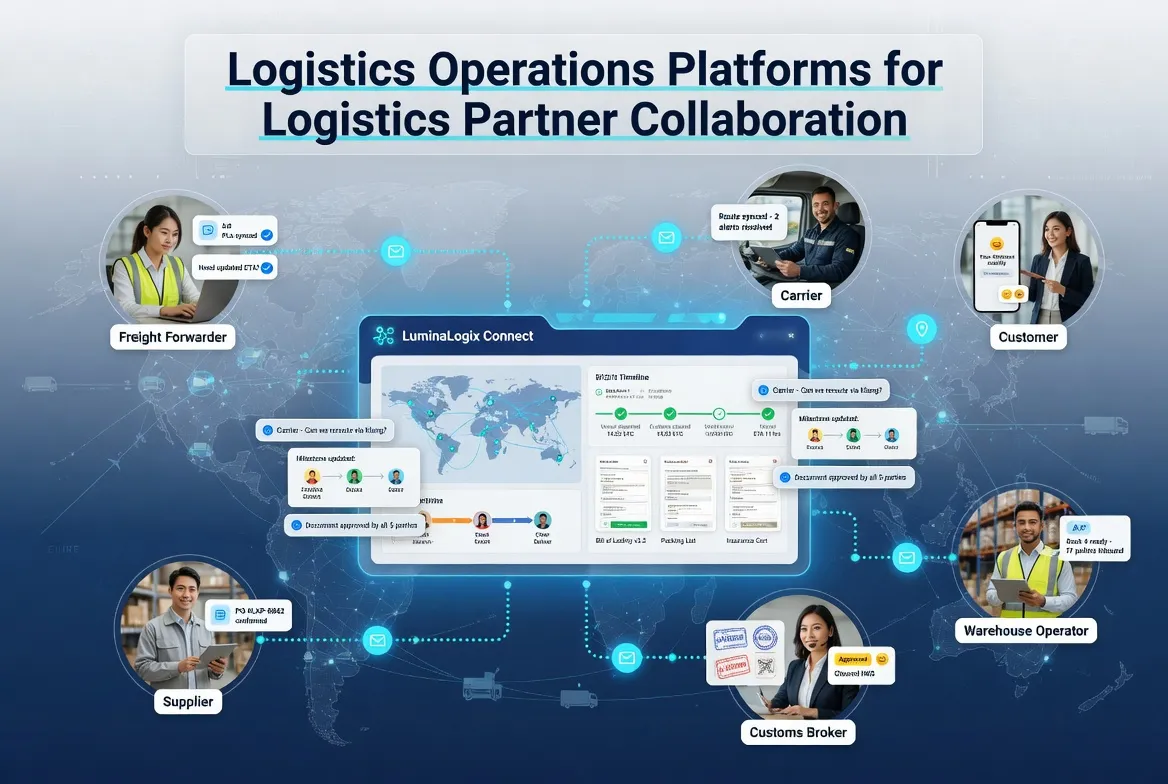
Multi-Role Collaboration
Different stakeholders can collaborate through shared operational workflows and visibility.
Workflow Automation
Advanced systems support:
Automated billing
Financial reconciliation
AI-assisted document recognition
Operational task management
SOP automation
Historical Performance Analysis
Historical logistics data supports long-term operational optimization and forecasting.
Benefits for Logistics Companies
Better Operational Decision-Making
Centralized logistics data improves planning and operational responsiveness.
Improved Shipment Transparency
Real-time visibility helps organizations maintain stronger operational control.
Faster Exception Resolution
Operational analytics help identify and resolve disruptions earlier.
Reduced Manual Processes
Automation reduces repetitive operational and reporting tasks.
Better Customer Service
Data-driven operations improve shipment reliability and customer communication.
Enhanced Collaboration
Shared visibility improves coordination between logistics stakeholders.
Improved Scalability
Centralized analytics help logistics companies manage growing shipment volumes more efficiently.
Better Financial Control
Integrated operational and financial workflows improve billing accuracy and reconciliation efficiency.
Best Practices and Use Cases
Freight Forwarding Operations
Freight forwarders use data-driven visibility platforms to:
Monitor shipment performance
Analyze transportation efficiency
Improve milestone management
Coordinate overseas agents
Cross-Border eCommerce Logistics
Cross-border logistics providers analyze:
Parcel delivery performance
Last-mile efficiency
Customs processing speed
Carrier reliability
Carrier Performance Optimization
Companies use logistics data to evaluate and optimize transportation providers.
Warehouse and Distribution Networks
Warehouse operators monitor:
Inventory movement
Inbound efficiency
Outbound processing
Fulfillment timelines
Financial and Operational Integration
Integrated visibility improves synchronization between operational workflows and financial management.
Conclusion
Data-driven supply chains are becoming increasingly important as global logistics operations grow more complex and operationally demanding. Logistics visibility platforms help organizations transform fragmented operational data into actionable intelligence through centralized visibility, real-time analytics, and workflow automation.
By combining shipment visibility, transportation analytics, operational collaboration, and financial integration, these platforms help logistics companies improve efficiency, reduce delays, strengthen customer service, and scale operations more effectively.
For freight forwarders, 3PL providers, and cross-border logistics companies, data-driven visibility is now a core capability for competitive and scalable supply chain management.
Frequently Asked Questions
What is a data-driven supply chain?
A data-driven supply chain uses operational data, analytics, and real-time visibility to improve logistics decision-making, transportation efficiency, and supply chain management.
How do logistics visibility platforms support data-driven operations?
They centralize shipment data, synchronize operational events, provide analytics dashboards, and automate logistics workflows.
Why are data-driven supply chains important?
They improve operational visibility, reduce delays, enhance customer service, improve decision-making, and increase logistics efficiency.
What are the benefits of logistics visibility platforms?
Benefits include real-time tracking, operational analytics, workflow automation, improved collaboration, and stronger supply chain transparency.
Who uses data-driven logistics visibility platforms?
Freight forwarders, 3PL providers, warehouses, transportation operators, and cross-border logistics companies commonly use these systems.
About WallTech
WallTech provides digital logistics solutions designed to help logistics companies improve shipment visibility, operational analytics, and supply chain efficiency. Its platforms support real-time shipment tracking, milestone-based visibility, operational reporting, and end-to-end logistics collaboration across freight forwarding, warehousing, transportation, and cross-border logistics operations.
WallTech solutions also support workflow automation, AI-assisted data recognition, automated billing and reconciliation, and centralized operational management across global logistics networks. By connecting upstream and downstream logistics stakeholders through unified digital workflows, logistics companies can improve operational scalability, transparency, and data-driven decision-making capabilities.
If you're exploring ways to improve your logistics operations, feel free to connect with us to learn more about our solutions and system capabilities.