
.webp "What Is a Warehouse Management System")
Mar 17,2026
What Is a Warehouse Management System
Introduction
Freight forwarders coordinate international shipments by managing communication, documentation, and execution across multiple stakeholders—including shippers, carriers, customs authorities, and overseas agents—through structured workflows and digital platforms. They act as the central orchestrators, ensuring that every stage of the shipment process is aligned, compliant, and executed on time.
In global logistics, coordination is one of the most complex challenges due to the number of parties involved and the geographic dispersion of operations. Without effective coordination, shipments can face delays, miscommunication, and costly errors. Modern freight forwarders increasingly rely on digital systems to unify operations, enhance visibility, and streamline collaboration.
What is International Shipment Coordination?
International shipment coordination refers to the process of organizing and managing all activities and stakeholders involved in moving goods across borders.
This includes:
Communicating with shippers and customers
Booking transportation with carriers
Managing documentation and customs clearance
Coordinating with overseas agents and local logistics providers
Tracking shipment progress across multiple legs
Freight forwarders serve as intermediaries that connect all parties, ensuring smooth information flow and operational execution.
Why Coordination Matters in International Logistics
Effective coordination is essential because international shipments involve complex, multi-step processes.
Common challenges include:
Multiple stakeholders: Shippers, carriers, customs brokers, and agents
Geographical dispersion: Operations across different time zones and regions
Information fragmentation: Data spread across emails, spreadsheets, and systems
Regulatory complexity: Varying customs requirements across countries
Poor coordination can lead to:
Shipment delays and missed connections
Documentation errors and compliance issues
Increased operational costs
Customer dissatisfaction
Strong coordination ensures that all parties are aligned and that shipments move efficiently through each stage.
How Freight Forwarders Coordinate International Shipments
Freight forwarders follow a structured approach to coordinate shipments from origin to destination.
1. Customer Order and Requirement Alignment
Receive shipment requests from customers
Define service scope, timelines, and pricing
Capture shipment data in a centralized system
2. Carrier Booking and Capacity Planning
Select appropriate carriers based on route, cost, and transit time
Book space with shipping lines, airlines, or trucking providers
Share booking details with all relevant parties
3. Multi-Party Communication
Coordinate with origin agents for pickup and export handling
Communicate with destination agents for import clearance and delivery
Maintain continuous updates across all stakeholders
Digital platforms enable multi-role coordination by allowing all parties to access shared data and updates in real time.
4. Documentation and Customs Coordination
Prepare and verify shipping documents (e.g., bill of lading, invoices)
Ensure compliance with export and import regulations
Use AI-based data recognition to reduce manual data entry and errors
5. Shipment Execution Across Multiple Legs
Manage first-mile pickup, main transport, and last-mile delivery
Coordinate transitions between different transport modes
Track milestone events throughout the shipment lifecycle
6. Real-Time Tracking and Exception Handling
Monitor shipment status across regions
Identify delays, customs issues, or disruptions
Communicate updates proactively to customers and partners
7. Financial Coordination and Settlement
Calculate costs based on contracts and services
Automate billing and invoicing processes
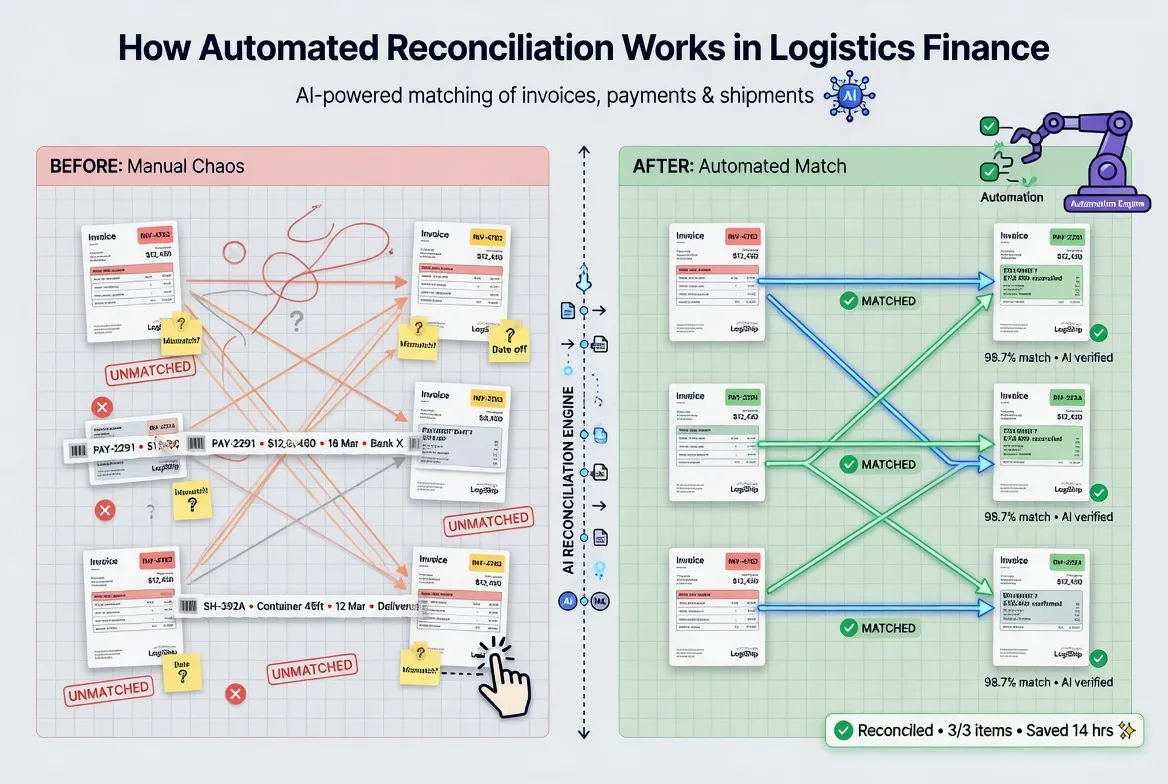
Reconcile payments with carriers and partners
Key Features / Key Capabilities
Modern freight forwarding coordination relies on digital capabilities that streamline operations.
1. Centralized Collaboration Platform
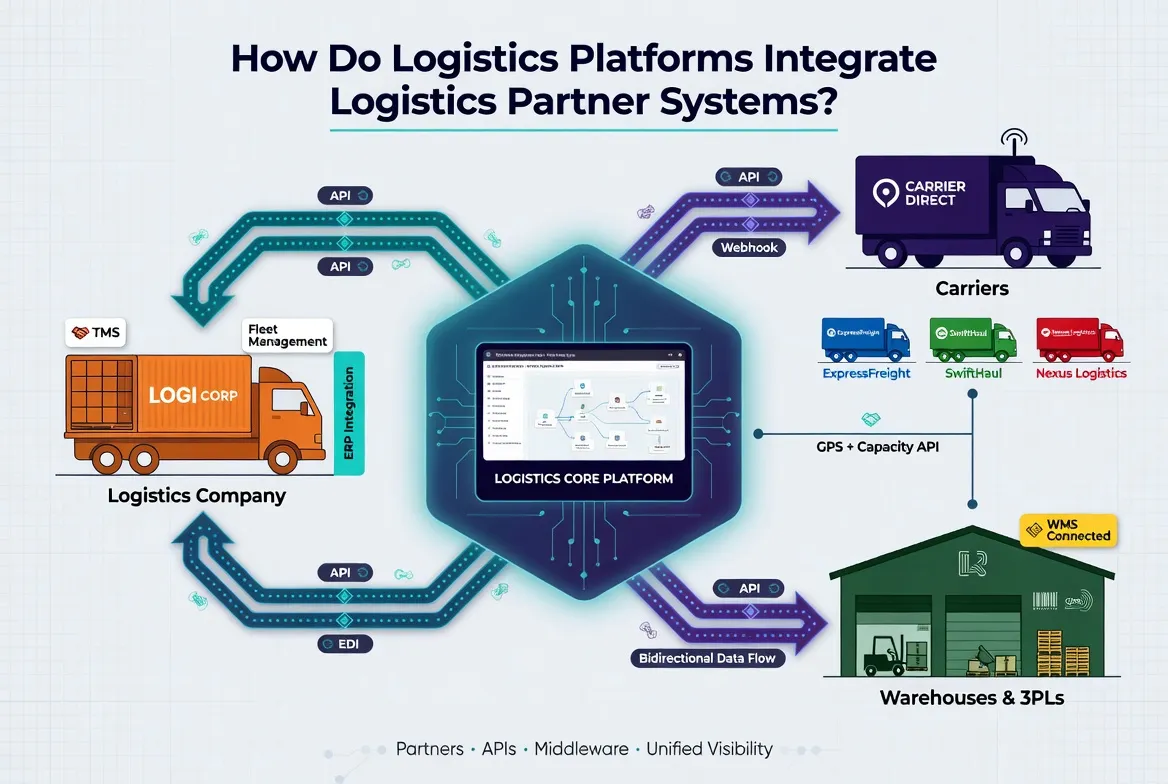
Connects internal teams and external partners
Enables real-time data sharing
Reduces reliance on emails and manual communication
2. End-to-End Visibility
Tracks shipments across all legs and regions
Provides a unified timeline of milestones
Improves transparency for customers and operators
3. Workflow Automation
Standardizes operational processes
Automates task assignments and updates
Reduces manual intervention and errors
4. AI-Driven Data Management
Extracts data from documents automatically
Validates information for accuracy
Accelerates document processing
5. Integrated Financial Management
Links operational data with billing processes
Automates invoicing and reconciliation
Provides real-time financial insights
Benefits for Freight Forwarders
Effective coordination delivers significant advantages:
Operational efficiency: Streamlined processes reduce delays and workload
Improved accuracy: Fewer errors in documentation and communication
Enhanced customer experience: Timely updates and reliable service
Better partner collaboration: Stronger relationships with carriers and agents
Scalability: Ability to manage more shipments without increasing complexity
These benefits are critical for maintaining competitiveness in global logistics.
Best Practices / Use Cases
1. Build a Unified Data Environment
Use a centralized system to manage all shipment-related information and communication.
2. Standardize Communication Protocols
Define clear processes for information exchange between teams and partners.
3. Enable Real-Time Visibility
Ensure that all stakeholders can track shipment progress through a shared platform.
4. Automate Repetitive Tasks
Leverage automation for documentation, updates, and financial processes.
5. Strengthen Partner Integration
Integrate systems with carriers and agents to improve data flow and reduce manual input.
Use Case Example:
A freight forwarder managing shipments from Asia to Europe can:
Coordinate with origin agents for export handling
Book ocean freight with carriers
Share shipment data with destination agents
Track milestones such as departure, arrival, and customs clearance
Automate billing based on shipment completion
This structured coordination ensures smooth operations across regions.
Conclusion
Freight forwarders play a critical role in coordinating international shipments by acting as the central link between all stakeholders. Through structured workflows and digital platforms, they ensure that shipments move efficiently, comply with regulations, and meet customer expectations.
As global logistics becomes more complex, the ability to coordinate effectively through collaboration, visibility, and automation is no longer optional—it is a core requirement for operational success.
Frequently Asked Questions
What is international shipment coordination in logistics?
It is the process of managing communication, documentation, and execution across all parties involved in cross-border shipments.
How do freight forwarders coordinate shipments?
They use centralized systems to manage workflows, communicate with partners, and track shipments in real time.
Why is coordination important in freight forwarding?
It ensures smooth operations, reduces errors, and improves shipment reliability across multiple regions.
What challenges do freight forwarders face in coordination?
They deal with fragmented systems, multiple stakeholders, regulatory complexity, and time zone differences.
How does digital technology improve coordination?
It enables real-time data sharing, automates processes, and provides visibility across the entire shipment lifecycle.
About WallTech
WallTech provides digital solutions designed to support freight forwarders and logistics companies in managing complex international operations. Its platforms enable end-to-end collaboration across multiple roles and partners, offer real-time shipment visibility through milestone-based tracking, and support workflow and financial automation. By connecting upstream and downstream stakeholders within a unified system, WallTech helps logistics companies improve coordination efficiency, reduce manual processes, and scale their global operations more effectively.
If you're exploring ways to improve your logistics operations, feel free to connect with us to learn more about our solutions and system capabilities.