Apr 01,2026
Logistics Platform for Managing Multi-Channel Orders
Introduction
A logistics platform for e-commerce logistics providers is a digital system designed to manage high-volume order fulfillment, shipment execution, and last-mile delivery coordination in a connected and automated way. It enables seamless integration with eCommerce platforms, real-time tracking across multiple carriers, and efficient handling of cross-border logistics operations.
As eCommerce continues to grow globally, logistics providers must process thousands—or even millions—of orders daily. Without a unified platform, operations become fragmented, manual, and difficult to scale.
What is a Logistics Platform for E-Commerce Logistics Providers
A logistics platform for eCommerce logistics providers is a centralized system that connects:
Online stores and marketplaces (e.g., Shopify, Amazon)
Warehouses and fulfillment centers
Transportation and last-mile carriers
Customs and compliance systems
Financial and billing systems
It manages the entire lifecycle of an eCommerce shipment, including:
Order ingestion
Warehouse processing
Shipment creation
Tracking and delivery
Returns handling
Unlike traditional logistics systems, these platforms are built for:
High-volume order processing
Multi-channel integration
Real-time visibility across all logistics stages
Why Logistics Platforms Matter for E-Commerce Logistics
1. Handles High Order Volumes
eCommerce logistics providers deal with:
Large volumes of small parcels
Frequent order fluctuations
Peak season surges
A logistics platform automates order processing and ensures operational stability.
2. Eliminates System Fragmentation
Without a unified platform:
Orders come from multiple channels
Warehouse and transport systems are disconnected
Data is inconsistent
A logistics platform integrates all systems into one ecosystem.
3. Improves End-to-End Visibility
Visibility is critical in eCommerce logistics. Platforms provide:
Real-time tracking across carriers
Milestone-based shipment updates
Unified tracking timelines
4. Enhances Customer Experience
Customers expect:
Fast delivery
Accurate tracking
Transparent communication
A logistics platform ensures these expectations are met.
5. Supports Cross-Border Operations
Cross-border eCommerce requires:
Customs compliance
Multi-country coordination
Multi-carrier management
Platforms streamline these complex processes.
How Logistics Platforms Work in E-Commerce Logistics
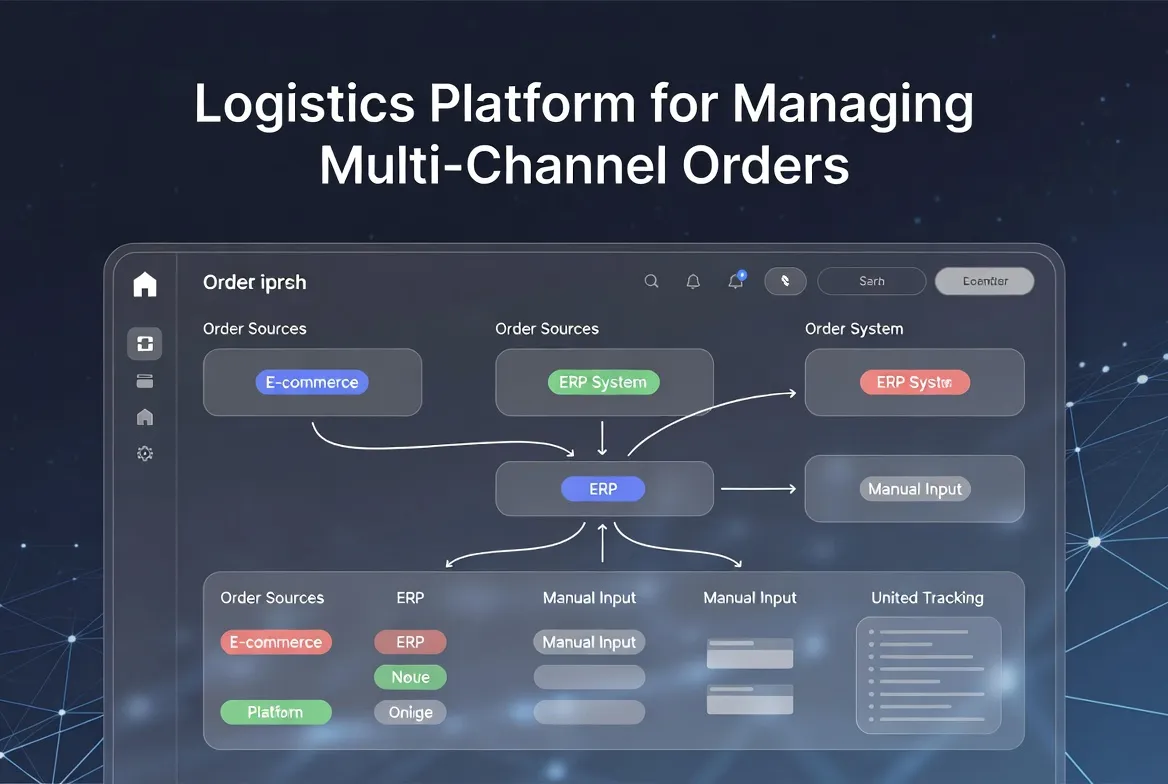
1. Order Integration
Orders are automatically imported from:
eCommerce platforms
Marketplaces
Merchant systems
This eliminates manual order entry.
2. Warehouse Coordination
The platform connects with WMS to:
Trigger picking and packing
Manage inventory updates
Coordinate fulfillment workflows
3. Carrier Selection and Shipment Creation
The system:
Selects optimal carriers based on rules (cost, speed, destination)
Generates shipping labels
Assigns tracking numbers
4. Real-Time Tracking
Shipment data is updated continuously through:
Carrier integrations
Event-based tracking updates
This creates a unified tracking experience across multiple carriers.
5. Returns Management
Platforms handle:
Return requests
Reverse logistics workflows
Refund-related data
6. Financial Processing
Operational data feeds into financial modules for:
Cost calculation
Billing
Reconciliation
Key Features of E-Commerce Logistics Platforms
1. Multi-Channel Integration
Connect with multiple eCommerce platforms
Unified order management
2. End-to-End Visibility
Real-time tracking across all logistics stages
Milestone-based shipment monitoring
3. Multi-Carrier Management
Integration with global carrier networks
Flexible carrier selection
4. Workflow Automation
Automated order processing
Automated shipment creation
Exception handling workflows
5. AI and Data Automation
AI-based document and data recognition
Automated data synchronization
6. Multi-Role Collaboration
Coordination across warehouse, operations, and customer service teams
Shared workflows and data access
7. Financial Integration
Automated billing and reconciliation
Real-time cost and revenue tracking
8. Scalability
Support for high-volume operations
Ability to handle peak demand
Benefits for Logistics Companies
1. Increased Processing Speed
Orders processed instantly
Faster fulfillment cycles
2. Improved Accuracy
Reduced manual errors
Consistent data across systems
3. Enhanced Customer Satisfaction
Real-time tracking
Transparent delivery updates
4. Operational Efficiency
Automated workflows reduce workload
Better coordination across teams
5. Cost Optimization
Optimized carrier selection
Reduced operational inefficiencies
6. Scalable Growth
Ability to handle increasing order volumes
Expansion into new markets
Best Practices / Use Cases
1. Cross-Border E-Commerce Logistics
Platforms enable:
Automated customs documentation
Multi-country shipment tracking
Coordination across international carriers
2. Multi-Warehouse Fulfillment
Companies can:
Distribute orders across warehouses
Optimize delivery times
Improve inventory utilization
3. Last-Mile Delivery Optimization
Platforms support:
Integration with multiple last-mile carriers
Dynamic carrier selection
Real-time delivery tracking
4. Returns Management
Efficient handling of returns:
Automated workflows
Improved customer experience
Reduced operational costs
5. Exception Management
Systems proactively manage issues:
Delay alerts
Automated workflow triggers
Faster issue resolution
Conclusion
A logistics platform is essential for eCommerce logistics providers managing complex, high-volume operations. By integrating systems, automating workflows, and providing real-time visibility, these platforms enable efficient, scalable, and customer-centric logistics operations.
As global eCommerce continues to expand, adopting a robust logistics platform is critical for maintaining competitiveness and delivering high-quality service.
Frequently Asked Questions
What is a logistics platform for eCommerce logistics providers?
It is a digital system that manages order fulfillment, shipment execution, tracking, and returns across eCommerce logistics operations.
How does a logistics platform work in eCommerce?
It integrates with eCommerce platforms, warehouses, and carriers to automate order processing, shipment creation, and tracking in real time.
Why is a logistics platform important for eCommerce logistics?
It improves efficiency, enables real-time visibility, enhances customer experience, and supports scalable operations.
What are the benefits of using a logistics platform?
Benefits include faster processing, improved accuracy, better tracking, cost optimization, and scalability.
About WallTech
WallTech provides digital logistics platforms tailored for eCommerce logistics providers, enabling seamless integration across order sources, warehouses, and carrier networks. Its solutions support end-to-end collaboration, connecting upstream and downstream partners within unified workflows. With real-time shipment visibility, milestone-based tracking, and automation capabilities such as AI-driven data recognition, automated billing, and reconciliation, WallTech helps logistics companies streamline high-volume operations and improve efficiency. By integrating operational and financial processes, it supports scalable growth in global eCommerce logistics.
If you're exploring ways to improve your logistics operations, feel free to connect with us to learn more about our solutions and system capabilities.