

Apr 28,2026
Freight Financial Platforms for Shipment Profit Analysis
Introduction
International shipment tracking across multiple carriers works by aggregating tracking data from different logistics providers—such as airlines, ocean carriers, trucking companies, and last-mile couriers—into a unified system. This is achieved through API integrations, event subscriptions, and milestone standardization, allowing all shipment updates to be displayed in a single timeline. In global logistics, this approach is essential for maintaining visibility across complex, multi-leg shipments involving multiple service providers.
What is International Shipment Tracking Across Multiple Carriers
International shipment tracking across multiple carriers refers to the process of monitoring a shipment’s movement across different transportation providers throughout its journey.
A single international shipment often involves:
Origin pickup by a local trucking provider
Line-haul transportation via air or ocean carrier
Destination handling by a local logistics partner
Final delivery by a last-mile courier
Each carrier operates its own tracking system, generating separate tracking numbers and event updates. Multi-carrier tracking consolidates these fragmented data points into one cohesive tracking experience.
Instead of checking multiple carrier websites, users can access a unified view of shipment status from origin to delivery.
Why Multi-Carrier Tracking Matters
In global logistics operations, shipments rarely rely on a single carrier. This creates several challenges:
Fragmented tracking information across different platforms
Inconsistent event formats between carriers
Delayed updates due to manual data collection
High customer service workload for status inquiries
Without a unified tracking approach, logistics teams must manually gather updates from various sources, which is inefficient and error-prone.
Multi-carrier tracking solves these issues by:
Providing a single source of truth for shipment status
Reducing manual tracking efforts
Improving response time to customer inquiries
Enhancing transparency across all shipment stages
For freight forwarders, 3PL providers, and cross-border eCommerce operators, this capability is critical to maintaining service quality and operational efficiency.
How International Shipment Tracking Works Across Multiple Carriers
Multi-carrier tracking systems rely on a combination of data integration, standardization, and real-time synchronization.
1. Carrier System Integration
The system connects with multiple carrier systems through:
APIs (Application Programming Interfaces)
EDI (Electronic Data Interchange)
Third-party tracking aggregators
These integrations enable automatic retrieval of tracking events from:
Airlines and ocean carriers
Express couriers (e.g., DHL, UPS, FedEx)
Local trucking providers
Postal services
This ensures continuous data flow without manual intervention.
2. Multi-Source Data Aggregation
Tracking data is collected from various sources and combined into a centralized system.
Sources may include:
Carrier tracking systems
Warehouse scan events
Customs clearance updates
Manual updates from operators
The system consolidates all inputs to provide a complete view of shipment progress.
3. Milestone Standardization
Different carriers use different terminology and event structures. For example:
“Departed facility” vs “Shipment left origin”
“Arrived at hub” vs “Received at destination terminal”
To address this, the system maps carrier-specific events into standardized milestones, such as:
Pickup completed
In transit
Arrived at destination
Customs cleared
Out for delivery
Delivered
This standardization enables consistent tracking across all carriers.
4. Unified Shipment Timeline
All tracking events are displayed in a single, chronological timeline.
This unified timeline allows users to:
View the full shipment journey
Identify the current shipment status instantly
Track progress across different transport segments
Modern systems support combining automated tracking with manual updates to ensure completeness.
5. Exception Detection and Alerts
The system monitors shipment progress against expected timelines and milestones.
If deviations occur—such as delays or missing events—the system triggers alerts to notify relevant stakeholders.
This enables proactive issue resolution rather than reactive responses.
6. Multi-Role Access and Collaboration
Different users interact with tracking data based on their roles:
Operations teams monitor execution
Customer service teams handle inquiries
Customers track shipments independently
Partners update status when needed
Role-based access ensures efficient collaboration across the logistics network.
Key Features / Key Capabilities
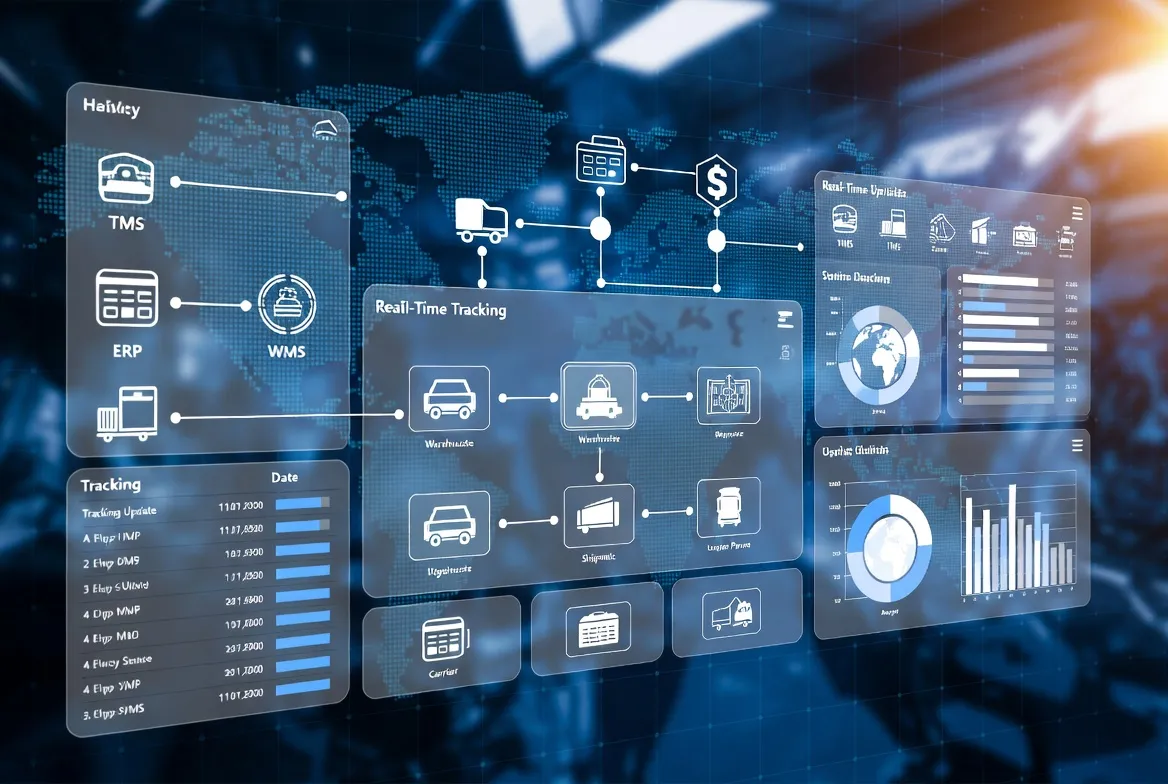
A robust multi-carrier tracking system typically includes:
Multi-carrier integration
Connects with global carriers and logistics providersAutomated tracking updates
Continuously retrieves tracking events from multiple systemsMilestone-based tracking model
Standardizes shipment progress across carriersUnified tracking dashboard
Displays all shipment events in one interfaceException alerts and notifications
Identifies delays and abnormal situations automaticallyManual tracking input support
Allows operators to add or correct tracking dataCustomer-facing tracking portal
Enables end customers to track shipments independently
Benefits for Logistics Companies
1. Reduced Manual Workload
Automated tracking eliminates the need to manually check multiple carrier platforms.
2. Improved Visibility Across Shipments
A unified system provides full transparency across all shipment stages and carriers.
3. Faster Customer Response
Customer service teams can quickly access accurate tracking data, reducing response time.
4. Enhanced Operational Control
Real-time tracking enables proactive management of delays and disruptions.
5. Better Customer Experience
Customers gain access to consistent, reliable tracking information without confusion.
Best Practices / Use Cases
1. Integrate Key Carriers First
Start by integrating major carriers and gradually expand to cover the full logistics network.
2. Standardize Tracking Milestones
Define a consistent milestone structure to unify tracking data across carriers.
3. Combine Automation with Manual Updates
Use automated tracking as the foundation, supplemented by manual updates for complex scenarios.
4. Provide Self-Service Tracking
Offer customers access to a tracking portal to reduce inquiry volume.
5. Use Tracking Data for Performance Optimization
Analyze tracking data to identify delays, improve routes, and optimize carrier performance.
Practical Use Cases
Freight forwarders managing multi-leg international shipments
3PL providers coordinating multiple transportation partners
Cross-border eCommerce logistics tracking high parcel volumes
Supply chain teams monitoring inbound and outbound shipments globally
Conclusion
International shipment tracking across multiple carriers is essential for managing complex global logistics operations. By integrating data from various carriers, standardizing milestones, and presenting information in a unified timeline, logistics platforms provide the visibility needed to improve efficiency and service quality. As supply chains become more interconnected, multi-carrier tracking systems play a critical role in enabling transparency and control.
Frequently Asked Questions
What is multi-carrier shipment tracking?
It is the process of tracking shipments across multiple logistics providers by consolidating tracking data into a single system.
How does multi-carrier tracking work?
It works by integrating with carrier systems, aggregating tracking data, standardizing events, and displaying them in a unified timeline.
Why is multi-carrier tracking important?
It reduces data fragmentation, improves visibility, and enables faster response to shipment issues.
What are the benefits of multi-carrier tracking systems?
They improve operational efficiency, reduce manual work, enhance customer experience, and provide better shipment control.
About WallTech
WallTech provides digital logistics solutions that support multi-carrier tracking and end-to-end shipment visibility. Its platforms enable logistics companies to aggregate tracking data from multiple sources, standardize milestones, and present shipment progress in a unified timeline. By combining multi-role collaboration, workflow automation, and financial process integration, WallTech helps freight forwarders, 3PL providers, and cross-border logistics operators manage complex global operations more efficiently and at scale.
If you're exploring ways to improve your logistics operations, feel free to connect with us to learn more about our solutions and system capabilities.
.webp "Key Features of Cargo Tracking Platforms")