Apr 15,2026
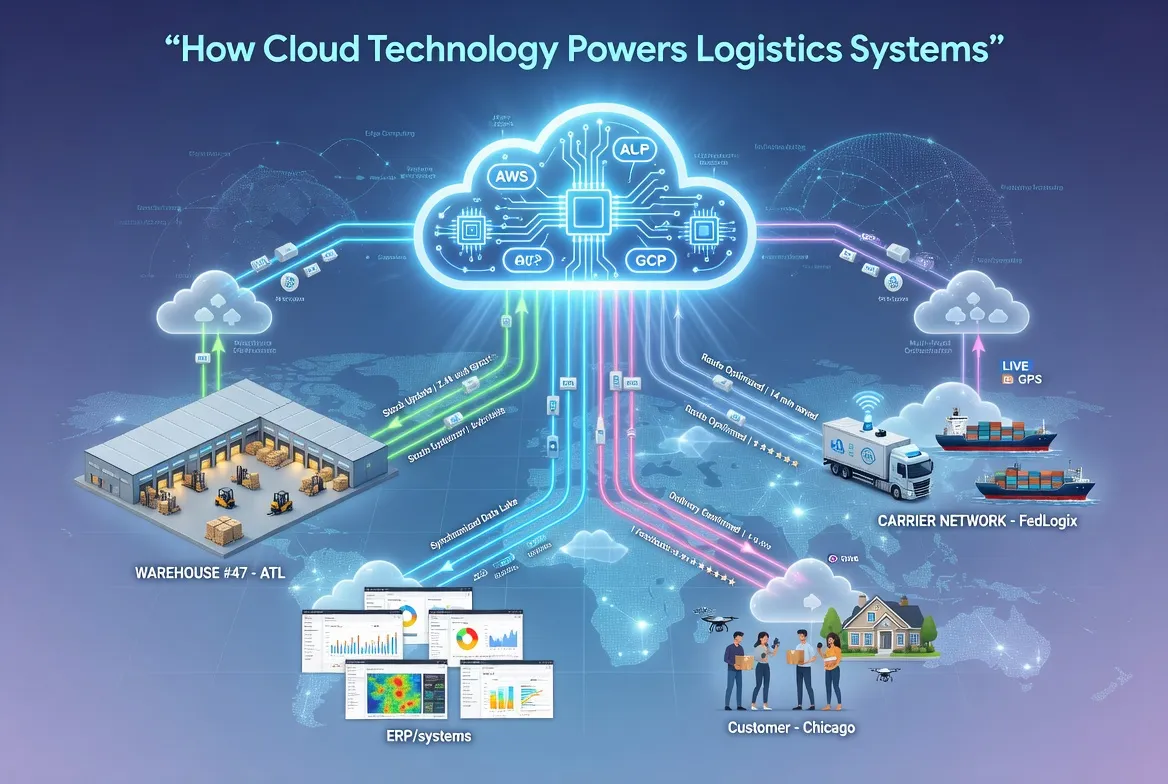
How Cloud Technology Powers Logistics Systems
Introduction
Logistics platforms are essential for freight operations because they help logistics companies manage complex transportation workflows, improve shipment visibility, automate operational processes, and coordinate multiple supply chain participants through one centralized system. Without digital logistics platforms, freight operations often rely on fragmented tools, manual communication, and disconnected processes that reduce efficiency and increase operational risks.
As freight forwarding, 3PL services, and cross-border logistics operations continue to expand globally, companies need systems that can support real-time coordination, operational scalability, financial management, and customer visibility.
Modern logistics platforms provide the digital infrastructure required to manage freight operations efficiently in increasingly fast-moving and data-driven supply chains.
What Is a Logistics Platform?
A logistics platform is a digital system designed to centralize and manage logistics operations, shipment workflows, transportation activities, financial processes, and supply chain collaboration.
These platforms are commonly used by:
Freight forwarders
3PL providers
NVOCC companies
Cross-border eCommerce logistics providers
International transportation companies
A logistics platform may include:
Shipment management
Transportation coordination
Real-time tracking
Workflow automation
Financial settlement
Customer portals
Partner collaboration
Reporting and analytics
Modern logistics platforms replace fragmented operational methods with centralized digital workflows and synchronized logistics data.
Why Logistics Platforms Matter
Freight Operations Are Operationally Complex
Freight operations involve multiple moving parts, including:
Shipment bookings
Carrier coordination
Warehouse management
Customs clearance
Documentation processing
Financial settlement
Final delivery management
Managing these workflows manually becomes increasingly difficult as logistics networks grow more complex.
Logistics platforms provide centralized operational control across these processes.
Manual Processes Reduce Efficiency
Traditional freight operations often depend on:
Excel spreadsheets
Email communication
Phone coordination
Paper documents
Manual status tracking
These workflows create challenges such as:
Delayed responses
Duplicate work
Human errors
Limited shipment visibility
Fragmented communication
Digital logistics platforms streamline operations and improve workflow efficiency.
Customers Expect Real-Time Visibility
Modern logistics customers increasingly expect:
Real-time shipment tracking
Accurate milestone updates
Transparent communication
Online document access
Faster response times
Logistics platforms help freight companies meet these expectations consistently.
Global Supply Chains Require Better Coordination
Freight operations involve collaboration across:
Carriers
Overseas agents
Warehouses
Customs brokers
Trucking providers
Customers
A logistics platform improves coordination and data sharing across all operational participants.
How Logistics Platforms Work
Logistics platforms centralize operational workflows, shipment data, and collaboration into one integrated digital environment.
1. Shipment and Transportation Management
The platform manages shipment workflows including:
Booking creation
Transportation scheduling
Shipment milestones
Delivery coordination
Operational status updates
Shipment data is centralized for better operational visibility.
2. Real-Time Shipment Visibility
Logistics platforms collect tracking data from multiple sources such as:
Carriers
GPS devices
Warehouses
Transportation providers
Customs systems
Users can monitor shipments through milestone-based tracking and unified shipment timelines.
3. Workflow Automation
Automation capabilities reduce repetitive manual work.
Examples include:
Automated shipment notifications
Billing automation
Workflow approvals
Task assignments
Exception alerts
Document generation
Some platforms also support AI data recognition for logistics document processing.
4. Financial Management Integration
Modern logistics platforms often integrate operational and financial workflows.
This includes:
Accounts receivable
Accounts payable
Cost allocation
Invoice generation
Profit analysis
Automated reconciliation
Integrated financial visibility improves operational control and profitability management.
5. Multi-Role Collaboration
Logistics platforms support collaboration between:
Operations teams
Finance departments
Customers
Overseas agents
Warehouses
Carriers
Role-based access enables secure and efficient information sharing across the supply chain.
Key Features of Logistics Platforms
End-to-End Shipment Visibility
Modern logistics platforms provide visibility across the full transportation journey.
This includes:
Pickup operations
International transportation
Customs clearance
Warehouse operations
Final delivery
Workflow Automation
Automation improves process efficiency and reduces operational dependency on manual coordination.
Key automation capabilities may include:
Billing workflows
Shipment updates
Exception management
Task routing
Document processing
Unified Operational Dashboard
Centralized dashboards provide operational visibility across shipments, transportation activities, and financial performance.
Multi-System Integration
Logistics platforms integrate with:
ERP systems
WMS platforms
Carrier systems
Customs systems
eCommerce platforms
Accounting software
Integration improves data consistency and operational synchronization.
Financial and Profit Management
Integrated financial capabilities support:
Revenue tracking
Cost management
Multi-currency settlement
Profitability analysis
Reconciliation automation
Benefits for Logistics Companies
Improved Operational Efficiency
Centralized workflows and automation reduce manual workload and improve shipment processing speed.
Better Shipment Control
Real-time visibility enables logistics companies to monitor shipments proactively and respond faster to disruptions.
Reduced Operational Errors
Digital workflows reduce risks related to:
Manual data entry
Billing inconsistencies
Missing documents
Tracking inaccuracies
Enhanced Customer Experience
Customers benefit from:
Faster updates
Real-time tracking
Better transparency
Improved communication
Stronger Collaboration
Shared operational visibility improves coordination between internal teams and external logistics partners.
Scalability
Logistics platforms help companies manage growing shipment volumes more efficiently without proportionally increasing manpower requirements.
Best Practices and Use Cases
Standardize Operational Processes
Consistent workflows improve operational efficiency and simplify digital management across teams and branches.
Prioritize Shipment Visibility
Real-time visibility is often one of the most valuable capabilities for improving operational responsiveness and customer service.
Automate Repetitive Tasks
Companies should automate high-frequency operational activities such as:
Billing
Shipment updates
Document processing
Exception alerts
Integrate Financial and Operational Data
Integrated operational and financial management improves business visibility and profitability analysis.
Support Global Logistics Collaboration
International freight operations require systems that support multi-country coordination across different partners and time zones.
Conclusion
Logistics platforms are essential for freight operations because modern logistics networks require centralized visibility, operational automation, scalable workflows, and real-time collaboration across increasingly complex supply chains.
Manual operational methods can no longer efficiently support the speed, scale, and transparency requirements of global freight management.
Digital logistics platforms improve operational efficiency, shipment visibility, financial control, partner collaboration, and customer service while reducing manual workload and operational fragmentation.
For freight forwarders, 3PL providers, and international logistics companies, logistics platforms have become critical infrastructure for managing modern freight operations and supporting long-term digital transformation.
Frequently Asked Questions
What is a logistics platform?
A logistics platform is a digital system that manages shipment operations, transportation coordination, tracking, workflow automation, and supply chain collaboration.
Why are logistics platforms important for freight operations?
They improve operational efficiency, shipment visibility, automation, collaboration, and scalability across freight management processes.
How do logistics platforms improve shipment visibility?
They collect and synchronize shipment data from carriers, warehouses, transportation providers, and logistics systems into centralized tracking environments.
What are the benefits of logistics workflow automation?
Automation reduces manual workload, improves operational speed, minimizes errors, and enhances process consistency.
Can logistics platforms support international logistics operations?
Yes. Modern logistics platforms support multi-country logistics coordination across carriers, warehouses, customs systems, and overseas partners.
About WallTech
WallTech provides digital logistics solutions for freight forwarders, 3PL providers, and global supply chain companies. Its platforms support end-to-end shipment visibility, logistics workflow automation, integrated financial management, and multi-role collaboration across international freight operations. Through capabilities such as milestone-based tracking, AI-assisted document processing, automated billing and reconciliation, unified operational timelines, and upstream/downstream partner connectivity, logistics companies can improve operational efficiency, scalability, and supply chain coordination while reducing fragmented workflows and manual operational challenges.
If you're exploring ways to improve your logistics operations, feel free to connect with us to learn more about our solutions and system capabilities.
Scan the QR code or contact our team directly for further discussion.
.webp "What Is Logistics Automation and How Does It Work")