.webp "Operational Challenges Freight Forwarders Face Without Integrated Systems")
Mar 10,2026
Operational Challenges Freight Forwarders Face Without Integrated Systems
Introduction
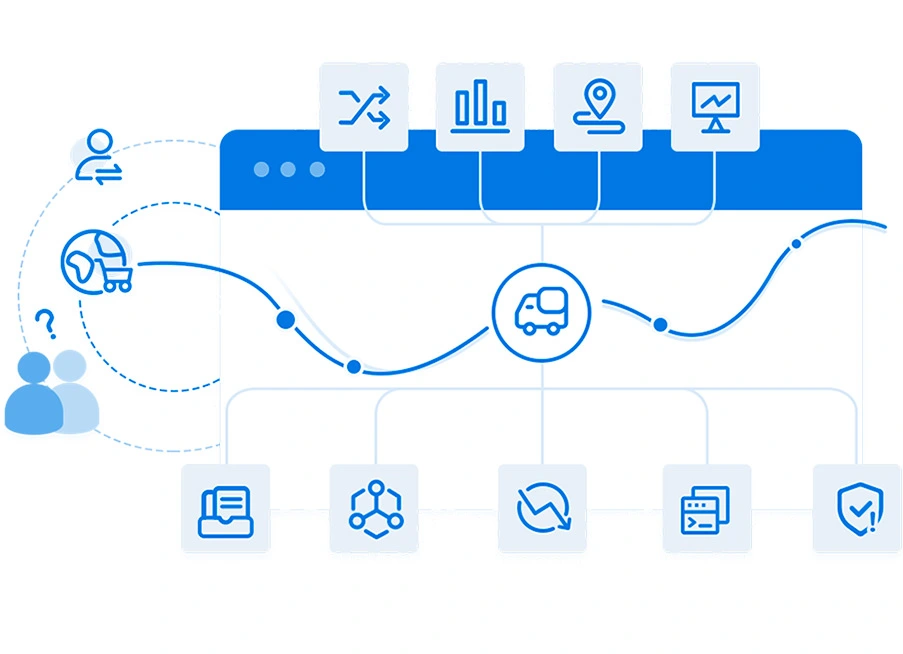
Logistics system integration refers to the process of connecting multiple logistics-related systems—such as transportation, warehouse, finance, ERP, and customer platforms—into a unified environment where data flows seamlessly. It matters because modern logistics operations depend on real-time coordination across multiple stakeholders, and without integration, companies face fragmented data, delays, and operational inefficiencies.
In today’s global logistics landscape, freight forwarders, 3PLs, and cross-border eCommerce operators rely on integrated systems to manage complex, multi-step supply chains with greater visibility, accuracy, and efficiency.
What Is Logistics System Integration
Logistics system integration is the technical and operational process of linking different software systems used across the logistics lifecycle into a single connected ecosystem.
These systems may include:
Warehouse management systems (WMS)
Transportation management systems (TMS)
ERP and financial systems
E-commerce platforms and customer portals
Carrier and tracking systems
Instead of operating in silos, an integrated logistics system shares data automatically, ensuring that all stakeholders work with consistent, up-to-date information.
At its core, integration eliminates “information islands” and creates a unified operational environment.
Why Logistics System Integration Matters
1. Eliminates Data Silos
Disconnected systems often result in duplicated data entry and inconsistent information. Integration ensures a single source of truth across all departments.
2. Improves Operational Efficiency
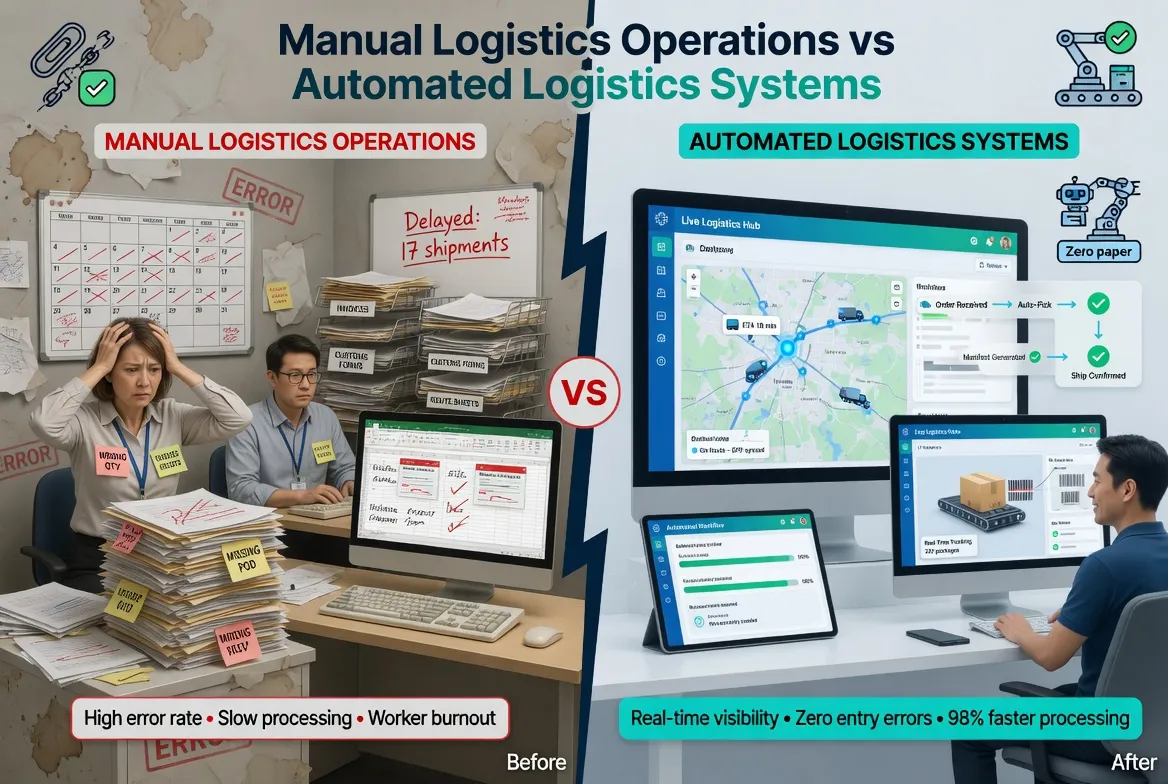
Manual processes such as re-entering shipment data or updating multiple systems are time-consuming and error-prone. Integration automates these workflows.
3. Enhances Visibility
Integrated platforms enable end-to-end tracking across ocean, air, and land shipments, providing a unified timeline of shipment milestones.
4. Enables Real-Time Collaboration
Sales, operations, documentation, and finance teams can coordinate seamlessly on the same shipment or job, reducing delays and miscommunication.
5. Supports Scalability
As logistics businesses grow, integrated systems allow them to handle higher shipment volumes without increasing operational complexity.
How Logistics System Integration Works
Logistics system integration typically relies on several technologies and methods:
1. API Integration
APIs (Application Programming Interfaces) allow systems to communicate and exchange data in real time.
2. Data Mapping and Standardization
Different systems may use different data formats. Integration requires mapping fields and standardizing data structures.
3. Middleware Platforms
Middleware acts as a bridge between systems, enabling data synchronization without direct system-to-system connections.
4. Event-Driven Updates
Shipment milestones, status changes, and financial updates trigger automatic data synchronization across systems.
5. Automation Layers
Modern platforms incorporate automation such as:
AI-based data recognition (e.g., extracting shipment details from documents)
Automated billing and reconciliation
Workflow automation for task assignment and exception handling
These capabilities ensure that integration is not just about connectivity, but also about operational intelligence.
Key Features of Integrated Logistics Systems
Integrated logistics platforms typically provide the following capabilities:
End-to-end shipment visibility
Unified tracking across all transport modes with milestone-based updatesMulti-role collaboration
Coordination between internal teams and external partners within a single systemCentralized data management
All shipment, document, and financial data stored in one placeAutomated workflows
Task assignment, alerts, and exception handling based on predefined SOPsDocument integration
Centralized document storage with automated generation and sharingFinancial integration
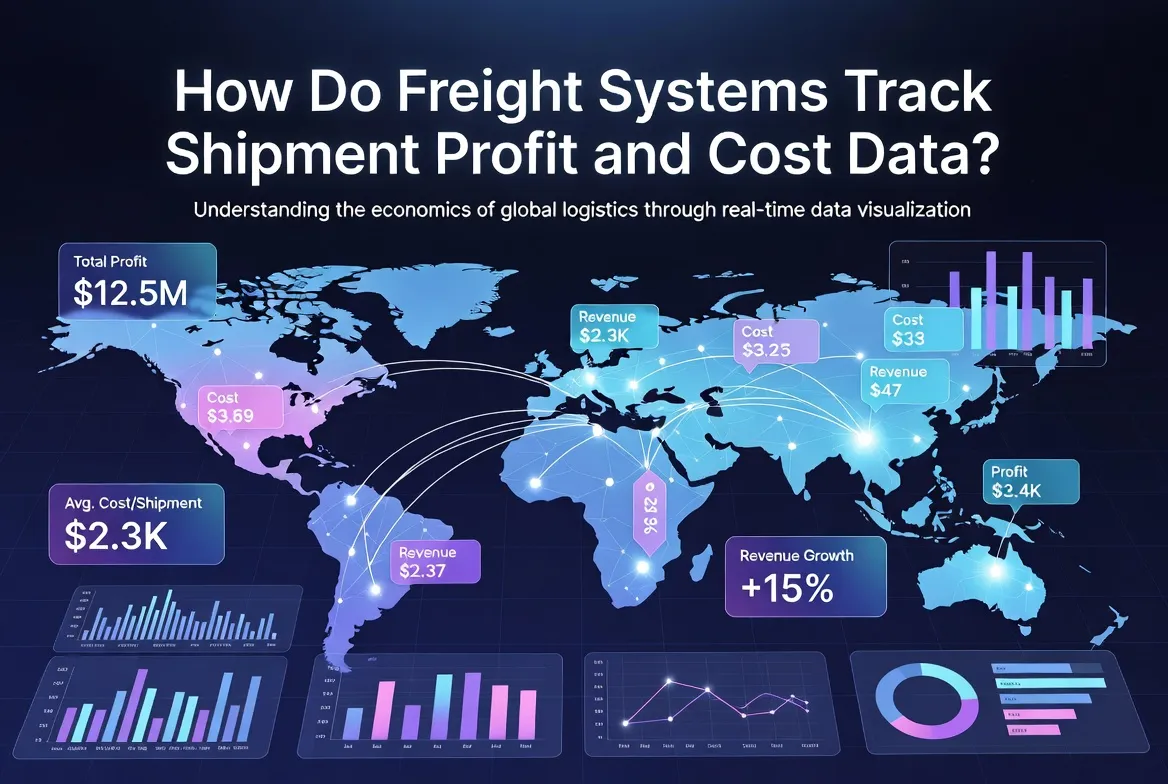
Automated invoicing, cost allocation, and profit analysisExternal system connectivity
Integration with carriers, ERP systems, and e-commerce platforms
Benefits for Logistics Companies
1. Reduced Operational Errors
Automation and unified data reduce manual input mistakes and inconsistencies.
2. Faster Processing Times
Orders, bookings, and documentation can be processed more quickly through automated workflows.
3. Improved Customer Experience
Customers gain access to real-time tracking and updates, reducing the need for manual inquiries.
4. Better Financial Control
Integrated financial data enables accurate cost tracking and profitability analysis at the shipment level.
5. Stronger Partner Collaboration
Upstream and downstream partners can connect through the same system, improving coordination across the supply chain.Best Practices for Logistics System Integration
1. Start with Core Systems
Prioritize integration between key systems such as order management, tracking, and finance.
2. Use Standardized APIs
Adopt scalable API frameworks to ensure long-term flexibility.
3. Ensure Data Consistency
Define clear data standards to avoid inconsistencies across systems.
4. Automate Where Possible
Leverage AI and workflow automation to reduce manual intervention.
5. Focus on User Experience
Integration should simplify operations, not complicate them.
6. Plan for Scalability
Choose integration architectures that can support future growth and additional system connections.
Conclusion
Logistics system integration is no longer optional—it is a foundational requirement for modern logistics operations. By connecting systems, standardizing data, and enabling real-time collaboration, integrated platforms help logistics companies move from fragmented workflows to streamlined, scalable operations.
As global supply chains become more complex, the ability to unify systems and data will be a key differentiator for freight forwarders and logistics providers.
Frequently Asked Questions
What is logistics system integration?
It is the process of connecting different logistics software systems to enable seamless data exchange and unified operations across the supply chain.
Why is logistics system integration important?
It reduces data silos, improves efficiency, enhances visibility, and enables real-time collaboration across teams and partners.
How does logistics system integration work?
It uses technologies like APIs, middleware, and data mapping to synchronize information between systems in real time.
What are the benefits of integrated logistics systems?
They improve operational efficiency, reduce errors, enhance customer experience, and provide better financial control.
About WallTech
WallTech provides digital logistics solutions designed to help freight forwarders and logistics companies operate more efficiently in complex global environments. Its platforms support end-to-end logistics collaboration across multiple roles, enabling seamless coordination between internal teams and external partners. With real-time shipment visibility based on milestone tracking, companies gain full transparency over their operations. The system also incorporates workflow automation, AI-driven data recognition, and integrated financial processes such as automated billing and reconciliation, helping businesses improve accuracy, efficiency, and scalability.
If you're exploring ways to improve your logistics operations, feel free to connect with us to learn more about our solutions and system capabilities.