

Apr 20,2026
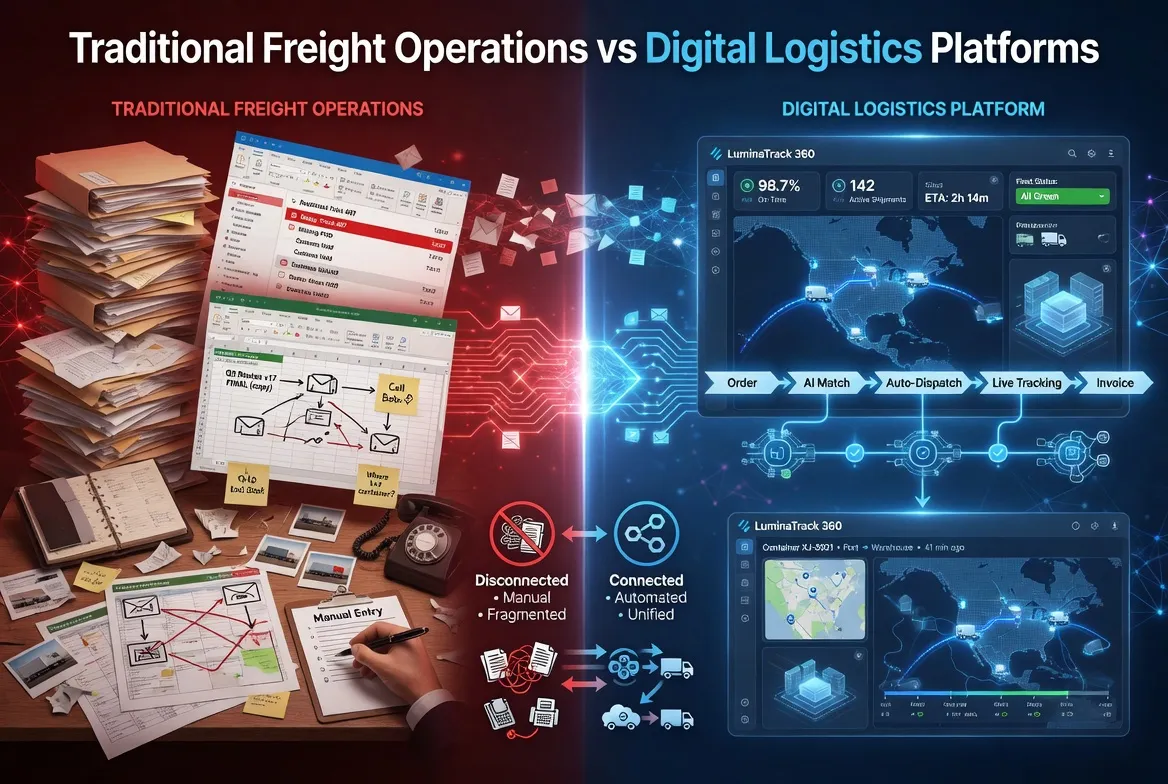
Traditional Freight Operations vs Digital Logistics Platforms
Efficient shipment processing is one of the most important operational challenges in logistics. Every shipment begins with an order, and the way that order is created, processed, and managed directly affects the efficiency of the entire logistics workflow.
In many logistics companies, order management is still handled through a combination of emails, spreadsheets, and manual coordination between departments. As shipment volumes increase, these fragmented processes can lead to delays, data inconsistencies, and operational errors.
Logistics order management systems address these issues by providing a structured platform where shipment orders can be created, processed, and monitored within a unified digital workflow.
Centralizing Order Information
One of the primary benefits of an order management system is the ability to centralize shipment data. Instead of storing order details across multiple documents or communication channels, the system records all relevant information within a single platform.
Order records typically include shipment details such as shipper information, cargo specifications, origin and destination locations, transportation methods, and service requirements. By organizing this information in a structured format, logistics teams can access complete order data at any stage of the shipment process.
Centralized order information improves operational clarity and reduces the risk of missing or inconsistent data.
Supporting Multiple Order Creation Methods
Modern logistics operations require flexibility in how shipment orders are created. Different customers and partners may submit order information through various channels.
Logistics order management systems typically support multiple order creation methods, including manual entry, batch uploads, and system integrations. Orders can also be synchronized automatically from external systems such as e-commerce platforms, ERP systems, or partner platforms.
This flexibility allows logistics companies to process orders efficiently regardless of how the shipment request is received.
Automating Operational Workflows
Once an order is created, it triggers a sequence of operational activities such as shipment planning, documentation preparation, tracking updates, and financial processing.
Order management systems automate many of these tasks by linking order data to operational workflows. For example, creating a shipment order can automatically generate operational tasks for relevant teams or initiate related processes within the system.
Automation reduces manual coordination and ensures that operational procedures follow a consistent workflow.
Improving Coordination Across Departments
Shipment processing often involves collaboration between multiple departments, including sales teams, operations staff, customer service representatives, and financial teams.
An order management system provides a shared operational environment where all departments can access the same order information. This improves coordination by ensuring that everyone works with consistent and up-to-date data.
Sales teams can monitor order progress, operations teams can manage shipment activities, and finance teams can prepare billing records based on the same shipment data.
Enhancing Shipment Tracking and Visibility
Order management systems also play an important role in tracking shipment progress. As a shipment moves through different operational stages, updates can be recorded directly within the order record.
These updates may include booking confirmations, departure events, transit milestones, and delivery status changes. By linking operational updates to the original shipment order, logistics companies maintain a complete record of the shipment lifecycle.
This visibility helps both internal teams and customers understand the current status of each shipment.
Reducing Manual Data Entry
Manual data entry is a common source of operational errors in logistics processes. When shipment information must be entered repeatedly across different systems or documents, the risk of mistakes increases.
Order management systems reduce this risk by allowing shipment data to be reused across different operational modules. Information entered during order creation can automatically populate other system processes, such as documentation generation or billing workflows.
Reducing repetitive data entry improves both efficiency and accuracy.
Supporting Scalable Logistics Operations
As logistics companies grow, managing increasing shipment volumes becomes more complex. Without structured systems, manual order processing can quickly become a bottleneck in operational workflows.
Logistics order management systems provide the digital infrastructure needed to support scalable operations. By centralizing order data, automating workflows, and improving cross-department coordination, these systems allow logistics companies to handle higher shipment volumes without sacrificing operational efficiency.
For modern logistics providers, an effective order management system is not only a tool for organizing shipment data but also a foundation for efficient and scalable logistics operations.