

.webp "Key Features of Partner Coordination Platforms")
Mar 13,2026
Key Features of Partner Coordination Platforms
Introduction
Collaboration between shippers and freight forwarders works through structured workflows, shared data systems, and coordinated communication across the shipment lifecycle. Modern logistics platforms enable this collaboration by connecting both parties within a unified system, allowing them to exchange information, track shipments, manage documents, and handle exceptions in real time.
In today’s global logistics environment—where shipments involve multiple stakeholders, transport modes, and regulatory requirements—effective collaboration is essential for ensuring efficiency, accuracy, and service reliability.
What is Collaboration Between Shippers and Forwarders
Collaboration between shippers and forwarders refers to the coordinated interaction and data exchange required to plan, execute, and monitor logistics operations.
It involves multiple activities, including:
Order placement and confirmation
Shipment planning and booking
Documentation preparation
Transportation execution
Tracking and status updates
Billing and financial reconciliation
Traditionally, this collaboration relied heavily on emails, phone calls, and spreadsheets. However, these methods often lead to:
Information silos
Delayed responses
Data inconsistencies
Limited visibility
Modern logistics systems replace fragmented communication with centralized, system-based collaboration, where all parties operate within the same workflow environment.
Why Collaboration Matters
1. Reduces Operational Inefficiencies
Manual coordination between shippers and forwarders often results in duplicated work, delays, and errors.
Structured collaboration ensures that all stakeholders access the same data, reducing inefficiencies.
2. Improves Data Accuracy
When information is shared through multiple channels, inconsistencies are common.
A unified system ensures that data is:
Standardized
Synchronized
Updated in real time
3. Enhances Visibility Across the Supply Chain
Collaboration platforms provide shared visibility into shipment status, enabling both parties to monitor progress and respond to changes.
4. Enables Faster Decision-Making
Real-time data access allows shippers and forwarders to:
Adjust plans quickly
Respond to disruptions
Optimize logistics operations
5. Strengthens Business Relationships
Transparent and efficient collaboration builds trust and improves long-term partnerships.
How Collaboration Works
Modern collaboration between shippers and forwarders is enabled through integrated logistics platforms that support multi-role interaction.
Step-by-step workflow:
1. Order Creation and Submission
Shippers submit shipment requests through a system interface or API.
Both shippers and forwarders can create orders within the platform, supporting multi-role order entry and reducing dependency on manual communication
2. Order Confirmation and Planning
Forwarders review the order details and:
Confirm booking
Select transport modes
Assign carriers
Plan routes
3. Data Synchronization Across Systems
Once confirmed, shipment data is synchronized across all relevant modules, including:
Transportation
Warehouse operations
Financial systems
4. Document Management and Sharing
Both parties can upload, access, and manage documents such as:
Bills of lading
Commercial invoices
Packing lists
Documents are stored centrally, eliminating the need for email exchanges.
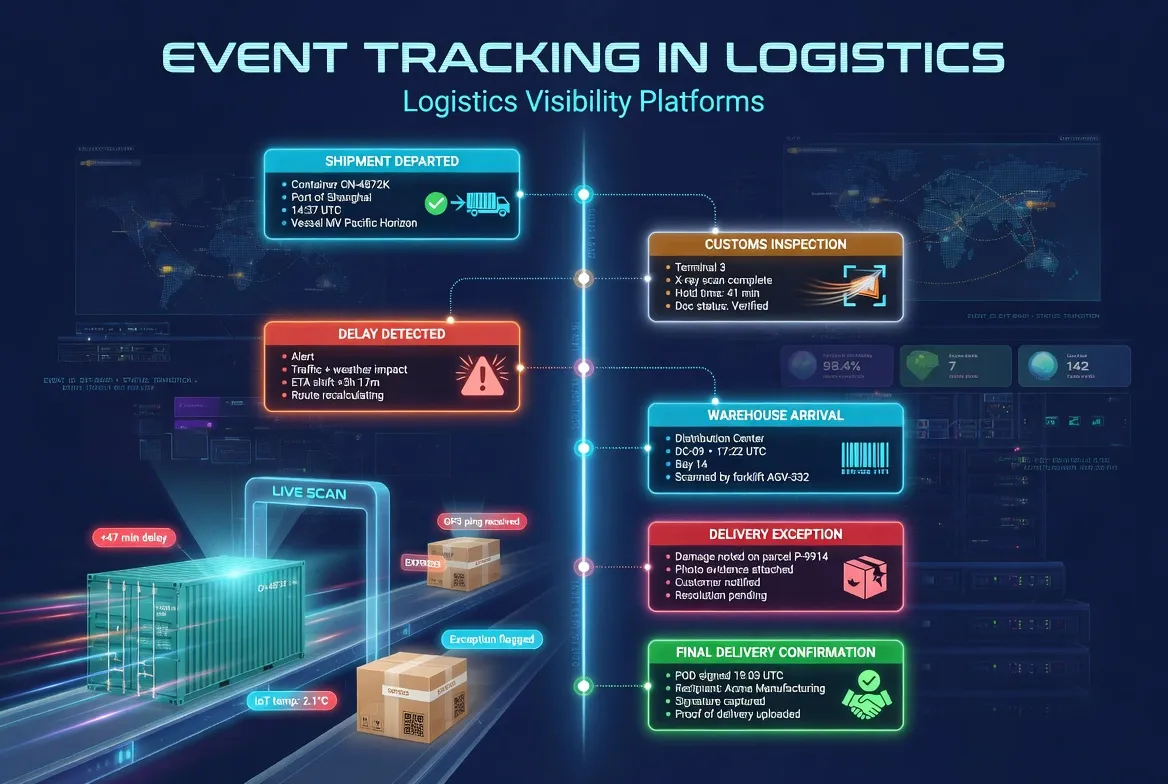
5. Shipment Execution and Tracking
As the shipment progresses:
Events are captured automatically
Milestones are updated in real time
Both parties can track progress through a unified timeline
6. Exception Handling and Alerts
If issues occur (e.g., delays, customs problems):
The system generates alerts
Relevant stakeholders are notified
Actions can be taken immediately
7. Financial Settlement
Billing and payment processes are managed within the system, including:
Invoice generation
Cost tracking
Payment reconciliation
Key Features / Key Capabilities
1. Multi-Role Collaboration
Shared access for shippers, forwarders, and partners
Role-based permissions
Unified workflow across all stakeholders
2. End-to-End Visibility
Real-time tracking across shipment lifecycle
Milestone-based monitoring
Unified timeline view
3. Centralized Data Management
Single source of truth for all shipment data
Real-time synchronization
Reduced data duplication
4. Document Management
Centralized document storage
Easy sharing and retrieval
Customizable document templates
5. Workflow Automation
Automated task assignments
SOP-driven processes
Reduced manual intervention
6. Financial Integration
Automated billing and invoicing
Cost and profit tracking
Reconciliation management
7. Integration with External Systems
API connectivity with ERP, WMS, and carrier systems
Seamless data exchange across platforms
8. AI and Automation Capabilities
AI-driven data recognition (e.g., OCR for documents)
Automated workflows and alerts
Intelligent exception handling
Benefits for Logistics Companies
1. Increased Operational Efficiency
Streamlined workflows reduce delays and manual tasks.
2. Improved Customer Satisfaction
Transparent collaboration improves service quality and trust.
3. Reduced Errors
Centralized data and automation minimize inconsistencies.
4. Better Resource Utilization
Teams can focus on high-value tasks instead of repetitive coordination.
5. Scalable Business Operations
System-based collaboration supports growth without increasing complexity.
Best Practices / Use Cases
1. Freight Forwarding Operations
Forwarders can collaborate with shippers on booking, tracking, and documentation within one system.
2. Cross-Border eCommerce Logistics
Enable coordination between sellers, forwarders, and last-mile providers.
3. Multi-Region Supply Chains
Support collaboration between global offices and partners.
4. Complex Multimodal Shipments
Coordinate sea, air, and land transport within a unified workflow.
Best Practices:
Use a centralized platform for all collaboration
Implement role-based access control
Standardize workflows using SOPs
Automate routine processes
Ensure real-time data synchronization
Conclusion
Effective collaboration between shippers and forwarders is essential for managing modern logistics operations. By replacing fragmented communication with integrated platforms, companies can achieve greater efficiency, accuracy, and transparency.
As supply chains become more complex, system-driven collaboration will continue to play a key role in enabling seamless coordination and delivering high-quality logistics services.
Frequently Asked Questions
What is collaboration between shippers and forwarders?
It refers to the coordinated interaction and data exchange required to manage shipments, including order creation, tracking, documentation, and financial processes.
How does collaboration work in logistics systems?
It works through integrated platforms that connect multiple roles, synchronize data, and enable real-time communication and workflow management.
Why is collaboration important in logistics?
It reduces inefficiencies, improves data accuracy, enhances visibility, and enables faster decision-making.
What tools enable logistics collaboration?
Customer portals, logistics platforms, APIs, and workflow automation systems enable collaboration.
What are the benefits of system-based collaboration?
Benefits include improved efficiency, reduced errors, better customer experience, and scalable operations.
About WallTech
WallTech provides digital logistics solutions that enable seamless collaboration between shippers, forwarders, and partners across global supply chains. Its platforms support multi-role coordination within a unified workflow, allowing all stakeholders to share data, manage shipments, and track progress in real time. With end-to-end visibility and milestone-based tracking, logistics operations become more transparent and controllable. Automation capabilities—including workflow automation, intelligent data processing, and integrated financial management—help reduce manual effort and improve operational efficiency, enabling logistics companies to scale their business with greater consistency and reliability.
If you're exploring ways to improve your logistics operations, feel free to connect with us to learn more about our solutions and system capabilities.
.webp "What Is a Logistics Cost Control System?")
.webp "Why Companies Use Shipment Lifecycle Management Systems")