

Dec 27,2022
Cross-Border Delivery Issue: Document Management
Introduction
Global supply chains involve thousands of repetitive operational tasks across multiple regions, systems, and partners. Managing these tasks manually leads to inefficiencies, delays, and errors. Logistics task automation improves supply chain performance by automating routine activities, ensuring consistency, and enabling real-time execution across global operations.
What is logistics task automation?
Logistics task automation refers to the use of digital systems to automatically execute specific operational tasks within logistics workflows.
These tasks include:
Order creation and data entry
Shipment status updates
Document generation
Task assignment and notifications
Billing and financial processing
Automation ensures that tasks are triggered and completed based on predefined rules without manual intervention.
Why logistics task automation is important
Global supply chains are complex due to:
Multiple stakeholders across regions
High volumes of transactions
Frequent status changes and updates
Dependency on timely execution
Without automation:
Tasks are delayed or missed
Manual errors increase
Coordination becomes inefficient
Operational costs rise
Automation helps streamline operations and improve reliability.
How logistics task automation supports global supply chains
1. Automating repetitive operational tasks
Many logistics tasks are repetitive and rule-based.
Examples include:
Creating shipment records
Updating tracking statuses
Generating documents
Automation eliminates manual effort and reduces the risk of errors.
2. Enabling real-time task execution
Automated systems trigger actions based on events.
For example:
Order received → create shipment record
Shipment dispatched → update status
Delay detected → send alert
This ensures that tasks are executed immediately when conditions are met.
3. Improving coordination across stakeholders
Global supply chains involve:
Internal teams (sales, operations, finance)
External partners (carriers, suppliers, customs agents)
Automation ensures that all stakeholders receive timely updates and work with consistent data.
Systems can synchronize information across different participants within a single workflow.
4. Integrating multi-system operations
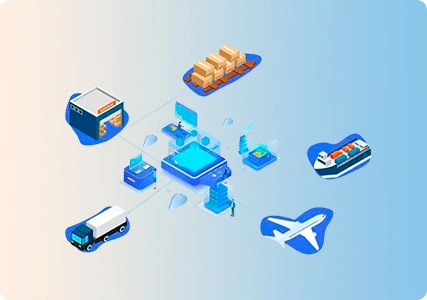
Task automation connects multiple systems:
ERP systems
Warehouse management systems
Carrier and tracking systems
Financial platforms
This enables seamless data flow and reduces the need for manual data transfer.
5. Enhancing visibility and tracking
Automated tasks generate real-time operational data.
Capabilities include:
Automatic tracking event updates
Centralized visibility dashboards
End-to-end shipment monitoring
This improves transparency across global supply chains.
6. Supporting exception management
Automation helps detect and handle disruptions.
For example:
Late shipment → trigger warning
Missing data → prompt correction
Abnormal event → notify responsible team
This enables faster response to issues and reduces operational risks.
7. Automating financial processes
Task automation extends to financial workflows:
Automatic billing generation
Cost allocation and tracking
Accounts receivable and payable management
This ensures alignment between operations and financial performance.
8. Standardizing global operations
Automation enforces standardized processes across regions.
This ensures that:
All shipments follow the same workflow
Tasks are executed consistently
Operational quality is maintained
Standardization supports scalability and efficiency.
Key features of logistics task automation systems
Modern systems typically include:
Rule-based task automation engines
Event-driven workflow triggers
Multi-role collaboration within workflows
Integration with external systems and partners
Real-time tracking and visibility
Exception detection and alerting
Financial process automation
These features enable efficient and scalable global logistics operations.
Benefits of logistics task automation
Companies that implement task automation can achieve:
Increased operational efficiency
Reduced manual workload and errors
Faster response to operational events
Improved coordination across global teams
Better scalability for growing supply chains
Automation allows organizations to manage complexity more effectively.
How modern logistics platforms enable task automation
Modern logistics platforms act as automation hubs within supply chains.
They:
Define and execute tasks based on predefined rules
Integrate systems and partners into unified workflows
Provide real-time visibility into operations
Support collaboration across global networks
By automating tasks across the supply chain, these platforms improve efficiency and operational control.
Conclusion
Logistics task automation is essential for supporting global supply chains. By automating repetitive tasks and enabling real-time execution, companies can reduce complexity, improve efficiency, and enhance reliability.
As global logistics operations continue to expand, task automation will play a critical role in driving scalable and efficient supply chain management.