


Apr 23,2026
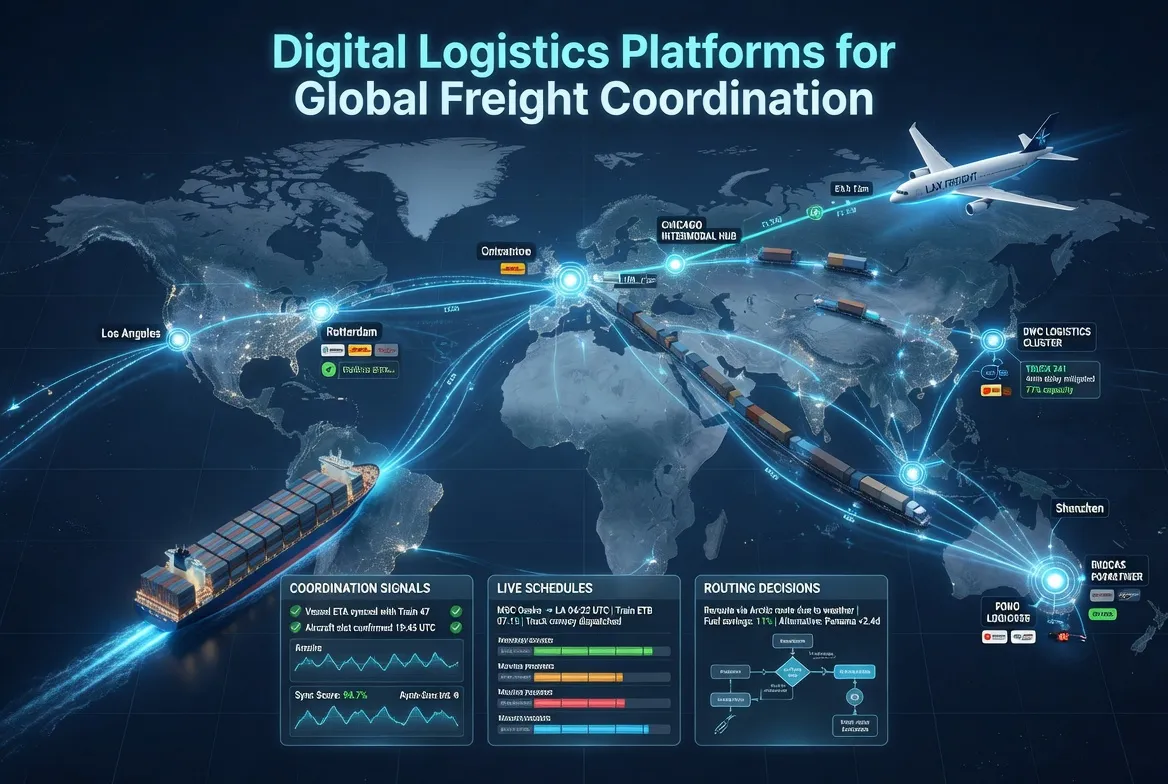
Digital Logistics Platforms for Global Freight Coordination
Introduction
In logistics operations, data flows continuously across multiple systems, departments, and partners. Orders, shipment statuses, inventory levels, and financial data must remain consistent across platforms to ensure smooth execution. However, without proper synchronization, discrepancies can arise—leading to delays, errors, and operational inefficiencies.
Managing operational data synchronization effectively is critical for maintaining accuracy, improving visibility, and enabling real-time decision-making in modern logistics environments.
What Is Operational Data Synchronization
Operational data synchronization refers to the process of ensuring that data across different systems and platforms remains consistent, accurate, and up to date.
In logistics, this includes synchronizing data across:
Order management systems
Warehouse systems
Transportation and carrier platforms
Financial and billing systems
External partner systems
The goal is to ensure that all stakeholders are working with the same data at any given time, regardless of which system they are using.
Why Data Synchronization Is Important
1. Maintaining Data Consistency
When systems are not synchronized, conflicting information can arise, leading to operational confusion.
2. Supporting Real-Time Operations
Modern logistics requires real-time updates. Synchronization ensures that all systems reflect the latest information instantly.
3. Reducing Manual Intervention
Automated synchronization eliminates the need for manual data updates across systems.
4. Improving Decision-Making
Accurate and consistent data enables better operational and strategic decisions.
5. Enhancing Customer Experience
Reliable and up-to-date information improves shipment tracking and communication with customers.
How Operational Data Synchronization Works
1. Centralized Data Management
A central platform aggregates data from multiple sources and distributes updates across connected systems.
2. API-Based Integration
Systems communicate through APIs, enabling real-time data exchange.
3. Event-Driven Updates
Changes in one system trigger automatic updates in others, ensuring consistency across platforms.
4. Data Validation and Rules
Validation rules ensure that only accurate and complete data is synchronized.
5. Continuous Monitoring
Systems monitor data flows and identify synchronization issues in real time.
For example, integrated logistics platforms synchronize operational data across multiple systems and workflows, ensuring that shipment, warehouse, and financial data remain aligned throughout the entire process.
Best Practices for Managing Data Synchronization
1. Establish a Single Source of Truth
Define a primary system or data hub where core data is maintained. All other systems should synchronize with this source to avoid inconsistencies.
2. Use Standardized Data Formats
Ensure that data is structured consistently across systems to enable smooth integration and accurate synchronization.
3. Implement Real-Time Synchronization
Where possible, use real-time or near-real-time synchronization to keep all systems updated instantly.
4. Design Clear Data Ownership
Assign ownership for different data types (e.g., orders, inventory, financial data) to specific systems or teams to avoid conflicts.
5. Automate Data Flows
Reduce manual intervention by automating data exchange between systems.
6. Monitor and Manage Exceptions
Implement monitoring tools to detect synchronization failures and resolve issues quickly.
7. Ensure Data Security and Access Control
Protect sensitive data by implementing role-based access and secure data transmission protocols.
8. Plan for Scalability
Design synchronization processes that can handle increasing data volumes and system complexity.
Key Features of Effective Data Synchronization Solutions
1. Real-Time Data Updates
Ensures that all systems reflect the latest information instantly.
2. Integration Capabilities
Supports connections with multiple internal and external systems.
3. Data Transformation Tools
Enables conversion of data formats for compatibility.
4. Error Handling and Alerts
Detects and notifies users of synchronization issues.
5. Audit and Tracking
Provides visibility into data changes and synchronization activities.
Benefits of Effective Data Synchronization
1. Improved Operational Efficiency
Automated synchronization reduces manual work and accelerates workflows.
2. Enhanced Data Accuracy
Consistent data across systems minimizes errors and discrepancies.
3. Better Collaboration
Teams and partners can rely on shared, up-to-date information.
4. Faster Response to Changes
Real-time data enables quick reactions to disruptions or exceptions.
5. Reduced Operational Risks
Accurate data reduces the risk of delays, compliance issues, and financial errors.
Conclusion
Operational data synchronization is a critical component of modern logistics management. As supply chains become more interconnected, ensuring consistent and accurate data across systems is essential for maintaining efficiency and reliability.
By following best practices such as establishing a single source of truth, automating data flows, and implementing real-time synchronization, logistics companies can improve data integrity, enhance operational performance, and support scalable growth in an increasingly complex global environment.
.webp "How does Freight Forwarding Systems Manage Global Agent Collaboration")

.webp "The Role of Shipment Collaboration in Modern Logistics")