




Mar 25,2025
New Partnership: WallTech & Haifeng International Supply Chain | Optimizing Cross-border Shipment Management through Comprehensive Logistics Solutions
A digital logistics infrastructure refers to the underlying technology framework that supports the operation, integration, and coordination of modern logistics systems. It includes cloud platforms, data integration layers, operational software, communication interfaces, and digital tools that enable logistics companies to manage shipments, information, and financial processes efficiently.
Why Digital Infrastructure Matters in Logistics
Global logistics networks involve large volumes of data and coordination across many stakeholders, including shippers, freight forwarders, carriers, warehouses, and customs authorities. Traditional logistics processes that rely heavily on manual communication and fragmented systems often struggle to keep up with the speed and complexity of modern supply chains.
Digital logistics infrastructure provides the technological foundation needed to support scalable, connected, and data-driven logistics operations.
Key Components of Digital Logistics Infrastructure
Cloud-Based Platforms
Cloud technology enables logistics systems to operate across multiple locations and organizations. Cloud platforms allow companies to store data securely, access systems remotely, and scale infrastructure as business volumes grow.
Data Integration Layer
A digital logistics infrastructure connects various systems such as operational platforms, warehouse systems, transportation systems, and financial systems. Data integration allows these platforms to exchange information automatically and maintain consistent records.
Operational Software Systems
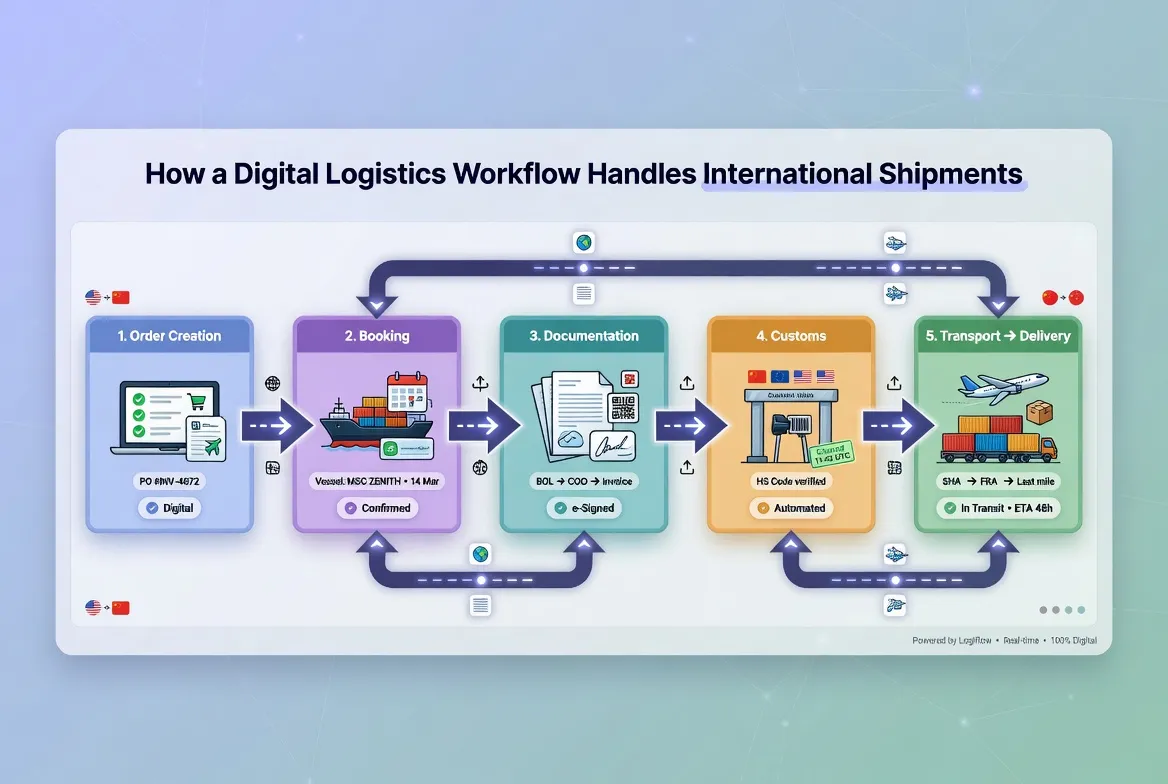
Operational systems form the core of logistics infrastructure. These systems support activities such as shipment execution, booking management, tracking, documentation, and billing.
Communication Interfaces
Digital communication tools allow systems to exchange information with external partners such as carriers, ports, and customs authorities. This connectivity enables real-time updates and reduces manual data exchange.
Data Storage and Security
Modern logistics infrastructure includes secure data storage and backup mechanisms. Data encryption, access control, and disaster recovery strategies help ensure the safety and availability of operational data.
How Digital Logistics Infrastructure Supports Logistics Operations
With a strong digital infrastructure in place, logistics companies can coordinate shipments more efficiently, access information in real time, and automate many operational processes.
For example, operational data from shipments, warehouses, and financial records can be synchronized across systems, allowing different departments to work with consistent and up-to-date information.
Who Uses Digital Logistics Infrastructure?
Digital logistics infrastructure supports a wide range of organizations, including:
Freight forwarding companies
Third-party logistics providers (3PL)
Cross-border logistics operators
Global supply chain organizations
Multinational companies managing international transportation
Any organization managing complex logistics networks can benefit from a robust digital infrastructure.
Business Benefits
Establishing digital logistics infrastructure can help companies:
Improve operational coordination
Increase data accuracy
Enable real-time information access
Support scalable logistics operations
Strengthen system reliability and security
It forms the foundation for modern logistics digitalization.
Conclusion
Digital logistics infrastructure represents the technological backbone that enables modern logistics operations. By connecting operational systems, data flows, and communication channels, it supports efficient, transparent, and scalable supply chain management.

.webp "How Global Freight Operations Support Global Supply Chains")


