.webp "What Is Customs Clearance Management Software")
Apr 09,2026
What Is Customs Clearance Management Software
Introduction
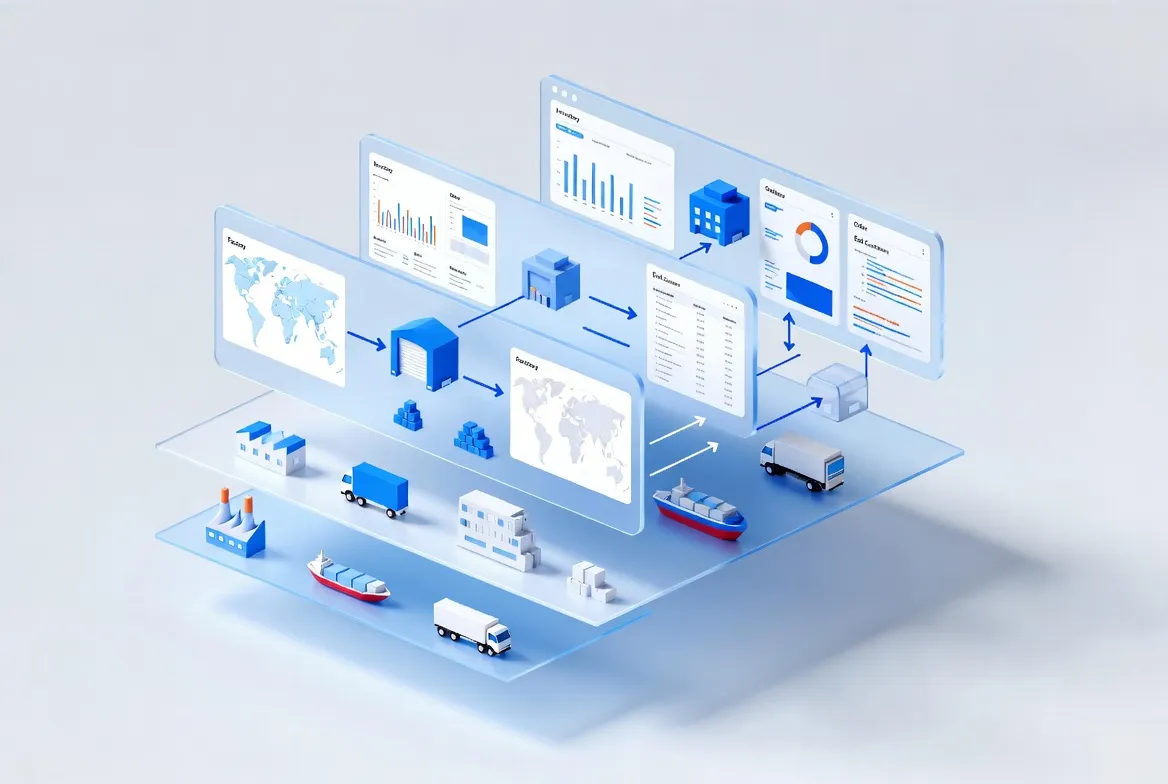
Logistics platforms share shipment data across systems by using APIs, centralized data models, and event-driven synchronization to ensure that shipment information—such as order details, tracking milestones, documents, and financial data—is consistently updated and accessible across all connected systems. This enables real-time data flow between internal teams, external partners, and customer-facing platforms, ensuring alignment and visibility throughout the shipment lifecycle.
For freight forwarders, 3PLs, and cross-border eCommerce logistics providers, seamless shipment data sharing is essential for reducing operational friction and enabling efficient, transparent supply chain operations.
What is Shipment Data Sharing in Logistics?
Shipment data sharing refers to the process of distributing and synchronizing shipment-related information across multiple systems and stakeholders involved in the logistics process.
This data typically includes:
Order and shipment details
Tracking milestones and status updates
Transport and routing information
Shipping documents (e.g., invoices, packing lists)
Financial data (costs, billing, payments)
Shipment data must be shared across systems such as:
ERP platforms
WMS systems
Carrier systems
Customer portals
Partner and agent platforms
Effective data sharing ensures that all stakeholders have access to accurate and up-to-date shipment information.
Why Shipment Data Sharing Matters
Without efficient data sharing, logistics operations become fragmented.
Common challenges include:
Data silos between systems
Inconsistent shipment information across platforms
Delays in updating shipment status
Manual communication through emails and spreadsheets
Limited visibility for customers and partners
These issues can lead to operational inefficiencies, errors, and poor customer experience.
By enabling seamless data sharing, logistics platforms:
Improve transparency across the supply chain
Enhance coordination between stakeholders
Reduce manual work and errors
Enable faster decision-making
How Logistics Platforms Share Shipment Data Across Systems
Modern logistics platforms use multiple mechanisms to ensure effective data sharing:
1. API-Based Data Exchange
APIs are the primary method for real-time data sharing.
Shipment data is automatically pushed and pulled between systems
External platforms can access shipment status instantly
Updates are synchronized continuously
This ensures real-time consistency across all connected systems.
2. Centralized Data Hub
Logistics platforms often act as a central data repository:
All shipment data is stored in one system
External systems connect to this central platform
Data is distributed to connected systems as needed
This creates a single source of truth for shipment information.
3. Event-Driven Synchronization
Event-based architecture ensures timely updates:
Shipment milestones trigger data updates
Systems are notified when key events occur
Data is automatically synchronized across platforms
This supports real-time visibility and proactive management.
4. Data Standardization and Mapping
Different systems use different formats and structures.
Logistics platforms:
Standardize shipment data fields
Map data between systems
Ensure consistency across platforms
This enables seamless communication between diverse systems.
5. Role-Based Data Access
Data sharing is controlled through role-based access:
Internal teams (operations, finance, sales) access relevant data
External partners access shipment-specific information
Customers access tracking and document data
This ensures secure and efficient data sharing.
Key Features of Shipment Data Sharing Platforms
Advanced logistics platforms offer:
Unified shipment timeline: Consolidated view of all shipment events
Real-time tracking: Continuous updates across systems
End-to-end visibility: Coverage across all shipment stages
Multi-role collaboration: Shared access for internal and external stakeholders
Workflow automation: Event-triggered data sharing and task execution
AI-driven document processing: Automated extraction and sharing of document data
Financial data synchronization: Automated billing and reconciliation
These features enable efficient and transparent data sharing across the supply chain.
Benefits for Logistics Companies
1. Improved Visibility
Access real-time shipment data across all systems
Provide customers with accurate tracking information
Monitor operations proactively
2. Enhanced Collaboration
Enable seamless communication between teams and partners
Share data across upstream and downstream stakeholders
Reduce reliance on manual communication
3. Increased Efficiency
Eliminate duplicate data entry
Automate data synchronization
Reduce operational workload
4. Better Data Accuracy
Ensure consistent data across systems
Minimize errors and discrepancies
Improve reporting and analytics
5. Stronger Customer Experience
Provide transparent, real-time shipment updates
Reduce customer inquiries
Build trust through accurate information
Best Practices / Use Cases
Best Practices
Use API-first integration for real-time data sharing
Standardize shipment data structures across systems
Implement role-based access control for secure data sharing
Automate event-driven workflows to ensure timely updates
Ensure data security and compliance across all integrations
Use Cases
Customer Tracking Portals
Provide customers with real-time shipment updates through integrated platforms.Multi-System Logistics Operations
Share shipment data between ERP, WMS, and logistics systems for coordinated execution.Cross-Border Logistics Management
Synchronize shipment data across international partners and systems.Financial Data Sharing
Automatically share shipment cost and billing data across finance systems.
Conclusion
Sharing shipment data across systems is a fundamental capability of modern logistics platforms. By enabling real-time data exchange, standardized information flow, and automated workflows, logistics companies can eliminate data silos, improve visibility, and enhance collaboration.
For freight forwarders and logistics providers, effective shipment data sharing is essential to building efficient, transparent, and scalable supply chain operations.
Frequently Asked Questions
What is shipment data sharing in logistics?
It is the process of distributing and synchronizing shipment information across multiple systems and stakeholders.
How do logistics platforms share shipment data?
They use APIs, centralized data hubs, event-driven synchronization, and data mapping techniques to ensure consistent data exchange.
Why is shipment data sharing important?
It improves visibility, enhances collaboration, reduces errors, and enables more efficient logistics operations.
What are the benefits of sharing shipment data across systems?
Benefits include real-time tracking, improved efficiency, better data accuracy, and enhanced customer experience.
About WallTech
WallTech provides digital logistics solutions that enable seamless shipment data sharing across systems and stakeholders. Its platform supports end-to-end collaboration, allowing multiple roles and partners to access and act on the same shipment data in real time. With milestone-based tracking and unified timelines, it delivers full visibility across the shipment lifecycle. Combined with workflow automation, AI-driven document recognition, and automated financial processes such as billing and reconciliation, WallTech helps logistics companies streamline operations and improve scalability in global logistics environments.
If you're exploring ways to improve your logistics operations, feel free to connect with us to learn more about our solutions and system capabilities.