




Jan 10,2024
New Forecast for World Freight Logistics: Ocean Freight Rates in 2024 - 2
Introduction
Freight platforms automate shipment coordination by centralizing communication, standardizing workflows, and enabling real-time data sharing across all stakeholders involved in a shipment. Through workflow automation, milestone-based tracking, and system integration, these platforms ensure that coordination between internal teams and external partners happens seamlessly, without relying on manual follow-ups, emails, or fragmented tools.
For freight forwarders, 3PL providers, and cross-border eCommerce logistics companies, shipment coordination is one of the most complex and time-consuming aspects of operations. Automation significantly reduces delays, improves accuracy, and ensures that every party involved stays aligned throughout the shipment lifecycle.
What is Shipment Coordination in Logistics?
Shipment coordination refers to the process of managing and synchronizing all activities and stakeholders involved in moving goods from origin to destination.
This includes coordination between:
Sales and customer service teams
Operations teams handling bookings and documentation
Warehouses managing inbound and outbound cargo
Carriers handling transportation
Customs brokers managing clearance
Last-mile delivery providers
Effective coordination ensures that each step of the shipment process is executed in the correct sequence, with accurate information shared among all parties.
Why Shipment Coordination Matters
In traditional logistics environments, coordination is often manual and fragmented:
Communication relies heavily on emails, calls, and messaging tools
Information is stored across multiple systems or spreadsheets
Updates are delayed or inconsistent
Responsibilities are not clearly defined
This leads to:
Operational delays and missed deadlines
Increased risk of errors and miscommunication
Lack of visibility into shipment progress
Difficulty managing exceptions
Automating coordination is critical because it:
Ensures timely execution of tasks
Improves communication efficiency
Enhances transparency across stakeholders
Reduces operational risks
How Freight Platforms Automate Shipment Coordination
Freight platforms automate coordination through structured workflows, shared data environments, and real-time communication mechanisms.
1. Centralized Coordination Platform
All shipment-related activities are managed within a single system:
Unified data access for all stakeholders
Centralized communication and updates
Elimination of fragmented tools and information silos
This creates a shared operational environment for coordination.
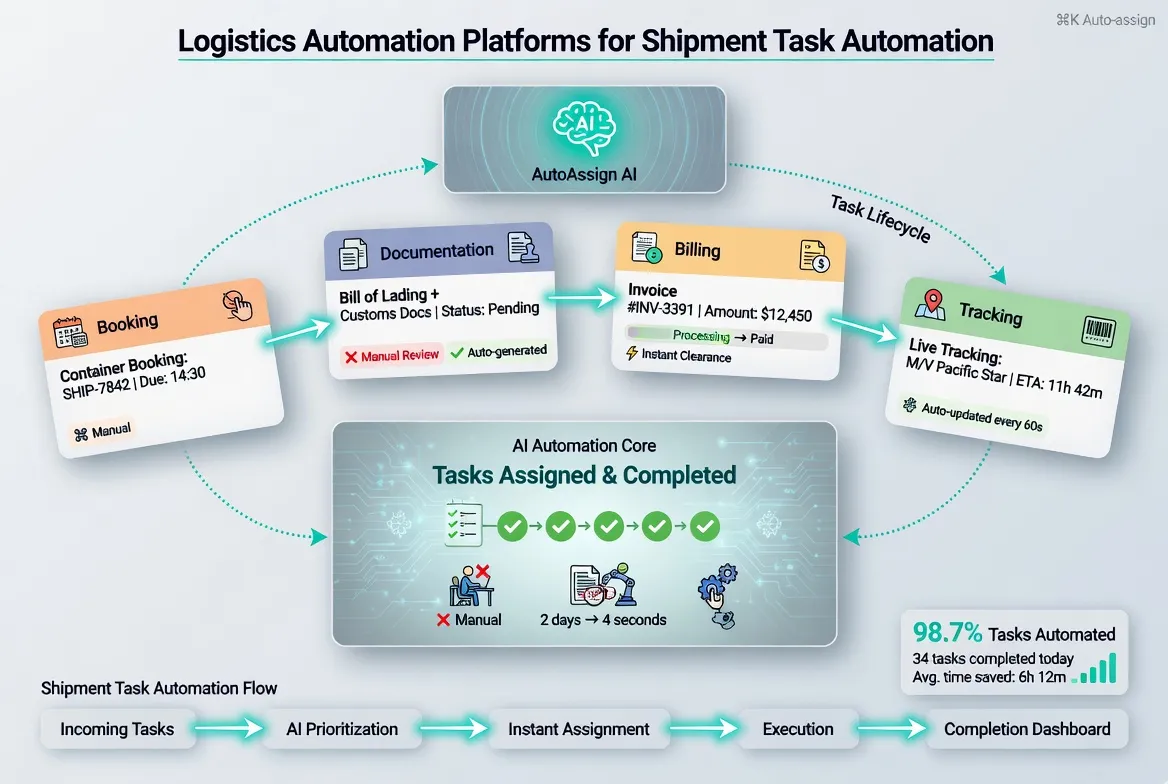
2. Workflow-Driven Task Management
Coordination tasks are automated through workflows:
Tasks are automatically assigned based on shipment stage
Dependencies between tasks are clearly defined
Next steps are triggered once previous tasks are completed
This ensures that coordination follows a structured and predictable process.
3. Real-Time Milestone Tracking
Freight platforms track shipments through predefined milestones:
Booking confirmed
Cargo received
Customs cleared
In transit
Delivered
Each milestone update is automatically reflected in a unified timeline, enabling all parties to stay aligned in real time.
4. Multi-Role Collaboration
Freight platforms enable seamless collaboration between:
Internal teams (sales, operations, finance)
External partners (carriers, warehouses, agents, customers)
Through role-based access:
Each stakeholder sees relevant information
Responsibilities are clearly defined
Collaboration occurs within the system
This eliminates the need for manual coordination through emails and calls.
5. Automated Notifications and Alerts
Systems automatically send notifications for:
Task assignments
Milestone updates
Delays or exceptions
Required actions
This ensures that all stakeholders are informed without manual follow-ups.
6. Integration with External Systems
Freight platforms integrate with:
Carrier tracking systems
Warehouse management systems
ERP and eCommerce platforms
Through API and EDI connections:
Data is synchronized automatically
Coordination across systems becomes seamless
7. Automated Document and Data Sharing
Documents and shipment data are shared automatically:
Upload once, access by all relevant parties
Version control ensures consistency
Real-time updates eliminate outdated information
This reduces manual document exchange and improves accuracy.
8. Financial Coordination Automation
Coordination also includes financial processes:
Automatic cost allocation across stakeholders
Invoice generation based on shipment milestones
Accounts receivable and payable tracking
Automated reconciliation
This ensures financial alignment alongside operational coordination.
Key Features / Key Capabilities
Freight platforms that automate shipment coordination typically include:
Centralized collaboration platforms
Workflow-based task automation
Real-time milestone tracking and unified timelines
Role-based access and responsibility management
Automated notification and alert systems
Document management and sharing capabilities
Integrated financial automation
API/EDI integration with external systems
These features enable efficient and scalable coordination across complex logistics networks.
Benefits for Logistics Companies
1. Improved Coordination Efficiency
Reduced manual communication
Faster alignment between stakeholders
2. Enhanced Visibility
Real-time tracking of shipment progress
Transparent status updates for all parties
3. Reduced Operational Risks
Fewer errors due to miscommunication
Better handling of exceptions and delays
4. Increased Productivity
Less time spent on coordination tasks
More focus on value-added activities
5. Scalable Collaboration
Ability to manage more shipments and partners
Seamless coordination across global operations
Best Practices / Use Cases
1. Freight Forwarders
Coordinate multi-leg international shipments
Collaborate with overseas agents and carriers
2. 3PL Providers
Manage complex supply chain operations for multiple clients
Ensure seamless coordination between warehousing and transportation
3. Cross-Border eCommerce Logistics
Handle high-volume shipments with multiple stakeholders
Provide real-time updates to customers
4. Multi-Partner Logistics Networks
Connect upstream suppliers and downstream delivery partners
Enable unified coordination across the entire supply chain
Conclusion
Freight platforms automate shipment coordination by replacing manual, fragmented communication with structured, system-driven workflows and real-time data sharing. By enabling centralized collaboration, milestone tracking, and automated notifications, these platforms ensure that all stakeholders remain aligned throughout the shipment lifecycle.
As logistics networks become more complex, automated coordination is essential for improving efficiency, reducing risks, and delivering reliable logistics services.
Frequently Asked Questions
What is shipment coordination in logistics?
Shipment coordination involves managing and synchronizing all activities and stakeholders required to move goods from origin to destination.
How do freight platforms automate coordination?
They use workflow automation, centralized data systems, real-time tracking, and automated notifications to streamline coordination processes.
Why is coordination important in freight operations?
Effective coordination ensures timely execution, reduces errors, improves communication, and enhances overall operational efficiency.
What are the benefits of automated shipment coordination?
Benefits include faster communication, improved visibility, reduced operational risks, increased productivity, and better scalability.
About WallTech
WallTech provides digital logistics solutions that help freight forwarders, 3PL providers, and cross-border eCommerce logistics companies automate shipment coordination. Its platforms enable end-to-end logistics collaboration by connecting multiple roles and stakeholders within a unified system. With real-time shipment visibility supported by milestone-based tracking, along with workflow and financial automation capabilities such as automated billing and reconciliation, WallTech helps logistics companies streamline coordination, improve efficiency, and scale operations effectively in complex global supply chains.
If you're exploring ways to improve your logistics operations, feel free to connect with us to learn more about our solutions and system capabilities.
.webp "How Freight Forwarding Platforms Improve Shipment Data Consistency")


