Apr 24,2026
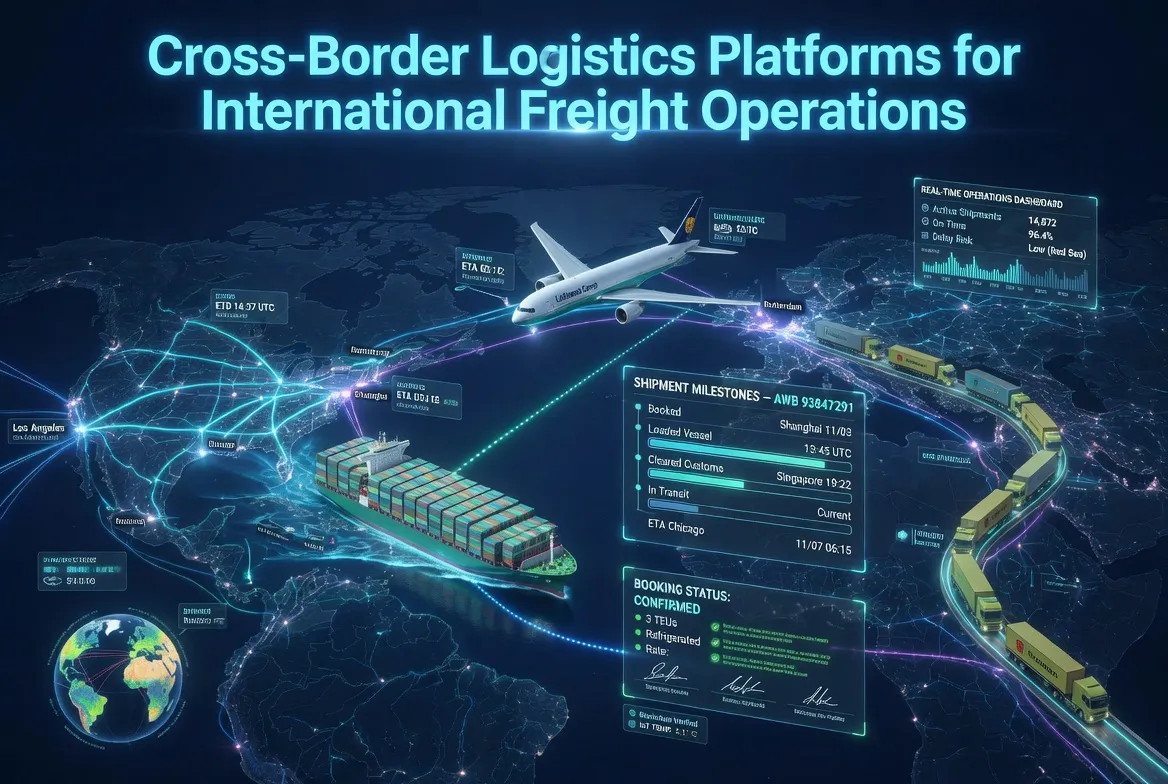
Cross-Border Logistics Platforms for International Freight Operations
Financial settlement is a critical part of logistics operations. Each shipment may involve multiple charges, including freight costs, service fees, documentation charges, and various operational expenses. Managing these financial transactions accurately can be challenging when shipment data and financial records are handled in separate systems.
Logistics billing systems help simplify this process by connecting operational data with financial workflows. By linking shipments, charges, invoices, and settlement processes within one platform, logistics companies can manage billing activities more efficiently and maintain greater financial transparency.
Linking Billing with Shipment Operations
One of the key advantages of a logistics billing system is its ability to connect financial processes with operational shipment data.
When shipment orders are created in the system, the relevant operational details—such as cargo type, transportation route, service providers, and contract rates—can automatically generate corresponding billing items. Charges associated with the shipment can be recorded directly within the order record.
This connection ensures that financial data reflects actual operational activities and reduces the need for manual invoice preparation.
Managing Receivables and Payables in One System
Logistics companies typically manage both receivables and payables. They collect payments from customers while also paying carriers, agents, and other service providers involved in the shipment.
A logistics billing system allows both receivable invoices and payable costs to be recorded and processed within the same platform. Each financial transaction can be linked to the corresponding shipment or operational activity.
This centralized approach makes it easier for companies to track financial balances and manage settlement processes.
Automating Invoice Generation
Manual invoice preparation can be time-consuming and prone to errors, especially when shipment volumes are high.
Logistics billing systems automate much of the invoicing process. Once shipment data and billing rules are recorded in the system, invoices can be generated automatically based on predefined pricing structures or service agreements.
Automation ensures that invoices are created consistently and reduces the administrative workload for finance teams.
Improving Financial Accuracy
Errors in billing can lead to disputes, delayed payments, and operational inefficiencies. When billing information must be manually transferred from operational records into financial documents, the risk of mistakes increases.
By generating billing information directly from shipment data, logistics billing systems reduce the likelihood of discrepancies. Charges, service items, and operational costs are automatically linked to the relevant shipment records.
This improves financial accuracy and helps ensure that invoices reflect the actual services provided.
Supporting Financial Visibility and Reporting
Financial data stored within logistics billing systems provides valuable insight into business performance.
Managers can analyze revenue, operational costs, and profit margins across different shipments, customers, or service routes. Reporting tools allow companies to identify which services generate the highest margins and where operational costs may need to be optimized.
This financial visibility supports more informed decision-making and long-term business planning.
Simplifying Reconciliation and Auditing
Financial reconciliation is an important step in logistics accounting processes. Companies must verify that invoices, payments, and operational records are consistent.
When financial data is integrated within a logistics billing system, reconciliation becomes significantly easier. All charges and transactions are linked to shipment records, making it easier to trace financial activity and verify billing accuracy.
This structured financial environment also simplifies auditing and compliance procedures.
Supporting Scalable Logistics Finance Operations
As logistics companies grow and shipment volumes increase, managing financial transactions manually becomes increasingly difficult.
Logistics billing systems provide the infrastructure needed to scale financial operations. By automating billing workflows, centralizing financial data, and linking operational activities with financial records, these systems allow companies to manage large volumes of transactions efficiently.
For modern logistics providers, integrated billing systems are essential tools for maintaining financial accuracy, improving operational efficiency, and supporting sustainable business growth.
.webp "What Is a Cross-Border Fulfillment System?")
.webp "How Logistics Platforms Enable Centralized Customer and Partner Management")