
May 08,2026
Logistics Operations Platforms for Logistics Partner Collaboration
A logistics document management system is a digital platform used to create, store, manage, and share shipment-related documents throughout the logistics lifecycle. It centralizes operational and compliance documents, linking them directly to shipment records to ensure accuracy, traceability, and easy access.
Why Is Document Management Important in Logistics?
International logistics operations generate a large number of documents, including:
Bills of lading
Air waybills
Commercial invoices
Packing lists
Shipping instructions
Customs declarations
Delivery orders
Certificates and compliance documents
Managing these documents manually through email or shared folders can result in:
Version confusion
Missing files
Delayed customs clearance
Data inconsistencies
Increased compliance risk
A logistics document management system reduces these risks by organizing documents within structured workflows.
Core Functions of a Logistics Document Management System
Centralized Document Storage
Store all shipment-related documents in one secure location. Each document is linked to a specific shipment, container, or order record.
Template Management
Create and manage standardized document templates for:
Bills of lading
Invoices
Manifests
Delivery confirmations
Templates ensure consistency and reduce manual formatting errors.
Version Control
Track document revisions and maintain historical versions. This prevents confusion when documents are updated during shipment processing.
Role-Based Access Control
Assign document access permissions based on user roles, such as:
Operations teams
Finance departments
Sales teams
External partners
Customers
This ensures both transparency and data security.
Document Sharing & Collaboration
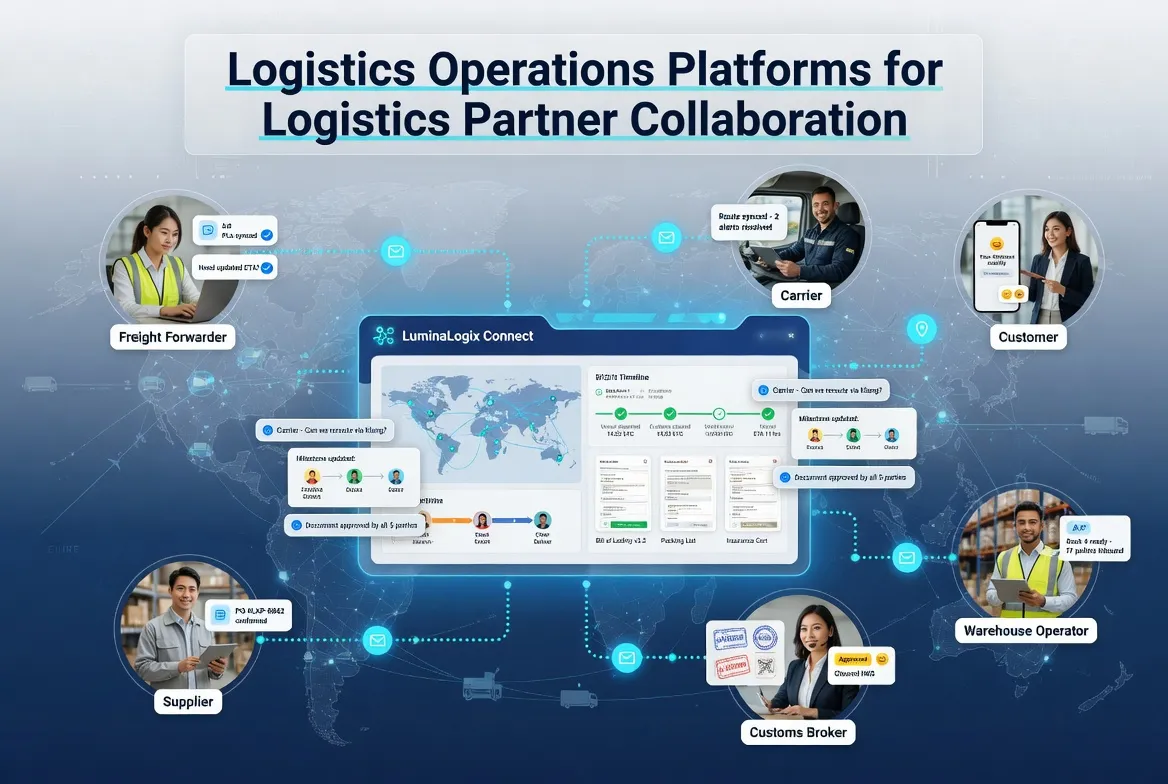
Allow internal teams and external stakeholders to upload, download, and review documents within the same system, reducing reliance on email attachments.
Compliance & Audit Support
Maintain structured document archives to support:
Customs audits
Financial reconciliation
Regulatory compliance
Internal reviews
All document activities are logged for traceability.
How Is It Different from a Generic File Storage System?
A generic file storage system stores documents but does not connect them to operational workflows.
A logistics document management system:
Links documents directly to shipment records
Integrates with booking and billing processes
Maintains compliance-ready documentation structures
Supports logistics-specific templates
Tracks document lifecycle within shipment execution
It is designed specifically for freight and supply chain operations.
Who Uses a Logistics Document Management System?
Typical users include:
Freight forwarders
Ocean and air cargo operators
3PL providers
Cross-border logistics companies
Multinational supply chain teams
Organizations handling high volumes of international documentation benefit most from structured digital document management.
Business Benefits
Implementing a logistics document management system can:
Reduce document retrieval time
Minimize compliance risk
Improve operational accuracy
Standardize documentation processes
Enhance collaboration between stakeholders
Strengthen audit readiness
It transforms document handling from fragmented file management into a controlled, traceable workflow.
Conclusion
A logistics document management system is a specialized digital platform for organizing and controlling shipment-related documentation. By linking documents to operational records and enabling structured collaboration, it improves efficiency, compliance, and transparency in international logistics operations.