

Feb 11,2023
Coping with Delivery Exception Challenges
Introduction
International logistics operations depend on accurate and timely documentation to ensure goods move smoothly across borders. From shipping instructions to customs declarations, documentation is required at every stage of the logistics process.
However, managing these documents manually or across disconnected systems often leads to inefficiencies, errors, and compliance risks.
International logistics documentation systems address these challenges by centralizing, standardizing, and automating document management across global operations.
What is an International Logistics Documentation System
An international logistics documentation system is a digital platform designed to manage all logistics-related documents involved in cross-border shipments.
It supports:
Shipping documents (B/L, AWB)
Commercial invoices and packing lists
Customs and regulatory documents
Operational and financial records
These systems integrate document workflows with logistics operations, ensuring that all documentation is aligned with shipment activities.
Why Companies Use International Logistics Documentation Systems
1. Managing Complex Cross-Border Requirements
Different countries have different documentation requirements. Systems help standardize and manage these variations efficiently.
2. Reducing Manual Errors
Manual document handling often leads to inconsistencies and missing information, which can cause shipment delays.
3. Improving Operational Efficiency
Automated document workflows reduce processing time and enable faster shipment execution.
4. Ensuring Regulatory Compliance
Accurate documentation is critical for customs clearance and regulatory adherence.
5. Enhancing Data Consistency
Using a centralized system ensures that all documents are generated from the same data source.
How International Logistics Documentation Systems Work
1. Centralized Document Management
All documents are stored in a unified system and linked to shipment records, enabling easy access and control.
2. Template-Based Document Generation
Systems allow users to configure templates for different document types and generate documents automatically.
Platforms support custom document templates and document export functions, ensuring standardized document creation across operations .
3. Integration with Operational Systems
Documentation systems connect with order management, tracking, and financial systems, ensuring real-time data synchronization.
4. Automated Workflow Processing
Documents follow predefined workflows, including creation, review, approval, and release.
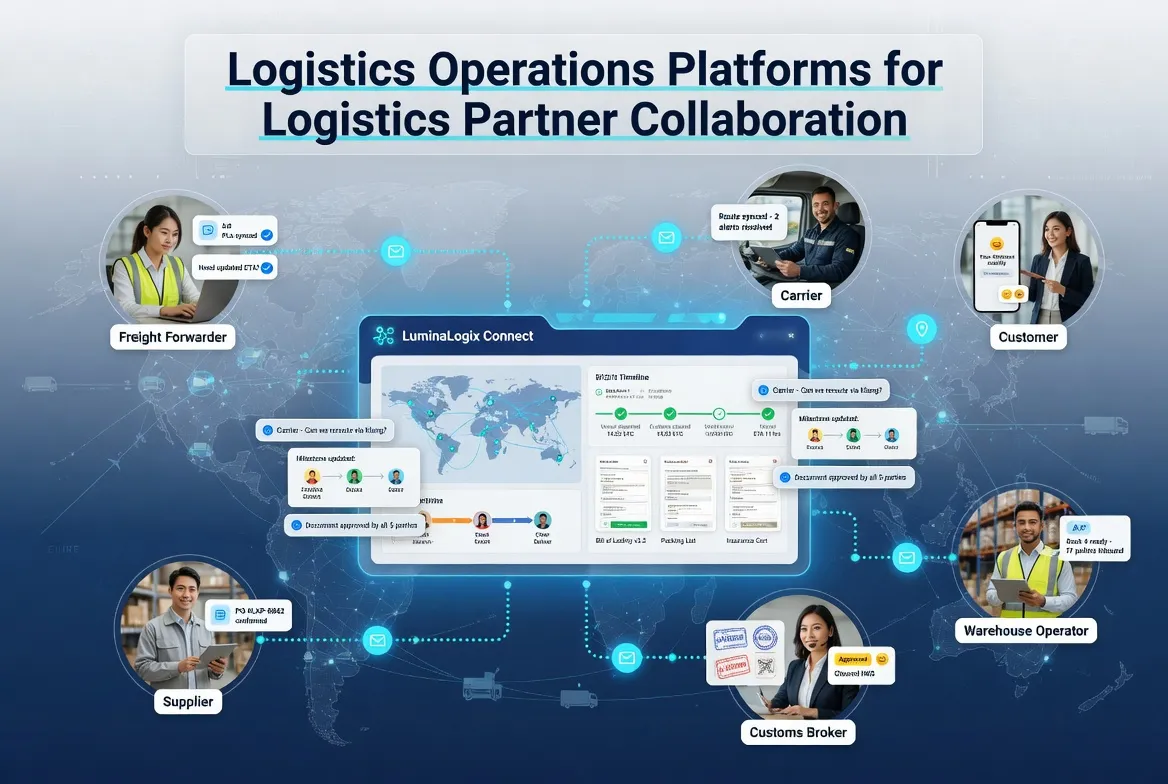
5. Real-Time Sharing and Collaboration
Documents can be shared instantly with internal teams and external stakeholders such as carriers and customs brokers.
6. Audit and Compliance Tracking
All document activities are recorded, enabling traceability and supporting compliance requirements.
Key Features of International Logistics Documentation Systems
1. Unified Document Repository
Centralized storage for all logistics documents.
2. Automated Document Generation
Documents are generated based on shipment data, reducing manual work.
3. Multi-Format Support
Supports different document formats required by various countries and partners.
4. Role-Based Access Control
Ensures secure access to sensitive information.
5. Integration with Global Logistics Systems
Connects with ERP, WMS, customs systems, and third-party platforms.
6. Compliance Management Tools
Helps ensure that documents meet regulatory standards.
Benefits of Using International Logistics Documentation Systems
1. Faster Shipment Processing
Automated document workflows reduce delays and accelerate operations.
2. Improved Accuracy and Consistency
Data-driven processes eliminate duplication and reduce errors.
3. Enhanced Compliance
Ensures that all required documents are complete and accurate.
4. Better Collaboration Across Stakeholders
Real-time sharing improves coordination between global partners.
5. Scalable Global Operations
Supports business growth without increasing document complexity.
Conclusion
International logistics documentation systems are essential for managing the complexity of global supply chains.
By centralizing and automating document workflows, these systems improve efficiency, accuracy, and compliance across logistics operations.
As cross-border trade continues to expand, companies that adopt advanced documentation systems will be better positioned to operate efficiently and compete in the global market.