



Mar 31,2026
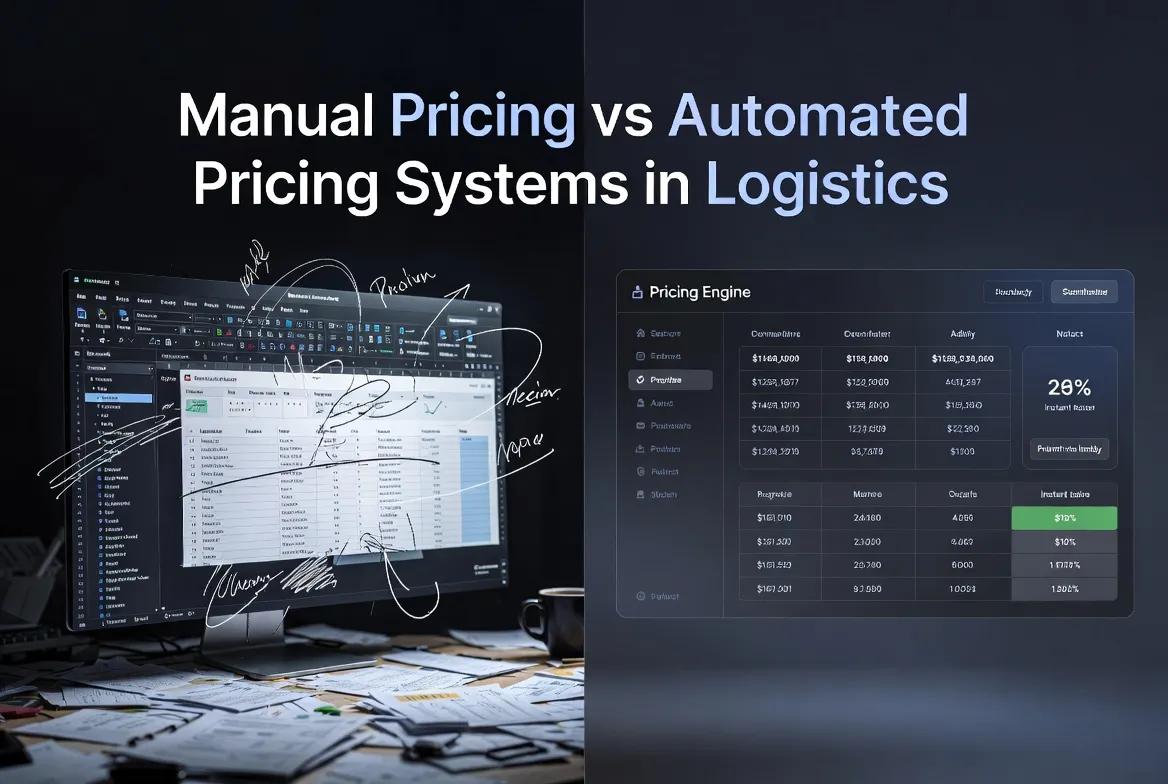
Manual Pricing vs Automated Pricing Systems in Logistics
Introduction (direct answer + context)
Freight financial platforms for freight accounting workflows are systems that streamline and automate the end-to-end accounting processes within logistics operations, from cost capture and billing to reconciliation and financial reporting. These platforms integrate operational data with accounting functions, ensuring that financial records are accurate, timely, and directly aligned with shipment activities. For freight forwarders, 3PLs, and cross-border logistics providers, efficient accounting workflows are essential to reduce manual effort, improve financial control, and support scalable growth.
What is Freight Accounting Workflows
Freight accounting workflows refer to the structured processes used to manage financial transactions in logistics operations, including:
Recording revenue and costs
Generating invoices and bills
Managing accounts receivable and payable
Performing reconciliation and write-offs
Closing financial periods and generating reports
In traditional logistics environments, these workflows are often fragmented across multiple systems and departments, leading to inefficiencies and errors.
Freight financial platforms unify these workflows by:
Embedding accounting processes into logistics operations
Automating repetitive financial tasks
Providing a centralized system for financial management
This creates a seamless connection between operations and finance.
Why Freight Accounting Workflows Matter
Efficient accounting workflows are critical in logistics due to:
High transaction volumes
Complex multi-party financial relationships
Multi-currency and cross-border operations
Tight profit margins
Without optimized workflows, companies often face:
Delayed financial processing
Data inconsistencies between systems
Increased risk of errors and disputes
High administrative workload
Freight financial platforms address these challenges by:
Standardizing accounting processes
Automating data entry and calculations
Improving coordination between departments
This ensures that financial operations keep pace with business growth.
How Freight Accounting Workflows Work
Freight financial platforms manage accounting workflows through integrated steps:
1. Financial Data Capture
Data is automatically captured from operational activities:
Shipment bookings and execution
Cost inputs from suppliers and partners
Pricing and billing information
AI-driven tools such as OCR can extract data from documents, reducing manual entry.
2. Transaction Recording
The system records financial transactions in real time:
Revenue entries linked to customer invoices
Cost entries linked to supplier bills
Allocation of shared costs across shipments
This ensures that financial records are always up to date.
3. Automated Billing and Invoicing
Invoices are generated automatically based on:
Predefined billing rules
Shipment milestones
Contractual agreements
This reduces delays and ensures consistency.
4. Reconciliation and Write-Off
The platform matches:
Receivables with incoming payments
Payables with supplier invoices
It supports:
Partial and full write-offs
Multi-stage reconciliation processes
5. Financial Reporting and Closure
The system generates reports and supports:
Period-end financial closing
Profit and loss analysis
Multi-dimensional financial reporting
Key Features / Key Capabilities
Freight financial platforms for accounting workflows typically include:
Workflow Automation
Automated transaction recording
Automated billing and invoicing
Automated reconciliation and write-off processes
End-to-End Visibility
Unified view of financial transactions across shipments
Real-time tracking of accounting status
Integration of financial data with shipment milestones
Multi-Role Collaboration
Coordination between operations, finance, and management teams
Shared access to financial data and workflows
Integration with external partners and stakeholders
Multi-Currency and Multi-Entity Support
Handling global operations with different currencies
Support for multiple legal entities and branches
Automatic currency conversion and reporting
Integration and Data Connectivity
API integration with ERP, WMS, and other systems
Synchronization of operational and financial data
Seamless data exchange across platforms
These capabilities enable efficient and scalable accounting workflows.
Benefits for Logistics Companies
Increased Efficiency
Automation reduces manual work and speeds up financial processes.
Improved Accuracy
Real-time data integration minimizes errors and inconsistencies.
Faster Financial Cycles
Automated workflows accelerate billing, reconciliation, and reporting.
Enhanced Financial Control
Centralized systems provide better oversight of financial activities.
Scalability
Standardized workflows support business growth without proportional increases in workload.
Best Practices / Use Cases
1. Integrated Operations and Finance
Align accounting workflows directly with logistics operations to ensure data consistency.
2. Multi-Branch Financial Management
Manage accounting processes across multiple branches and regions within a single platform.
3. Cross-Border Financial Handling
Support multi-currency transactions and compliance with international financial standards.
4. High-Volume Transaction Processing
Automate accounting workflows for businesses handling large numbers of shipments daily.
5. Exception Management
Use automated alerts to identify discrepancies and resolve issues quickly.
Conclusion
Freight accounting workflows are a fundamental component of logistics financial management. Freight financial platforms provide the tools needed to automate and optimize these workflows, ensuring accuracy, efficiency, and scalability. By integrating accounting processes with operational data, logistics companies can improve financial performance, reduce administrative burden, and support sustainable growth in a competitive market.
Frequently Asked Questions
What are freight accounting workflows?
Freight accounting workflows are structured processes used to manage financial transactions in logistics, including billing, reconciliation, and reporting.
How do freight financial platforms improve accounting workflows?
They automate data capture, transaction recording, billing, and reconciliation, reducing manual effort and improving accuracy.
Why are accounting workflows important in logistics?
They ensure accurate financial records, support cash flow management, and enable efficient business operations.
What are the benefits of automated accounting workflows?
Benefits include increased efficiency, reduced errors, faster financial cycles, and improved financial control.
Who should use freight accounting workflow systems?
Freight forwarders, 3PL providers, and cross-border logistics companies benefit from streamlined accounting workflows.
About WallTech
WallTech provides digital logistics solutions that integrate operational workflows with financial accounting processes, enabling seamless coordination across departments and partners. Through capabilities such as end-to-end shipment visibility, milestone-based tracking, automated billing, and intelligent workflow automation, the platform supports efficient and accurate freight accounting workflows. By connecting operations and finance within a unified system, WallTech helps logistics companies improve efficiency, enhance financial transparency, and scale their global operations effectively.
If you're exploring ways to improve your logistics operations, feel free to connect with us to learn more about our solutions and system capabilities.

.webp "What Is a Digital Logistics Infrastructure?")


