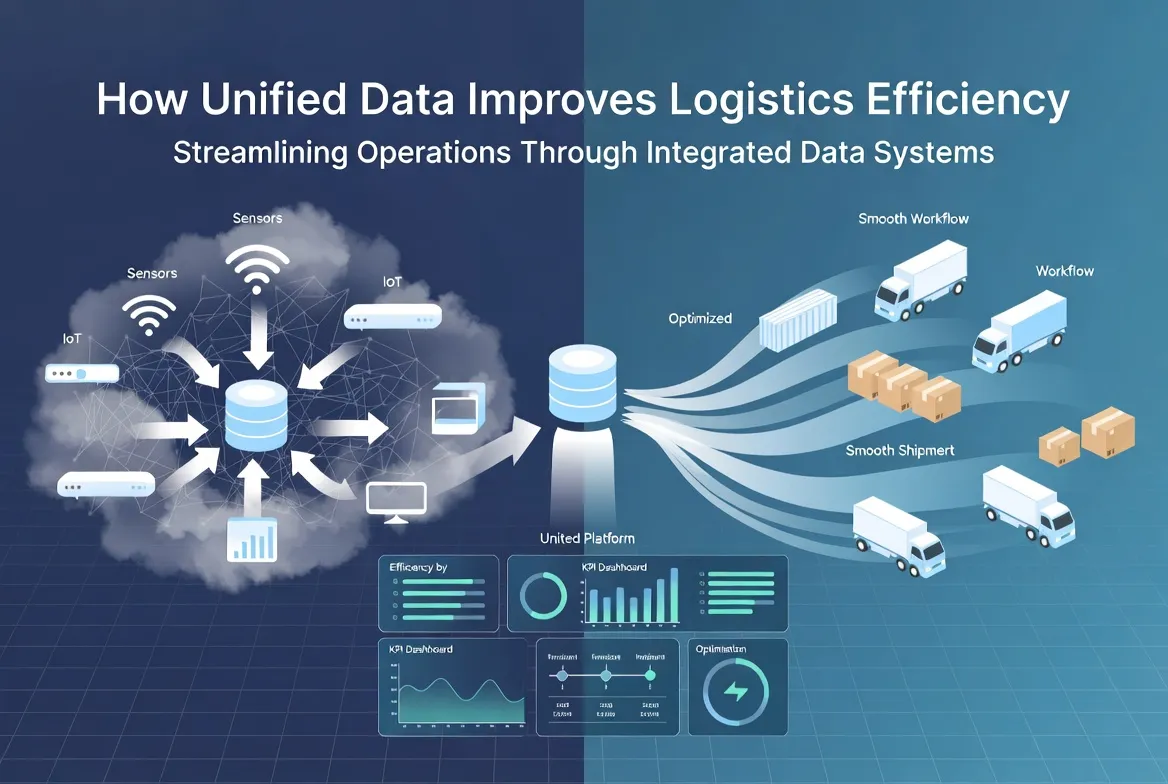
 How Unified Data Improves Logistics Efficiency
Unified data improves logistics efficiency by consolidating information from multiple systems, departments, and partners into a single, consistent source of truth. This enables real-time visibility, reduces manual processes, and allows logistics companies to operate with greater accuracy, speed, and coordination.
How Unified Data Improves Logistics Efficiency
Unified data improves logistics efficiency by consolidating information from multiple systems, departments, and partners into a single, consistent source of truth. This enables real-time visibility, reduces manual processes, and allows logistics companies to operate with greater accuracy, speed, and coordination.
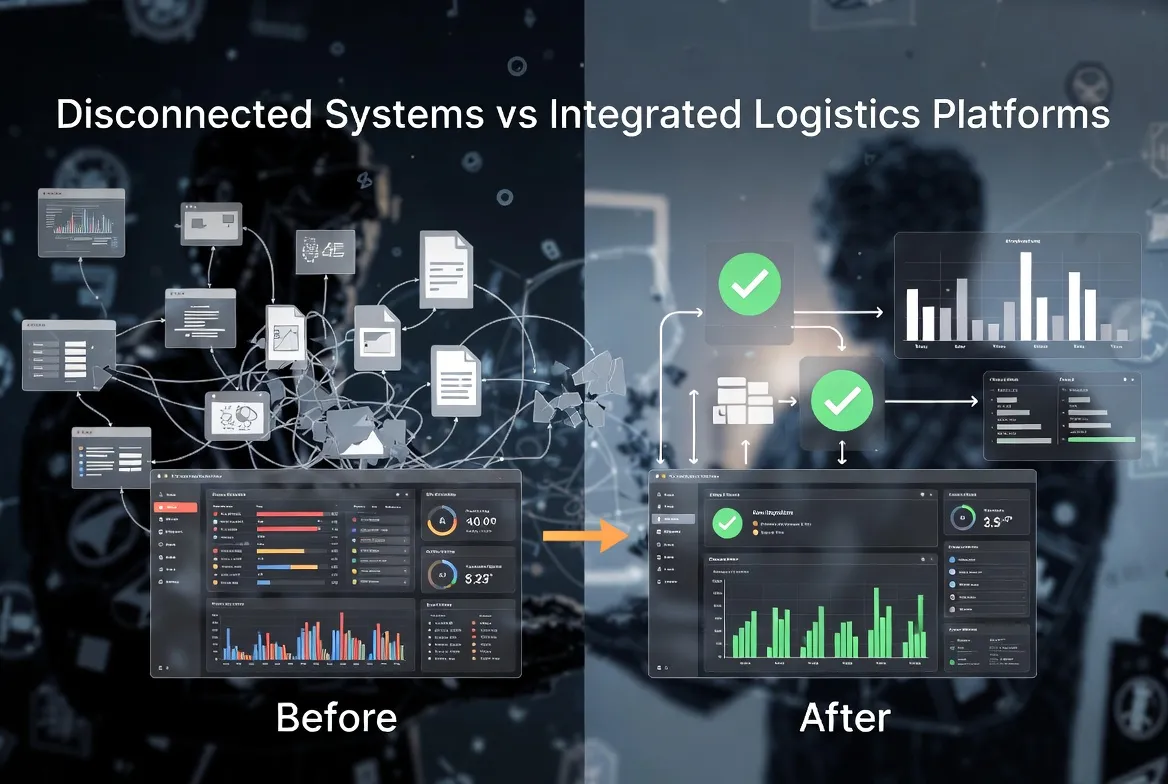 Disconnected Systems vs Integrated Logistics Platforms
Disconnected systems and integrated logistics platforms represent two fundamentally different approaches to managing logistics operations. Disconnected systems operate in silos with limited data sharing, while integrated logistics platforms unify all operations, data, and workflows into a single connected environment. The difference directly impacts efficiency, visibility, accuracy, and scalability.
Disconnected Systems vs Integrated Logistics Platforms
Disconnected systems and integrated logistics platforms represent two fundamentally different approaches to managing logistics operations. Disconnected systems operate in silos with limited data sharing, while integrated logistics platforms unify all operations, data, and workflows into a single connected environment. The difference directly impacts efficiency, visibility, accuracy, and scalability.
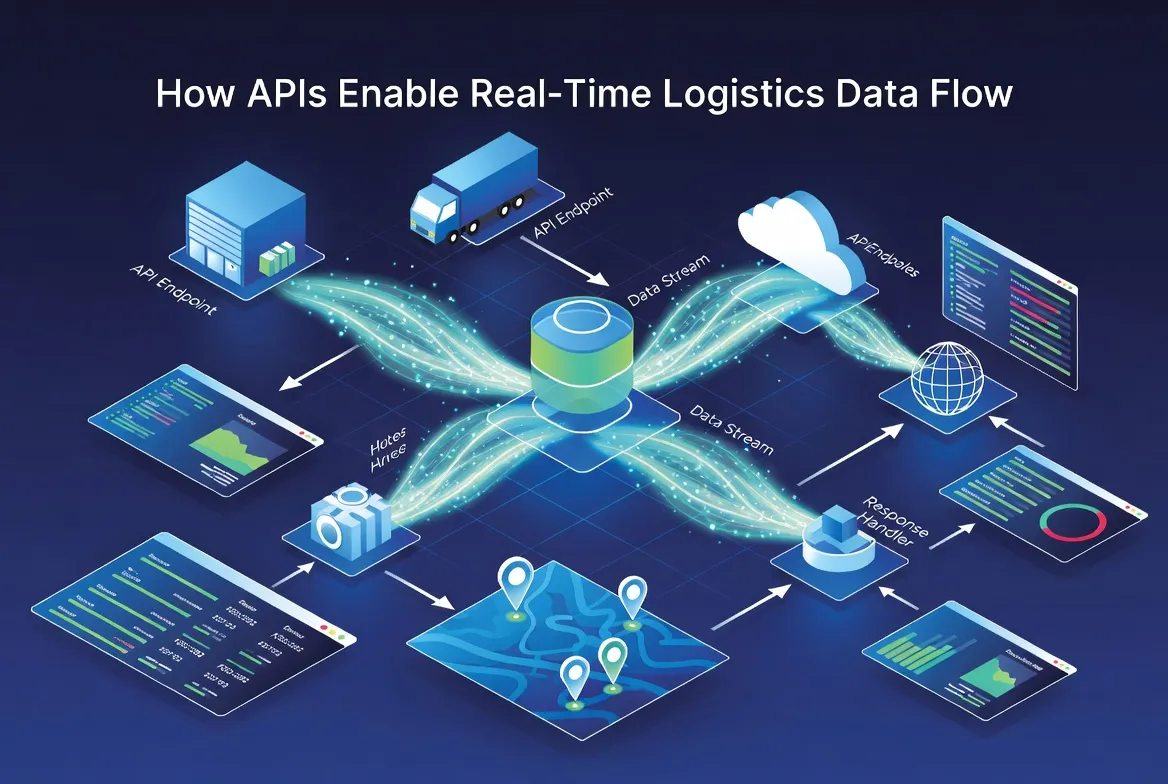 How APIs Enable Real-Time Logistics Data Flow
APIs enable real-time logistics data flow by allowing different systems—such as logistics platforms, carrier systems, ERP systems, and customer portals—to communicate instantly and exchange data automatically. This ensures that shipment updates, order information, and financial data are synchronized across all systems without delays or manual intervention.
How APIs Enable Real-Time Logistics Data Flow
APIs enable real-time logistics data flow by allowing different systems—such as logistics platforms, carrier systems, ERP systems, and customer portals—to communicate instantly and exchange data automatically. This ensures that shipment updates, order information, and financial data are synchronized across all systems without delays or manual intervention.
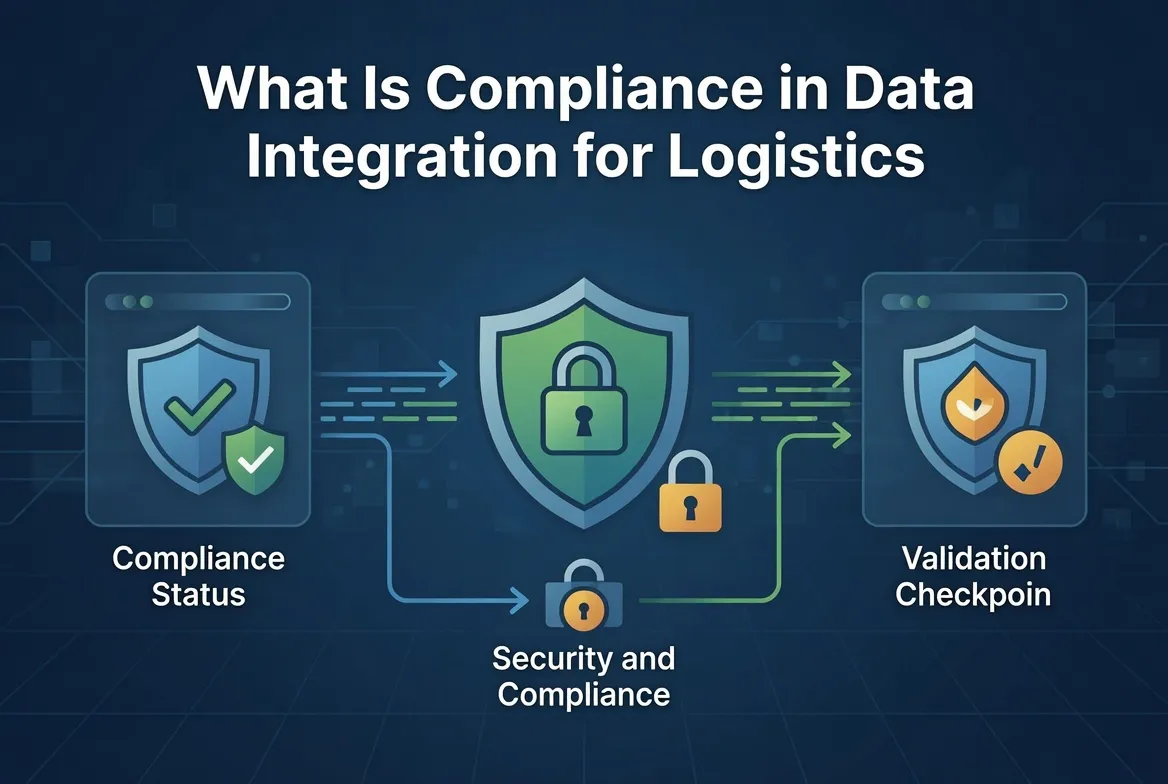 What Is Compliance in Data Integration for Logistics
Compliance in data integration for logistics refers to the processes, standards, and controls that ensure data exchanged between systems, partners, and platforms meets regulatory, legal, and operational requirements. It matters because logistics operations involve cross-border data flows, financial transactions, and sensitive shipment information that must adhere to international regulations and industry standards.
What Is Compliance in Data Integration for Logistics
Compliance in data integration for logistics refers to the processes, standards, and controls that ensure data exchanged between systems, partners, and platforms meets regulatory, legal, and operational requirements. It matters because logistics operations involve cross-border data flows, financial transactions, and sensitive shipment information that must adhere to international regulations and industry standards.
.webp "What Is a Logistics Customer Portal and How It Works") What Is a Logistics Customer Portal and How It Works
A logistics customer portal is a digital platform that allows customers to access shipment information, track orders, manage documents, and interact with logistics providers in real time. It works by connecting customers directly to the logistics system, providing self-service access to data and reducing the need for manual communication.
What Is a Logistics Customer Portal and How It Works
A logistics customer portal is a digital platform that allows customers to access shipment information, track orders, manage documents, and interact with logistics providers in real time. It works by connecting customers directly to the logistics system, providing self-service access to data and reducing the need for manual communication.
 How Logistics Platforms Enable Self-Service Shipment Tracking
Logistics platforms enable self-service shipment tracking by providing customers with direct, real-time access to shipment data through digital interfaces such as customer portals or tracking dashboards. Instead of relying on manual updates from operations teams, customers can independently check shipment status, milestones, and exceptions at any time.
How Logistics Platforms Enable Self-Service Shipment Tracking
Logistics platforms enable self-service shipment tracking by providing customers with direct, real-time access to shipment data through digital interfaces such as customer portals or tracking dashboards. Instead of relying on manual updates from operations teams, customers can independently check shipment status, milestones, and exceptions at any time.
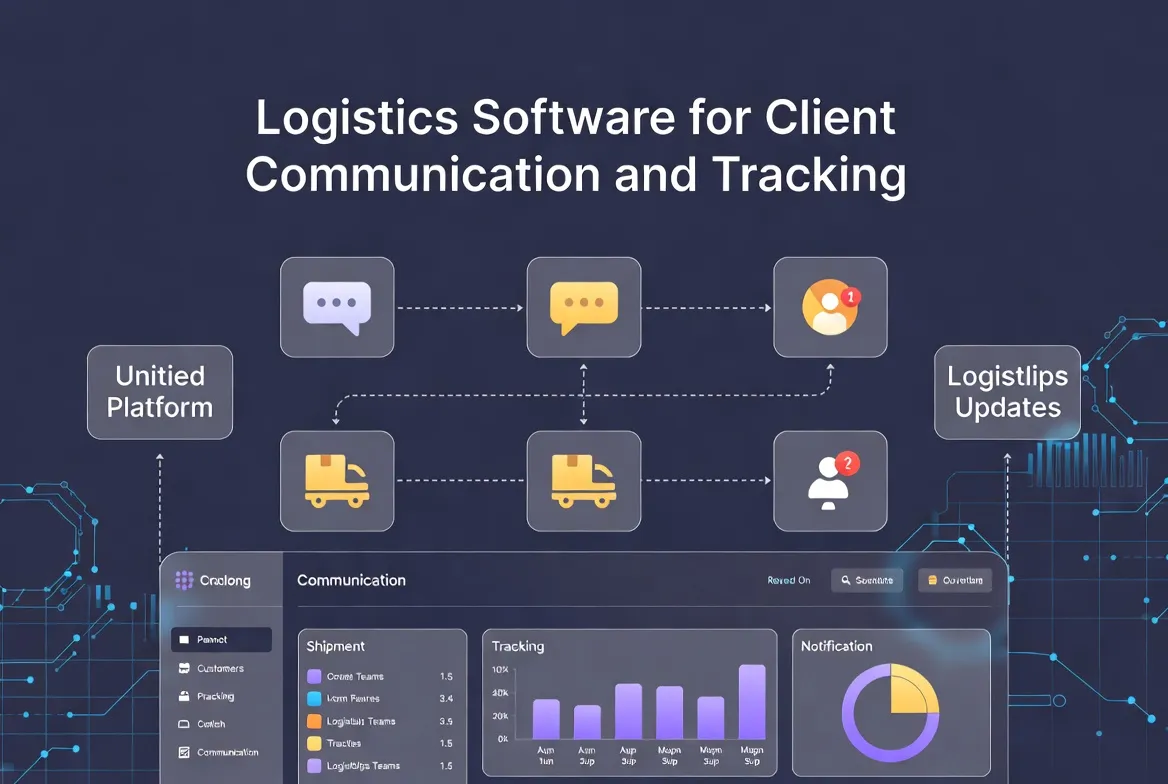 Logistics Software for Client Communication and Tracking
Logistics software for client communication and tracking is a digital platform that centralizes customer interactions and provides real-time shipment visibility within a single system. It works by integrating communication tools with tracking data, enabling logistics companies to share accurate updates, manage inquiries, and maintain transparency without relying on fragmented channels like email or phone calls.
Logistics Software for Client Communication and Tracking
Logistics software for client communication and tracking is a digital platform that centralizes customer interactions and provides real-time shipment visibility within a single system. It works by integrating communication tools with tracking data, enabling logistics companies to share accurate updates, manage inquiries, and maintain transparency without relying on fragmented channels like email or phone calls.
 Key Features of Logistics Customer Portals
The key features of logistics customer portals include real-time shipment tracking, self-service access, document management, automated notifications, and secure data access. These features enable customers to independently manage shipments, access information, and interact with logistics providers through a centralized digital platform.
Key Features of Logistics Customer Portals
The key features of logistics customer portals include real-time shipment tracking, self-service access, document management, automated notifications, and secure data access. These features enable customers to independently manage shipments, access information, and interact with logistics providers through a centralized digital platform.
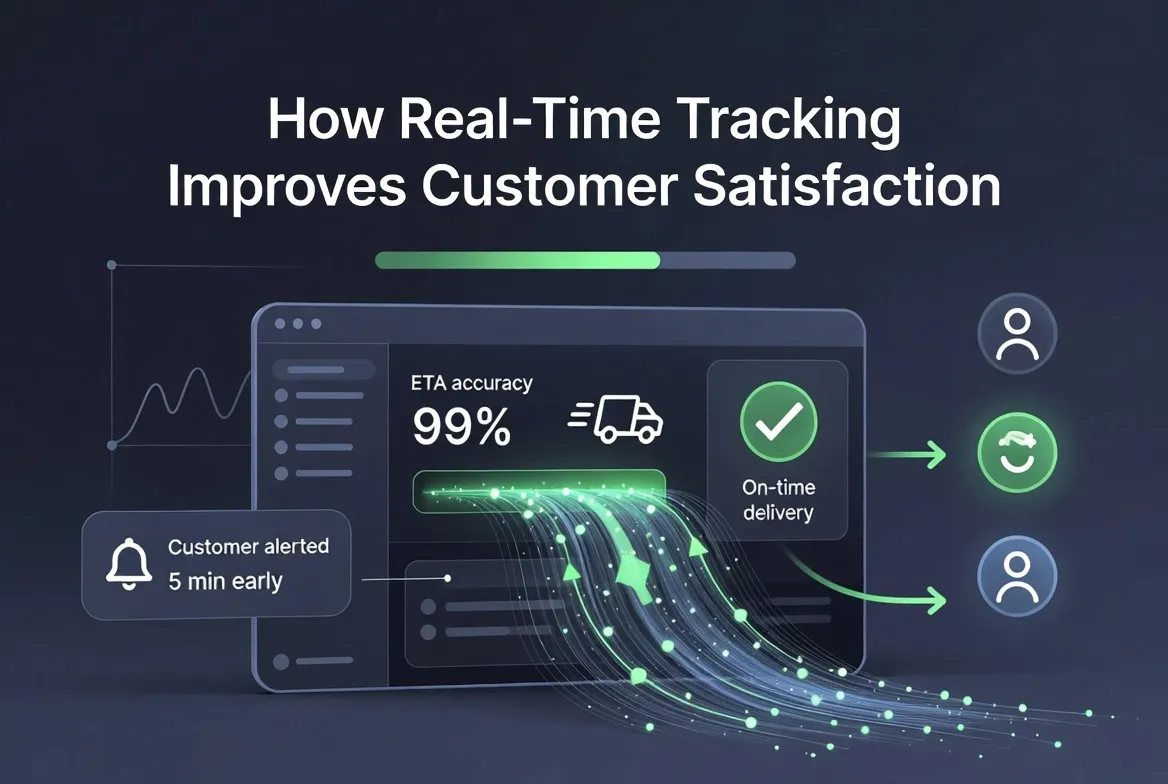 How Real-Time Tracking Improves Customer Satisfaction
Real-time tracking improves customer satisfaction by providing immediate, accurate visibility into shipment status, enabling customers to monitor progress, anticipate delays, and make informed decisions without relying on manual updates. In logistics, where uncertainty and delays are common, access to real-time information significantly enhances transparency and trust.
How Real-Time Tracking Improves Customer Satisfaction
Real-time tracking improves customer satisfaction by providing immediate, accurate visibility into shipment status, enabling customers to monitor progress, anticipate delays, and make informed decisions without relying on manual updates. In logistics, where uncertainty and delays are common, access to real-time information significantly enhances transparency and trust.
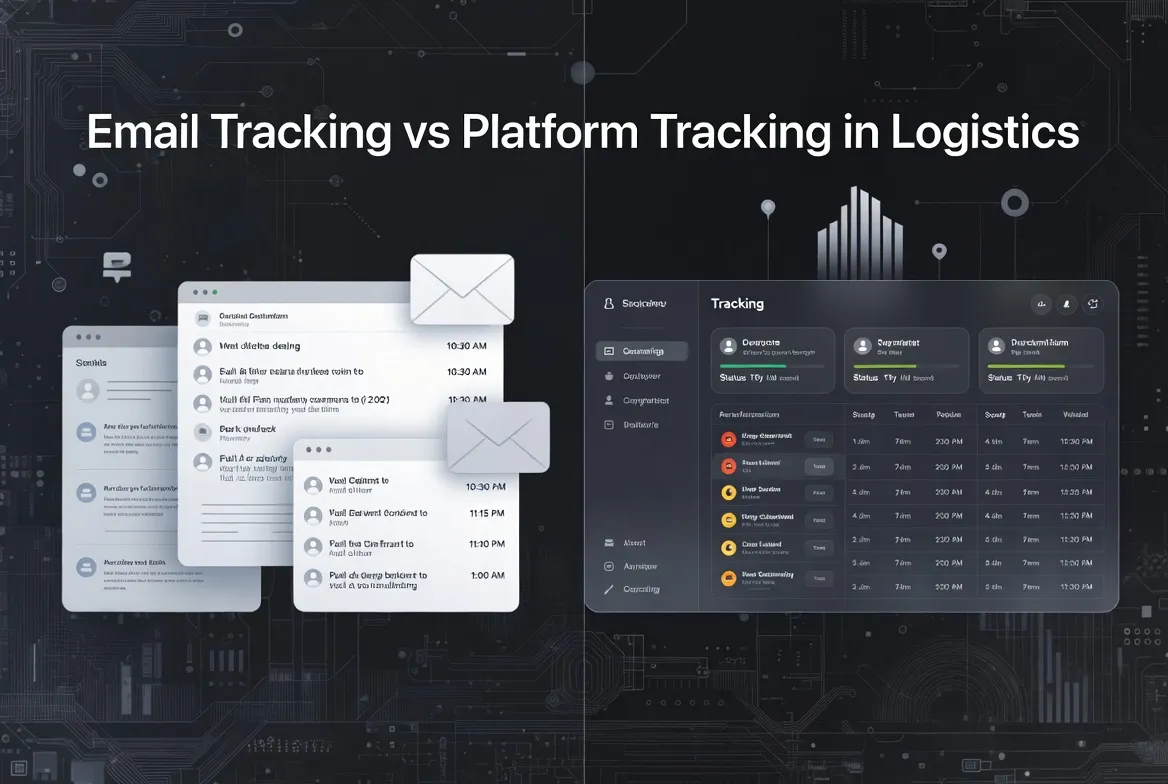 Email Tracking vs Platform Tracking in Logistics
Email tracking and platform tracking are two different approaches to managing shipment visibility in logistics. Email tracking relies on manual communication through emails to provide shipment updates, while platform tracking uses digital systems to deliver real-time, automated tracking information through centralized dashboards or customer portals.
Email Tracking vs Platform Tracking in Logistics
Email tracking and platform tracking are two different approaches to managing shipment visibility in logistics. Email tracking relies on manual communication through emails to provide shipment updates, while platform tracking uses digital systems to deliver real-time, automated tracking information through centralized dashboards or customer portals.
 How AI Chatbots Improve Logistics Customer Service
AI chatbots improve logistics customer service by providing instant, automated responses to customer inquiries, enabling real-time shipment updates, and reducing reliance on manual support teams. They work by integrating with logistics platforms to access shipment data, allowing customers to receive accurate information anytime without waiting for human assistance.
How AI Chatbots Improve Logistics Customer Service
AI chatbots improve logistics customer service by providing instant, automated responses to customer inquiries, enabling real-time shipment updates, and reducing reliance on manual support teams. They work by integrating with logistics platforms to access shipment data, allowing customers to receive accurate information anytime without waiting for human assistance.
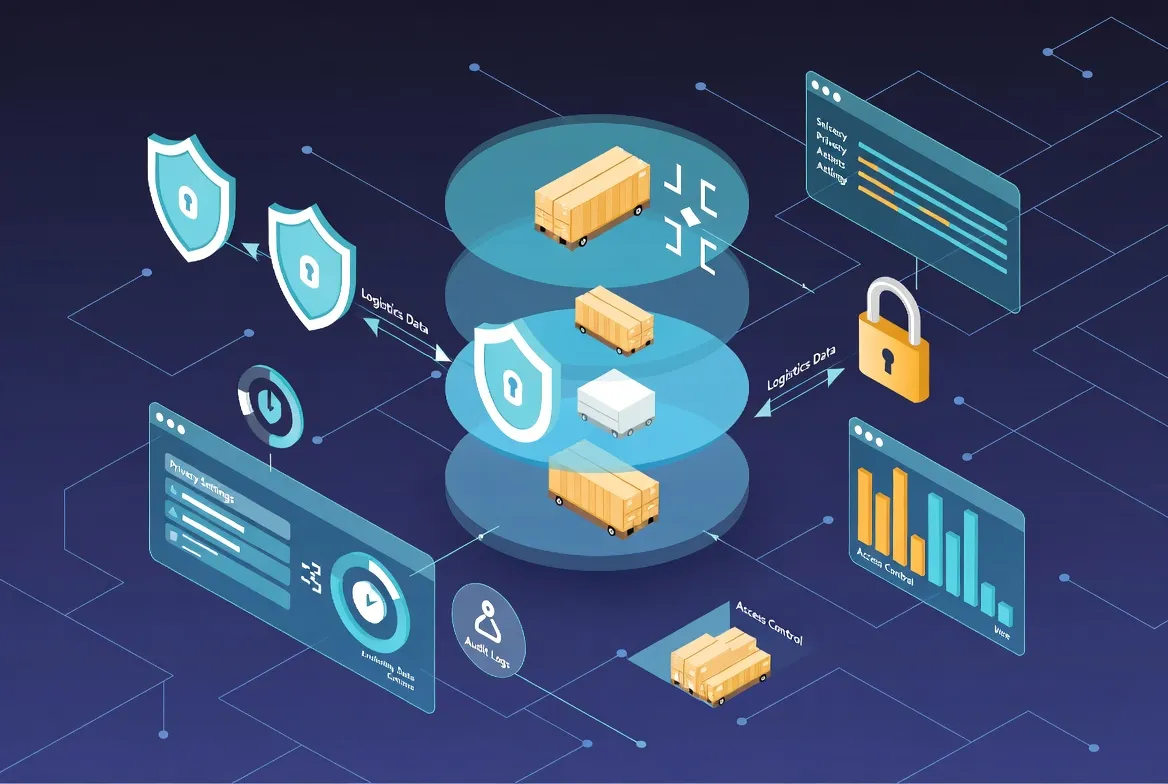 What Is Data Privacy in Logistics SaaS Platforms
Data privacy in logistics SaaS platforms refers to the protection, control, and responsible handling of sensitive data—such as shipment details, customer information, and financial records—within cloud-based logistics systems. It ensures that data is securely stored, accessed only by authorized users, and used in compliance with relevant regulations.
What Is Data Privacy in Logistics SaaS Platforms
Data privacy in logistics SaaS platforms refers to the protection, control, and responsible handling of sensitive data—such as shipment details, customer information, and financial records—within cloud-based logistics systems. It ensures that data is securely stored, accessed only by authorized users, and used in compliance with relevant regulations.
.webp "What Is Logistics Exception Management and How It Works") What Is Logistics Exception Management and How It Works
Logistics exception management refers to the process of identifying, tracking, and resolving unexpected issues or disruptions in shipment operations, such as delays, customs holds, or documentation errors. It works by monitoring shipment milestones in real time, detecting deviations from planned workflows, and triggering alerts and corrective actions.
What Is Logistics Exception Management and How It Works
Logistics exception management refers to the process of identifying, tracking, and resolving unexpected issues or disruptions in shipment operations, such as delays, customs holds, or documentation errors. It works by monitoring shipment milestones in real time, detecting deviations from planned workflows, and triggering alerts and corrective actions.
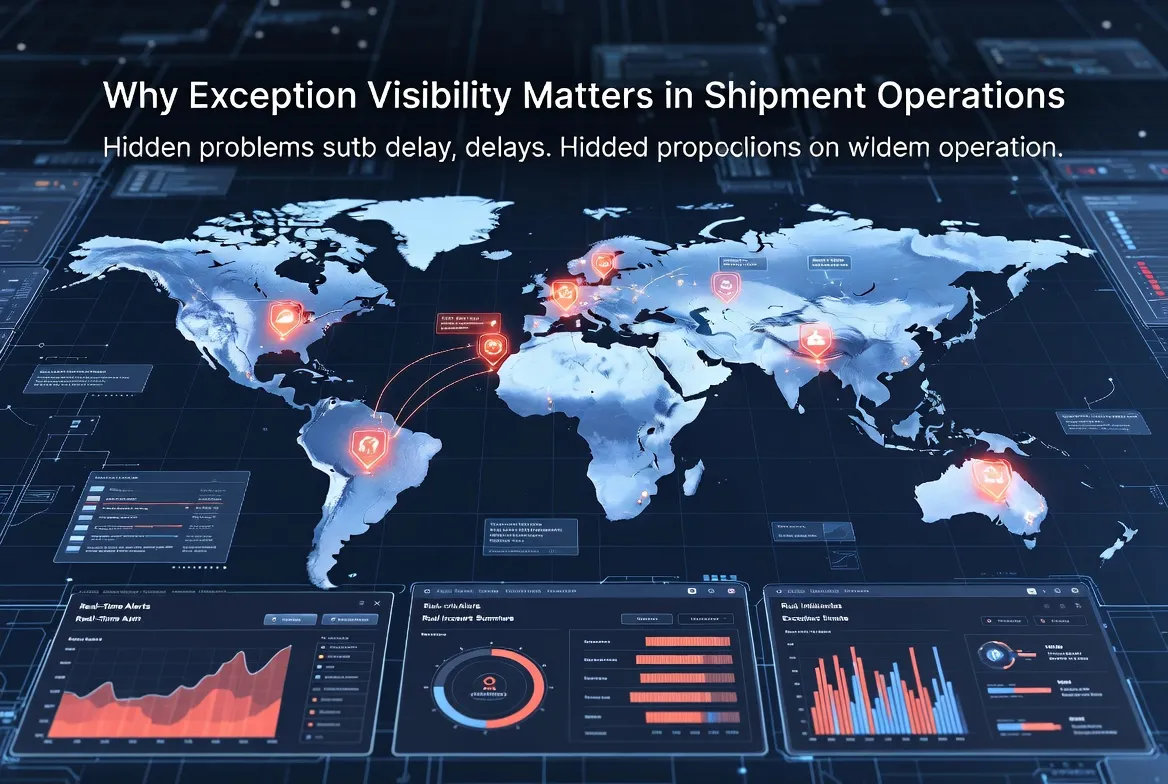 Why Exception Visibility Matters in Shipment Operations
Exception visibility in shipment operations refers to the ability to identify, monitor, and understand disruptions—such as delays, missed milestones, or documentation issues—in real time. It matters because logistics operations are highly dynamic, and without clear visibility into exceptions, issues often go unnoticed until they escalate into major disruptions.
Why Exception Visibility Matters in Shipment Operations
Exception visibility in shipment operations refers to the ability to identify, monitor, and understand disruptions—such as delays, missed milestones, or documentation issues—in real time. It matters because logistics operations are highly dynamic, and without clear visibility into exceptions, issues often go unnoticed until they escalate into major disruptions.
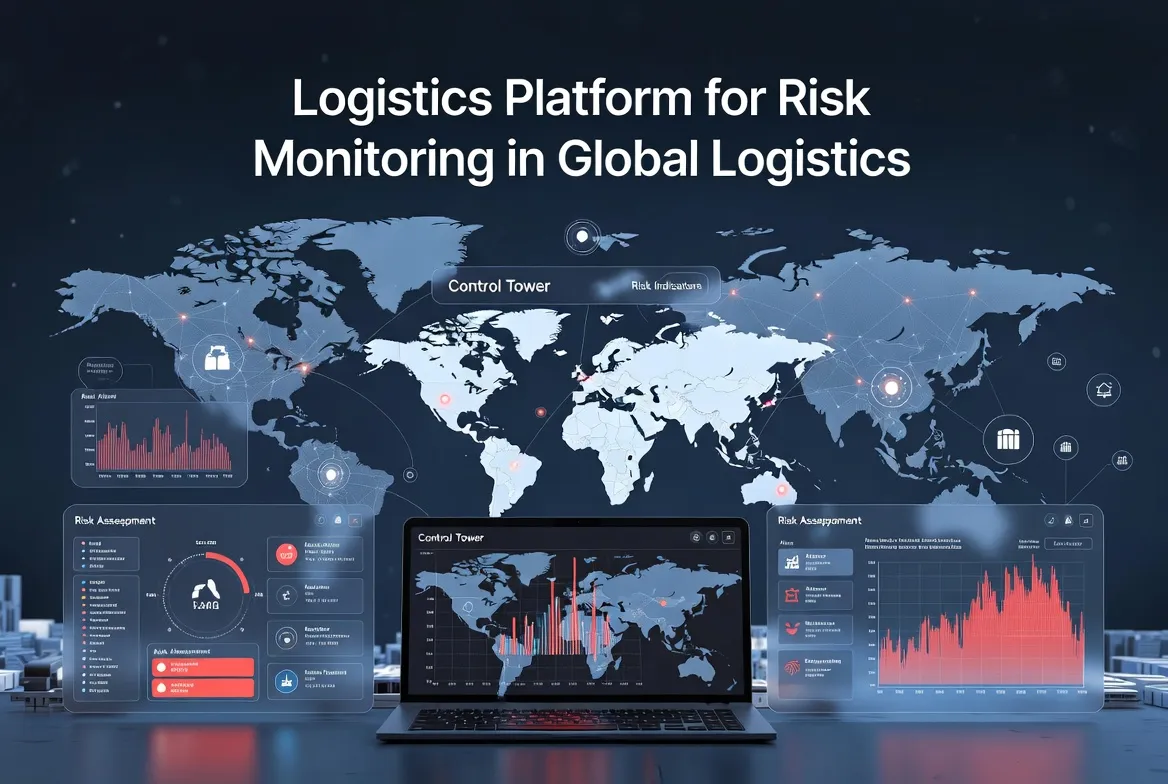 Logistics Platform for Risk Monitoring in Global Logistics
A logistics platform for risk monitoring in global logistics is a centralized system that continuously tracks shipment activities, identifies potential disruptions, and provides real-time insights into operational risks. It works by integrating data from multiple sources, analyzing shipment progress against expected milestones, and triggering alerts when risks are detected.
Logistics Platform for Risk Monitoring in Global Logistics
A logistics platform for risk monitoring in global logistics is a centralized system that continuously tracks shipment activities, identifies potential disruptions, and provides real-time insights into operational risks. It works by integrating data from multiple sources, analyzing shipment progress against expected milestones, and triggering alerts when risks are detected.