Apr 28,2026
Freight Financial Platforms for Logistics Cost Management
A cross-border ecommerce parcel passes through several operational handoffs before it reaches the recipient. The order begins on an ecommerce platform or seller system, moves into origin processing, receives a shipping label and carrier service, travels through the delivery network and finishes with a last-mile event or proof of delivery.
When those handoffs are managed in separate systems, teams spend time importing files, re-entering shipment data, checking carrier portals and investigating exceptions without one complete order record.
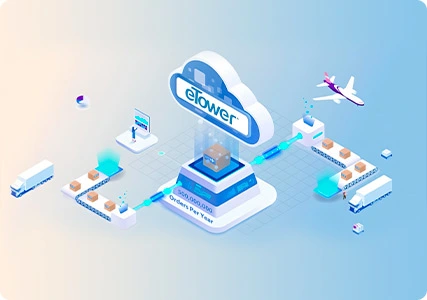
We designed eTower to connect this parcel workflow. It brings order intake, parcel processing, carrier connectivity, tracking, abnormal alerts and delivery information into one operating environment for cross-border ecommerce logistics providers, parcel networks and courier operations.
.webp "eTower cross-border parcel workflow from order intake to customs clearance")
Synchronize ecommerce orders
The workflow begins when an order enters eTower. Orders can be created individually, imported in batches or synchronized from connected ecommerce platforms, seller ERP systems and other upstream sources.
A connected order record gives the operations team the shipment information required for processing, including recipient details, delivery address, parcel references, declared information, weight data and the selected logistics service.
This reduces repeated entry, but synchronization does not remove the need for data control. Before the parcel moves, the team should identify missing addresses, incomplete declarations, duplicate orders and service combinations that cannot be processed.
Operational checkpoint
Review any order that fails validation before releasing it to parcel processing. Incorrect information at this stage can affect the label, routing, customs handling, delivery and billing later in the journey.
Process parcels at the origin facility
After order intake, the physical parcel and its digital record need to match. eTower supports the operational steps used to receive and prepare parcels, including scanning, weighing, measuring, label printing, sorting and packaging workflows.
Integration with weighing, measuring and other processing equipment can return actual parcel data to the order record. Operations teams can then compare the measured weight and dimensions with the information submitted by the customer or seller.
Shipping labels and parcel identifiers keep the physical item connected to its record as it moves through sorting and dispatch. This is particularly important when a facility processes parcels for multiple customers, services and downstream delivery providers.
Operational checkpoint
Investigate weight or dimension differences, unreadable labels, failed scans, prohibited-item concerns and parcels that cannot be assigned to the requested service.
Assign the appropriate logistics service
Cross-border parcel operations may use different delivery products depending on destination, parcel characteristics, customer requirements and available downstream providers. eTower supports carrier connectivity and the configuration of transportation channels, routes and price cards.
The purpose is not simply to generate a label. The selected service, carrier reference and tracking information should remain connected to the original order so operations and customer-service teams can work from the same shipment context.
Routing rules must reflect the services that are actually available for the destination and parcel type. A system can apply configured logic, but the logistics provider remains responsible for maintaining valid services, rules and commercial conditions.
Operational checkpoint
Review parcels that don't fit a valid route, exceed service limits, produce a carrier error or require a different delivery option.
See eTower in action
Explore how eTowerB2C can support more connected cross-border parcel operations.
BOOK A DEMOTrack the parcel and manage exceptions
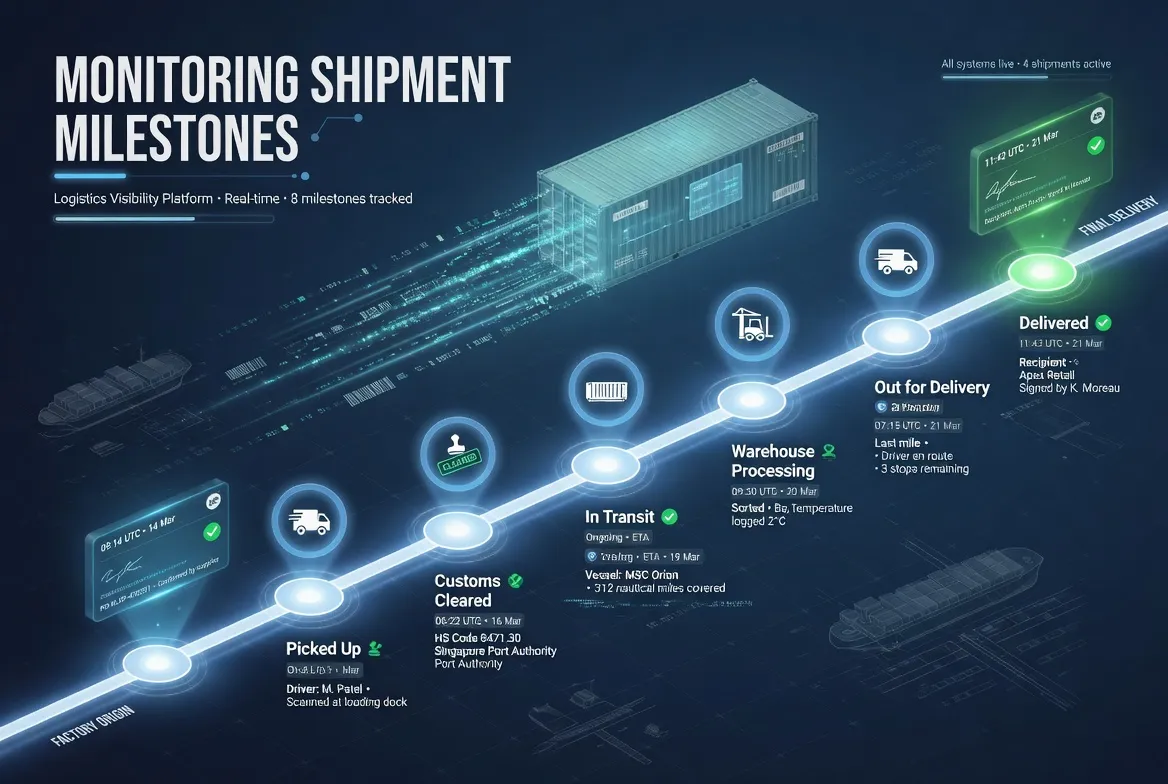
Once dispatched, parcel visibility depends on events returned by the delivery network. eTower connects tracking information to the shipment record so teams can follow progress without treating the carrier portal as a separate source of context.
Normal tracking events show that the parcel is moving through the network. Abnormal alerts help identify shipments that require attention, such as missing scans, address problems, delays or failed delivery attempts.
Visibility alone does not resolve an exception. Each alert needs an owner, a response rule and a record of the action taken. The operations team may need to confirm information with the customer, contact a downstream provider or update the recipient.
Operational checkpoint
Assign responsibility for each exception category and define when to escalate the issue. The goal is to act while the parcel can still be recovered, not only report the problem after delivery has failed.
Complete last-mile delivery and proof of delivery
The final stage connects the shipment to the last-mile provider and returns delivery information to the order record. eTower supports last-mile order placement, shipping-label printing, tracking and proof of delivery.
A completed delivery event gives operations and customer-service teams a shared reference for closing the shipment. When proof of delivery is available, it can also support enquiries and disputes about whether, when or where the parcel was delivered.
A delivery exception should remain linked to the same order. Address correction, another delivery attempt, return instructions or a proof-of-delivery dispute should not become disconnected conversations with no shipment history.
Operational checkpoint
Review failed delivery, damage, loss, return-to-sender and proof-of-delivery disputes according to the service agreement and the downstream provider’s process.
Connect parcel operations with settlement
The shipment also has a financial record. eTower includes financial management functions for receivables, payables, sales costs, write-offs, order profit and credit control.
Connecting settlement information with the parcel helps teams reconcile what the customer should be charged, what the delivery supplier charged and whether unexpected differences or surcharges require review.
Operational checkpoint
Investigate unmatched supplier charges, unexpected surcharges, customer billing differences and shipment records that cannot be reconciled.
What eTower covers
Order creation, batch import and synchronization with connected upstream systems
Parcel scanning, weighing, measuring, label printing, sorting and packaging workflows
Transportation-channel, route and price-card configuration
Carrier connectivity and shipment creation
Tracking information and abnormal alerts
Last-mile order placement and proof of delivery
Financial records connected to parcel operations
Extend your logistics network with WallTech Family
eTower users can also connect with WallTech Family, a global logistics resource platform where companies can discover potential partners and explore cooperation opportunities across the logistics ecosystem.
This means that working with WallTech goes beyond adopting a technology system. Customers also get responsive service, continuous operational support and ecosystem connections that could enable future collaboration and business development.
Connect the information behind every parcel
Cross-border parcel performance depends on more than physical transportation. Order data, parcel-processing record, carrier reference, tracking events, exceptions, delivery result and settlement information must be aligned.
eTower gives logistics providers one workflow for connecting those stages. Successful implementation still depends on accurate order data, supported carrier connections, valid routing rules and clear exception ownership.
Ready to connect your cross-border parcel operations?
See how eTowerB2C can help connect parcel workflows, improve visibility and support exception management from order intake through delivery.
BOOK A DEMO```

.webp "What Is a Warehouse Management System")